Discovering Brittany: a practical guide
Brittany is a peninsula with real character, with a very long and indented coastline, islands, forests, moors and a strongly present ancient heritage. This practical guide helps you understand the region before you go: where to go according to your tastes, when to travel and how to organise your days.
In the text, underlined site names link to their detailed pages: photos, access and tips. You can also consult our guides by département, listed at the bottom of the page.
Understanding the region in a few minutes
Brittany has four départements: Finistère in the west, Morbihan in the south, Côtes-d'Armor in the north and Ille-et-Vilaine in the east. Each has its own personality. Finistère is the wildest, with its headlands, lighthouses and islands; Morbihan is famous for its gulf and megaliths; Côtes-d'Armor offers the pink granite coast and fine cliffs; Ille-et-Vilaine brings together Rennes, Saint-Malo and the fortified towns.
People also speak of two Brittanys: the Armor, the coast, and the Argoat, the wooded interior. The Armor attracts most visitors, but the Argoat has forests, lakes and rocky chaos, such as Le Chaos de Huelgoat or Les Monts d'Arrée.
For a first trip, it is better to choose one or two areas rather than see everything: Brittany is bigger than it looks, and coastal roads are slow.
- Allow about three hours' drive between Rennes and the tip of Finistère.
- Distances are measured mostly in time: allow slack on the small roads.
- The weather is changeable: a single day can alternate sun, cloud and showers.
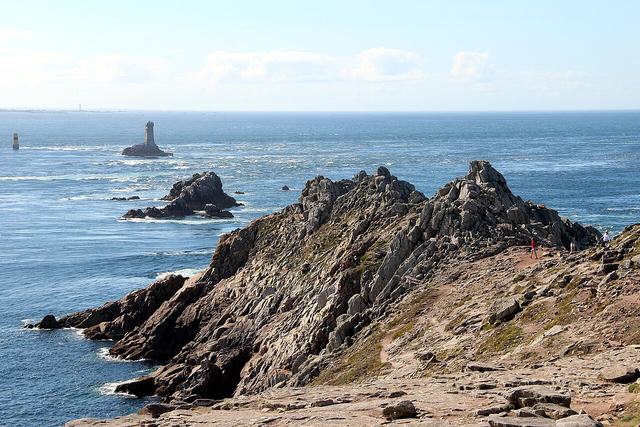
La Pointe du Raz
Located at the prow of Brittany in the Cap Sizun country, the Pointe du Raz is one of the most striking sites of the Atlantic coast.
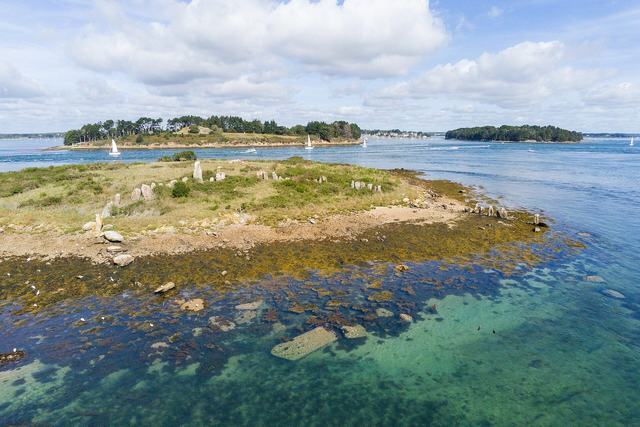
Golfe du Morbihan
A small inland sea sown with a multitude of islands, the Gulf of Morbihan owes its Breton name, "little sea", to this sheltered stretch of the ocean. Megaliths, oyster farming and fishing villages make up the identity of this territory apart.
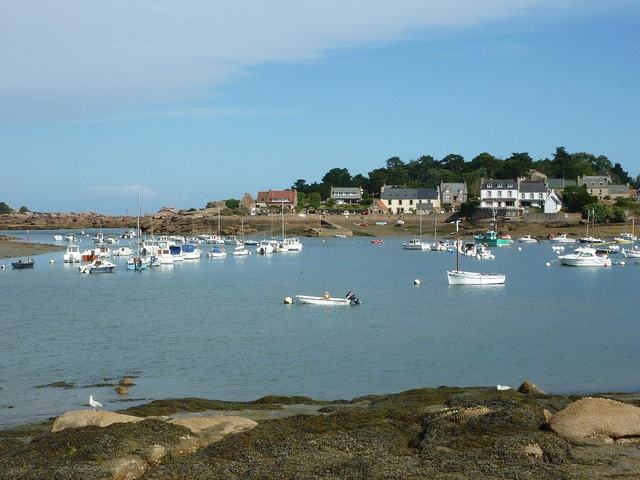
Les Rochers de Ploumanac'h
Sculpted by the sea and time, balanced in a sometimes more than improbable equilibrium, steeped in mystery and fuelling the imagination, the rocks recall the power of the natural elements.
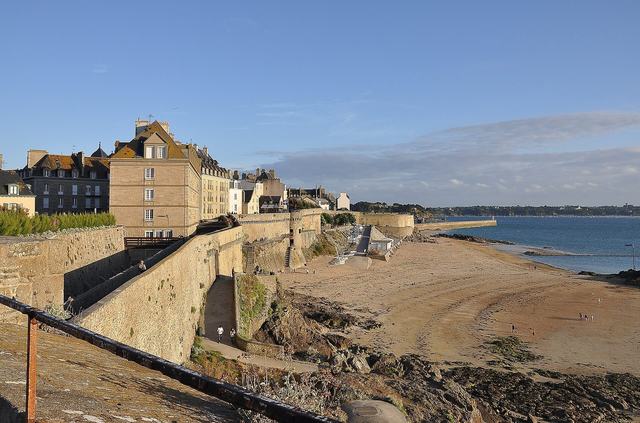
Les Remparts de Saint-Malo
Their construction began in 1144, at the instigation of the bishopric of Aleth moving its seat to the rock, the layout of the place allowing better defence.
Culture, history and traditions
Brittany has kept a strong identity, based on a language, Breton, religious traditions and a long maritime history. Pardons (popular religious festivals), music and dance festivals and traditional costumes are still part of local life, especially in summer.
The oldest heritage is that of the megaliths: the Alignements de Carnac, the Site mégalithique de Locmariaquer and the Cairn de Barnenez date from prehistory. They are visited on foot, and some sites are protected by marked paths to limit erosion.
Towns and castles tell the medieval and modern story: fortresses such as the Château de Fougères, the Château de Vitré and the Château de Josselin, fortified towns such as Dinan and Saint-Malo, and historic towns such as Quimper, Vannes and Rennes. The Château de Combourg is linked to the writer Chateaubriand.
The region is also a land of legends, with the Brocéliande forest, associated with the legend of King Arthur, which you can discover at Paimpont et la forêt de Brocéliande.
- Pardons take place mainly from May to September: ask at the tourist offices.
- At the Carnac megaliths, stay on the paths and follow the rules.
- Local museums, such as the Musée de Carnac or the Musée Départemental Breton, give keys to understanding the sites.
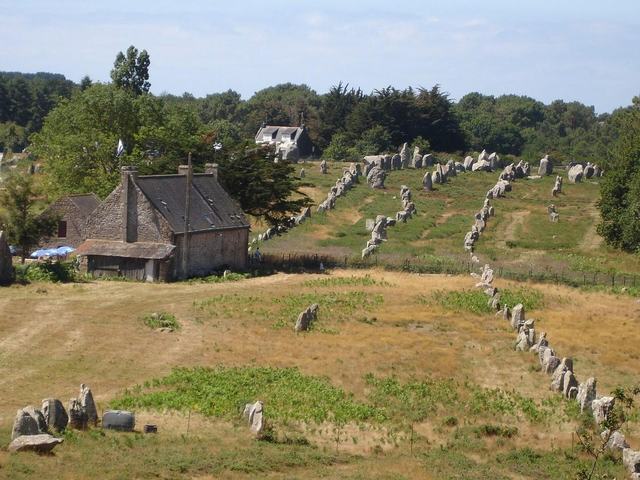
Alignements de Carnac
The Carnac alignments are in the commune of Carnac in the Morbihan département in Brittany.
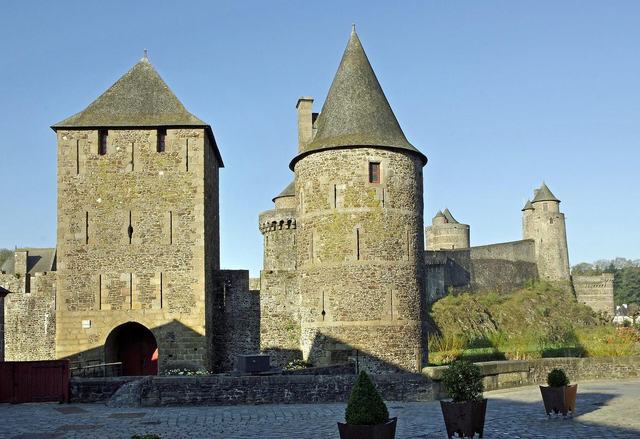
Château de Fougères
Fortified from the eleventh century, the castle was originally built on a rocky promontory emerging from a marsh.

Quimper
Prefecture of the Finistère and traditional capital of Cornouaille, where the twin spires of Saint-Corentin cathedral overlook a half-timbered centre.
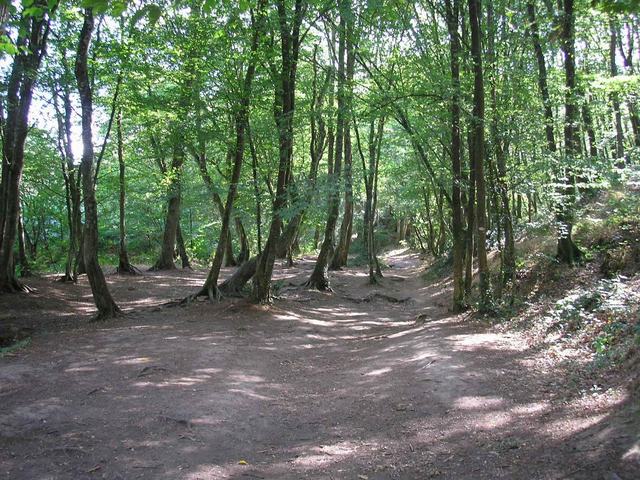
Paimpont et la forêt de Brocéliande
Come and discover Brocéliande and its mysteries. This mythical forest opens its undergrowth to you for a unique stay.
Food and local produce
Breton cooking is based on the sea and on butter. Cancale oysters, scallops, mussels, shellfish and fresh fish are the stars in the ports. The Ferme marine de Cancale helps you understand oyster farming.
The savoury buckwheat galette and the sweet wheat crêpe are the two pillars of the crêperie. They are served with cider, often in a bowl. Kouign-amann, a butter cake, far breton and salted-butter caramels are specialities to try.
To find good produce, favour local markets and producers, and crêperies recommended by locals. In the ports, ask what has just been caught.
- Book in advance at seaside restaurants in July and August.
- A crêpe meal is often simpler and cheaper than a classic restaurant.
- For oysters, ask about the size and the origin.

La Ferme Marine de Cancale
In a pleasant setting overlooking the port of Cancale, let yourself be guided and surprised by the world of the "sea gardeners".
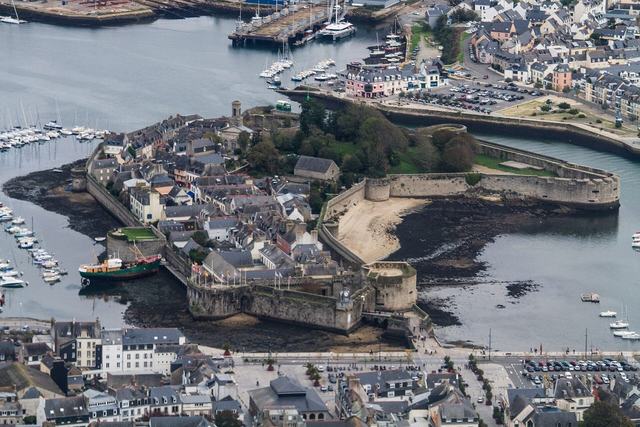
Concarneau
A Breton fishing port known for its Ville Close, a fortified town built on a rocky islet linked to the land by two bridges in the heart of the port.
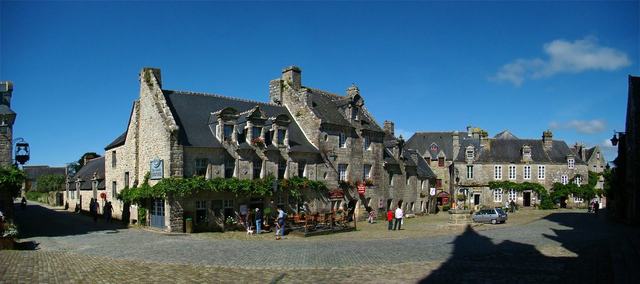
Locronan
A small town that became prosperous in the sixteenth and seventeenth centuries thanks to the sailcloth industry, wonderfully preserved Locronan has kept from its rich past very fine Renaissance granite houses.
Nature and wide open spaces
The coastline is Brittany's great asset. The cliffs of Cap Fréhel and the Château de Fort La Latte overlook the sea; the Pointe du Raz and the Pointe de Dinan offer panoramas over the Atlantic; the pink granite coast, with Les Rochers de Ploumanac'h and Rochers de Trébeurden, fascinates with its rounded boulders.
Beaches vary from one area to another: pale sands at Plage de Lostmarc'h, Plage de la Palue or Plage de Donnant, sheltered beaches on the north coast, islands such as Ile de Sein or Groix, with the Plage des Grands Sables (Groix). Swimming is sometimes dangerous on exposed beaches: respect the flags and instructions.
For hikers, the customs officers' path (GR34) runs along the coast, and the Monts d'Arrée, the Tourbière de Yeun-Elez and the gorges of the Gorges du Corong offer fine routes inland. Lighthouses, such as the Phare d'Eckmühl, the Phare Saint-Mathieu and the Phare du Stiff, are good landmarks.
- Check tide times before going to the beach or an islet.
- On the cliffs, keep away from the edge.
- Always pack a windproof jacket, even in summer.
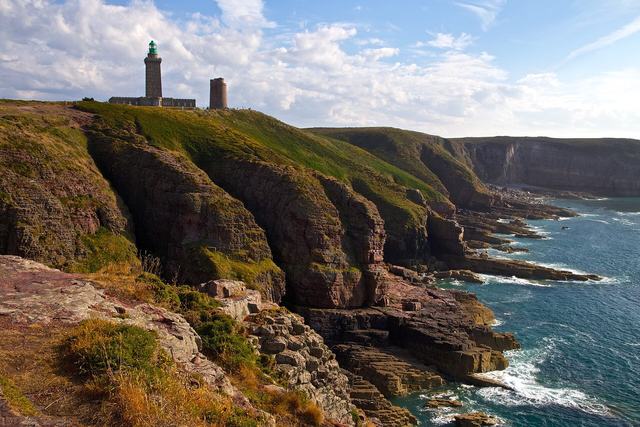
Cap Fréhel
Cap Fréhel is the largest area (nearly 400 hectares) of coastal heath on the French coasts.
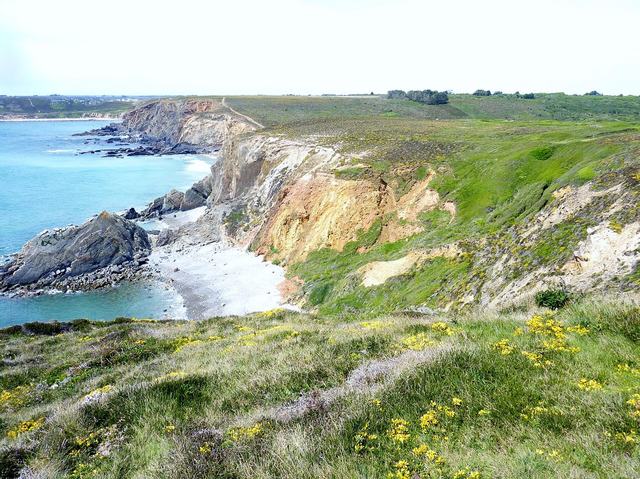
Plage de Lostmarc'h
Wild beach on the Crozon peninsula, between dunes, cliffs and the remains of an Iron Age fort.
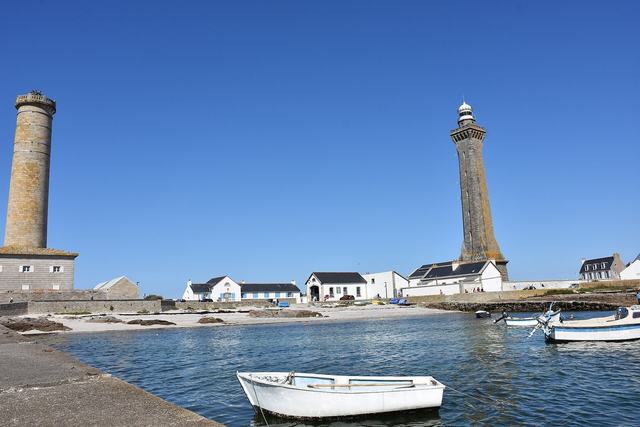
Phare d'Eckmühl
Inaugurated in 1897, it is due to the generosity of the family of the "Prince d'Eckmühl".
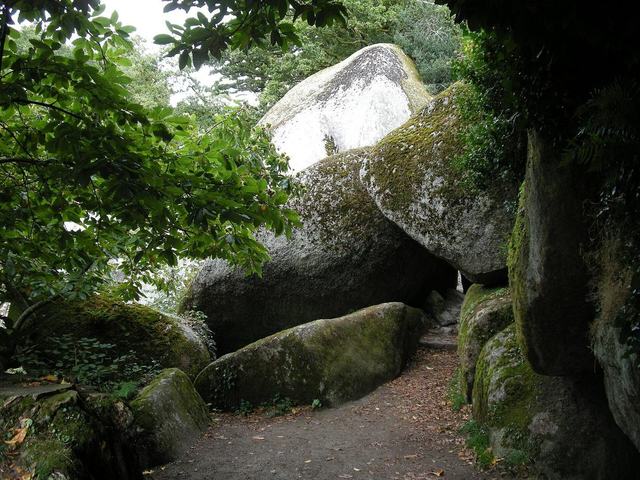
Le Chaos de Huelgoat
Huelgoat is nestled in the heart of a forest massif of more than 2,000 ha (state and private forests). Set beside a small lake that flows into the Rivière d'Argent before tumbling in a cascade into a ravine strewn with a chaos of enormous granite blocks. The land is covered with woods...
When to go and how to plan
From May to September the days are long and conditions more favourable. July and August are the busiest months, with crowds on the coast and in tourist towns such as Saint-Malo and Dinard. June and early September are often a good compromise: pleasant temperatures and calmer sites.
Spring brings moors in flower, and autumn soft light. Winter is wet and windy, but storms also attract lovers of seascapes; some sites then close or reduce their hours.
To organise your days, alternate outdoor and indoor visits: in bad weather, favour museums such as Océanopolis, the Port-musée de Douarnenez, the Cité de la voile Éric Tabarly or the Base sous-marine de Lorient, and keep the coastal landscapes for the sunny spells.
A car is the most practical way to get around. The islands are visited by boat, with timetables that depend on the season and the tide. Trains link the big towns, such as Rennes, Saint-Brieuc, Lorient and Brest, but the hinterland is poorly served.
- Book in advance in high season, especially boats to the islands.
- Pack waterproof shoes and a rain jacket.
- Keep half a day free to adapt to the weather.

Océanopolis
"Océanopolis Brest": the ocean discovery park. Everything you need for an unforgettable day!
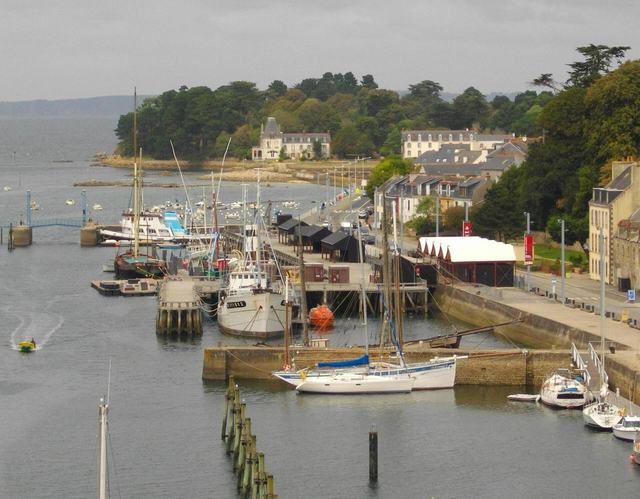
Port-musée de Douarnenez
A museum like no other, devoted to boats and men, of Brittany and elsewhere...

Cité de la voile Éric Tabarly
The Cité de la Voile Éric Tabarly puts the visitor in the heart of ocean adventure, in the world of modern sailing and offshore racing.

Château de Brest
Set on a Gallo-Roman base of the third century, Brest castle was completed by Vauban in the seventeenth century.
Going further
Find all the sites of the region on the page Brittany, or explore a département: