Discovering Vaucluse: a practical guide
Vaucluse concentrates the best-known features of Provence: hilltop villages, lavender fields, ochre cliffs, Roman remains, the Popes' Palace and vineyards. The département is compact, with very different landscapes between Mont Ventoux, the Luberon and the Rhône valley.
This practical guide helps you choose your stops and organise your trip. Underlined site names link to their detailed pages.
Understanding Vaucluse in a few minutes
In the north-west, Vaison la Romaine and the Théâtre antique d'Orange recall Roman times. In the west, the Rhône valley and Avignon, with the Palais des papes. In the centre, the Vaucluse plateau and Mont ventoux. In the south, the Luberon, with Gordes, Roussillon, Lourmarin and Ménerbes.
Distances are short, but village roads are narrow and very busy in summer. Two bases are enough: a town (Avignon or L'Isle-sur-la-Sorgue) and a village in the Luberon.
- Avoid visiting hilltop villages in the middle of the day in summer.
- Park the car at the entrance to villages.
- Bring water and a hat in summer.
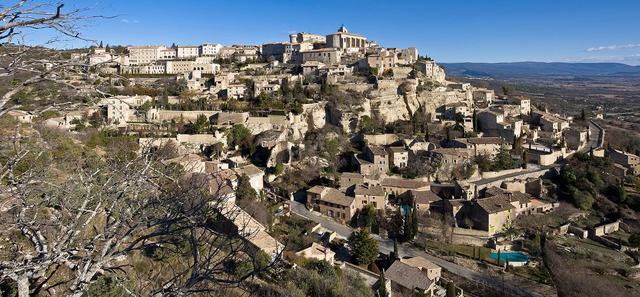
Gordes
This village perched on a promontory seems to stand guard over the Apt valley and the Cavaillon plain.

Roussillon
This village is world-famous for the 18 shades of red ochre of its Fairies' valley and the tormented relief of its old quarries, cliffs that erosion and the mistral continue to gully.
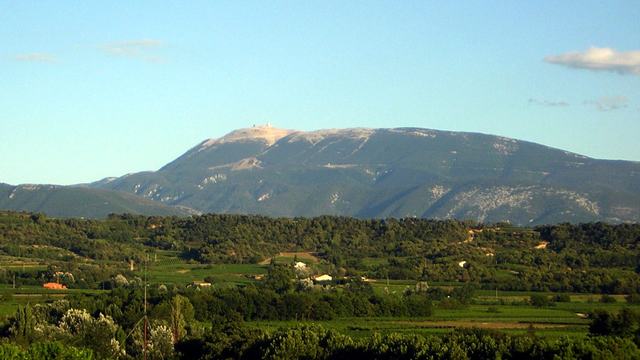
Mont ventoux
How to describe a giant? From 350 m to 1,912 m altitude, how to describe its diversity?

L'Isle-sur-la-Sorgue
Nicknamed "the Venice of the Comtat", L'Isle-sur-la-Sorgue is one of the most attractive towns of the PACA region because of the exceptional character of its living environment.
Culture, history and heritage
The Palais des papes is one of the largest Gothic palaces in Europe. Nearby, the Pont Saint Bénézet - Pont d'Avignon, the Musée du Petit Palais, the Musée Calvet, the Musée Angladon and the Musée lapidaire d'Avignon complete the visit.
Roman heritage is remarkable: Théâtre antique d'Orange, Arc de Triomphe d'Orange and Vaison la Romaine. Villages and abbeys are just as important: Abbaye de Sénanque, Château de Gordes, Château de Lourmarin, Château d'Ansouis, Château de Lacoste, Château du Barroux, Venasque, Séguret. The Le Village des bories and the Musée de la lavande evoke rural life.
- Book the Popes' Palace in advance in summer.
- At Sénanque, visit early to enjoy the calm.
- Allow half a day in Vaison-la-Romaine.

Palais des papes
The Palace of the Popes is the symbol of the Church's influence over Christian Europe in the fourteenth century.

Théâtre antique d'Orange
Located in Provence, the Ancient Theatre of Orange is the best-preserved Roman theatre in the West, listed as a UNESCO World Heritage site.
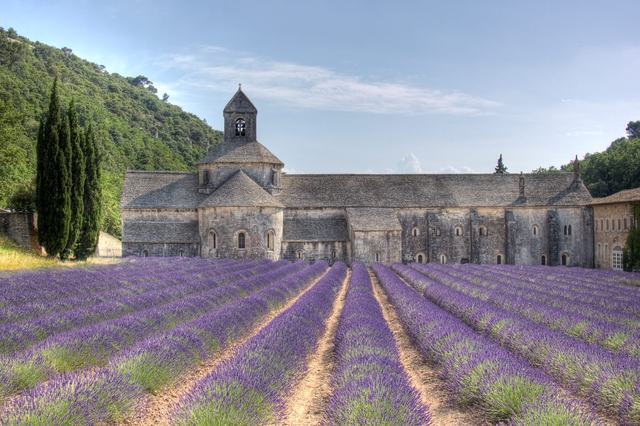
Abbaye de Sénanque
Notre-Dame de Sénanque is a working Cistercian monastery in the commune of Gordes (Vaucluse), in the valley where the Sénancole flows.
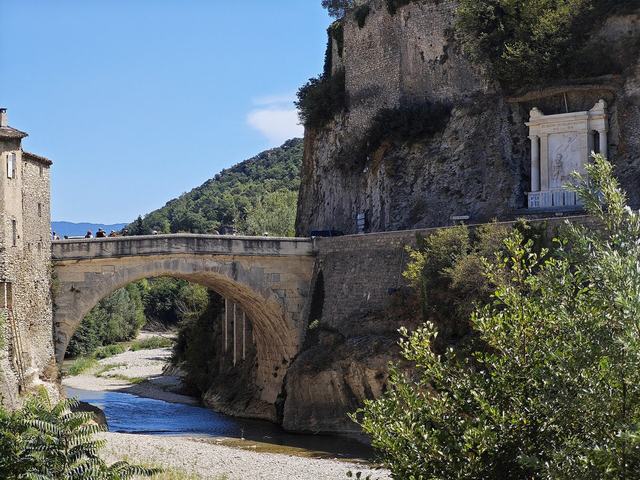
Vaison la Romaine
Between the Rhône valley and Mont Ventoux, Vaison is very close to the Dentelles de Montmirail, in hill country scented with vines and olive trees.
Food and local produce
Provençal cooking is the food of the sun: tapenade, soupe au pistou, ratatouille, daube, Cavaillon melon, truffles in winter, olives and lavender honey. The Vaucluse vineyards include several appellations, such as Châteauneuf-du-Pape, Gigondas, Vacqueyras, Luberon and Ventoux.
Provençal markets, especially the Sunday one in L'Isle-sur-la-Sorgue, are pleasant stops. The cellars offer tastings.
- Arrive early at the L'Isle-sur-la-Sorgue market.
- Nominate a driver for tastings.
- Book in high season.
L'Isle-sur-la-Sorgue
Nicknamed "the Venice of the Comtat", L'Isle-sur-la-Sorgue is one of the most attractive towns of the PACA region because of the exceptional character of its living environment.
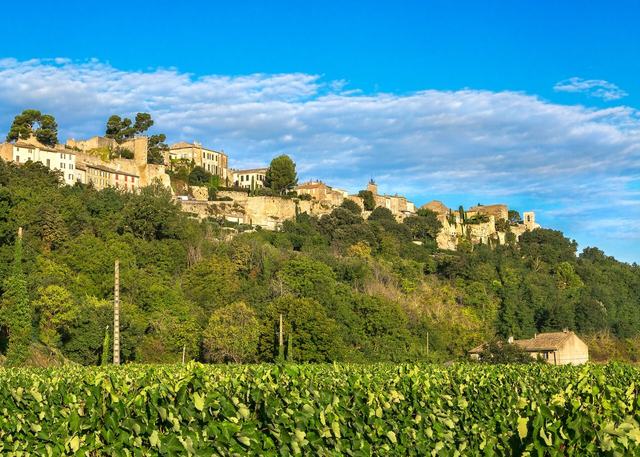
Ménerbes
It was in the Middle Ages that Ménerbes acquired part of its heritage, such as Saint-Hilaire abbey, a former priory where Saint Louis stopped on his return from the Crusades.
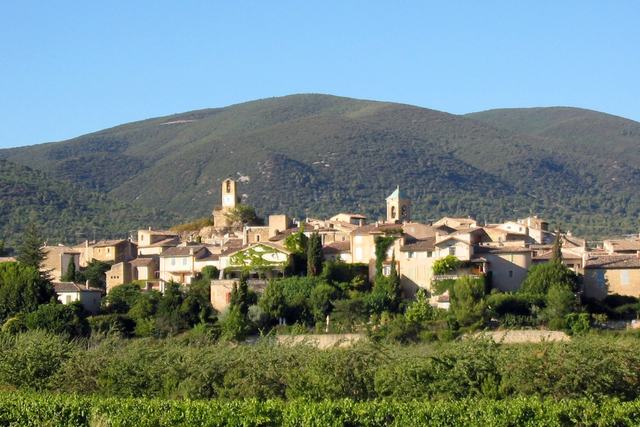
Lourmarin
It was in the sixteenth century that the inhabitants of the Protestant village were massacred by Maynier d'Oppède.
Nature and wide open spaces
The Colorado Provençal is a landscape of ochre, and the Fontaine de Vaucluse is one of the largest springs in France. Gorges are numerous: Gorges de la nesque, Les gorges du Régalon, Les Gorges du Toulourenc. The Mines de Bruoux and the Grotte de Thouzon can be visited underground.
Mont ventoux, known as the Giant of Provence, dominates the landscape. Many cyclists climb it, and the view is very extensive in clear weather. Pack warm clothes, even in summer.
- On Ventoux it can be much colder than on the plain.
- In the ochre areas, stay on the marked paths.
- Lavender usually flowers from late June to late July.
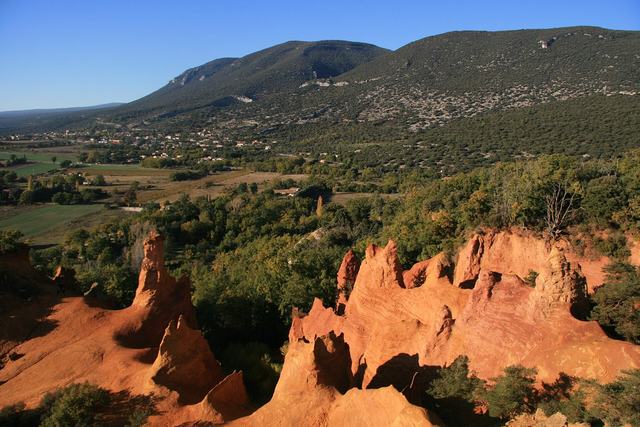
Colorado Provençal
Former open-air ochre quarries, worked until 1992, forming a landscape of blazing colours reminiscent of American canyons.
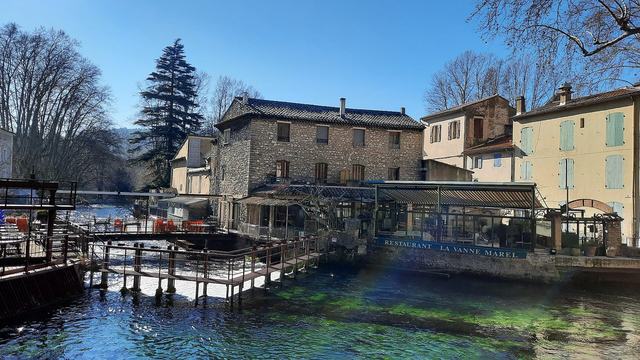
Fontaine de Vaucluse
The emerald-green spring is ranked among the most important emergences in the world.
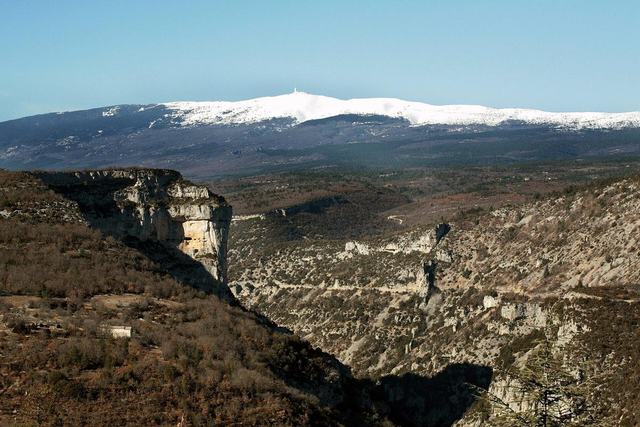
Gorges de la nesque
The gorges road is magnificent; it links Sault to Villes-sur-Auzon. It is little used by cars because the shortest road to join these two villages goes via the Col des Abeilles.

Mines de Bruoux
The Bruoux ochre mines are in the commune of Gargas.
When to go and how to plan
Spring and autumn are the most pleasant. Summer is very hot and very busy, but it is the lavender season. Winter is quiet, with beautiful light and truffle markets.
A car is essential for the Luberon and Ventoux. Avignon is well served by train. A four-day trip can combine Avignon and Orange, the Luberon, then Ventoux and Vaison-la-Romaine.
- Book accommodation well ahead in summer.
- Avoid the hottest hours for visits.
- Check opening hours out of season.

Château de Murs
The oldest remains of the château de Murs date from the twelfth century and were built by the Agoult family, lords of the land of Sault since 1004.
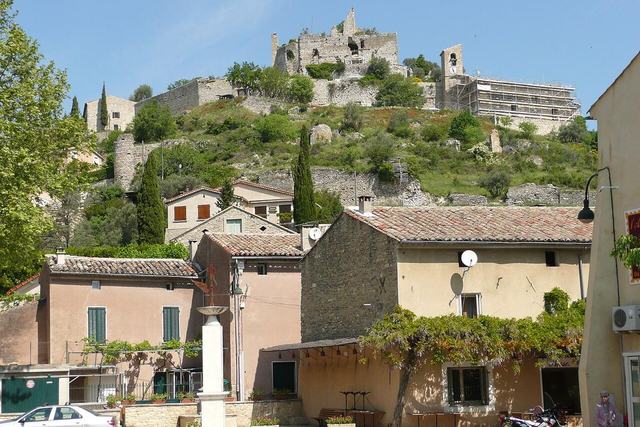
Château d'Entrechaux
What strikes first, whatever road is taken to reach it, is the importance of the site. The ruins of the château d'Entrechaux overlook the valleys. Set on its rocky peak, this old castle dates from the tenth or eleventh century.
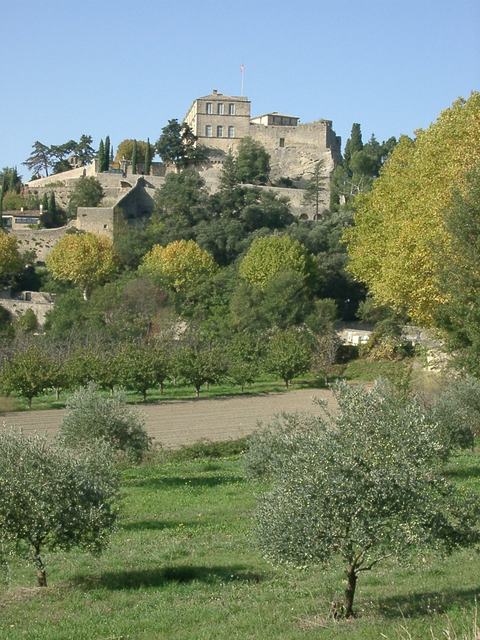
Ansouis
In the Middle Ages, Ansouis occupied an ideal position to control the road between Aix-en-Provence and Apt.
Going further
Explore the départements of this area: