Discovering Rhône: a practical guide
Rhône means Lyon, a city of art and the capital of gastronomy, but also the golden-stone villages of the Beaujolais, the Monts du Lyonnais and the Roman remains of the Rhône valley. A compact département, easy to discover in a few days.
This practical guide helps you choose your stops and organise your trip. Underlined site names link to their detailed pages.
Understanding Rhône in a few minutes
Lyon sits at the centre of the département, where the Rhône and the Saône meet. To the north, the Beaujolais stretches from Villefranche-sur-Saône to the wine-growing hills, with the golden-stone country around Oingt. To the west, the Monts du Lyonnais offer rolling countryside. To the south, the Rhône valley leads towards Vienne and the remains of Saint-Romain-en-Gal.
Lyon is a major rail and road hub. In the city, the metro, tram and funiculars are enough; a car becomes useful for the Beaujolais and the Monts du Lyonnais.
- The funiculars climb to Fourvière from Old Lyon.
- The Beaujolais is less than an hour from Lyon.
- Avoid driving in central Lyon.

Site historique de Lyon
UNESCO World Heritage since 1998, the Historic Site of Lyon is one of the largest protected urban ensembles in Europe: Renaissance Old Lyon and its traboules, the Fourvière hill and its basilica, the Presqu'île and the slopes of Croix-Rousse tell two thousand years of unbroken history since the Roman foundation of Lugdunum.

Oingt
Oingt is a magnificent medieval village, listed and restored, perched on a spur overlooking the Azergues valley where the "Route Fleurie" passes, linking the most beautiful villages of the Pays des Pierres Dorées.

Villefranche-sur-Saône
The historic capital of the Beaujolais, whose long rue Nationale lined with jettied houses leads to the collegiate church of Notre-Dame-des-Marais.
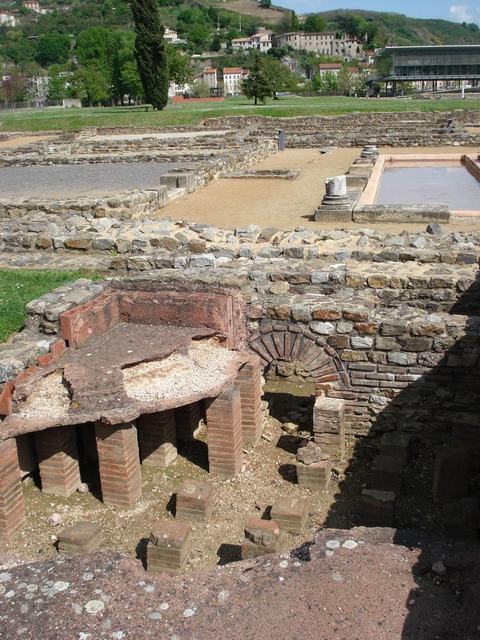
Musée et sites de Saint-Romain-en-Gal- Vienne
The Saint-Romain-en-Gal archaeological museum is in Saint-Romain-en-Gal in the Rhône département above the archaeological site of the same name, in the heart of the ancient Roman city of Vienna.
Culture, history and heritage
The historic site of Lyon is a UNESCO World Heritage site. On the hill, the Basilica of Fourvière overlooks the city, next to the Roman theatres and the Musée gallo-romain de Fourvière. Below, Old Lyon and its Cathedral of Saint-Jean keep their lanes and traboules (covered passageways).
Museums are plentiful: the Musée des Confluences, the Musée des Beaux-Arts de Lyon, the Gadagne museum, the textile museum, the Musée Miniature et Cinéma and the Musée de la résistance et de la déportation. In the Beaujolais, castles such as the Château de Jarnioux, the Château de Montmelas and the Château de Corcelles-en-Beaujolais are worth the detour. The Château de Rochetaillée-sur-Saone houses a motor museum.
- The Lyon City Card gives access to many museums and public transport.
- The traboules are visited on foot, respecting the residents' peace.
- Many Lyon museums close one day a week: check.

La Basilique de Fourvière
The basilica of Notre-Dame de Fourvière overlooks the city of Lyon from the top of the Fourvière hill, on the site of the old Forum of Trajan.

Musée des Confluences
The museum's architecture is incredible! Made of glass, concrete and stainless steel, it rises like a headland at the tip of the confluence of the Rhône and the Saône.

Cathédrale Saint Jean
The Primatial Cathedral of Saint-Jean-Baptiste-et-Saint-Étienne (more simply, Saint-Jean Cathedral) is the seat of the Archdiocese of Lyon (France).

Château de Jarnioux
Built in the twelfth and thirteenth centuries, the château de Jarnioux is one of the best preserved in the Beaujolais, since it never knew a siege. Its 6 towers, one of which 30 metres high, punctuate its imposing structure.
Food and local produce
Lyon is famous for its bouchons, traditional restaurants serving quenelles, saucisson brioché, cervelle de canut (a herb cheese dip) and praline tart. Markets and food halls complete this gourmet culture.
The Beaujolais produces renowned red wines, from the crus to the Beaujolais nouveau of November. To the south, the Rhône valley slopes give Côte-Rôtie and Condrieu. The Monts du Lyonnais are a land of cheeses and farm produce.
- Book your bouchon for the evening, especially at weekends.
- Beaujolais nouveau is celebrated on the third Thursday of November.
- For the cellars, nominate a driver.
Oingt
Oingt is a magnificent medieval village, listed and restored, perched on a spur overlooking the Azergues valley where the "Route Fleurie" passes, linking the most beautiful villages of the Pays des Pierres Dorées.

Château de la Chaize
Since 1967, the castle has been the property of the Marquise de Roussy de Sales who thus succeeded her aunt the Marquise de Montaigu, then the last descendant of this long family line.
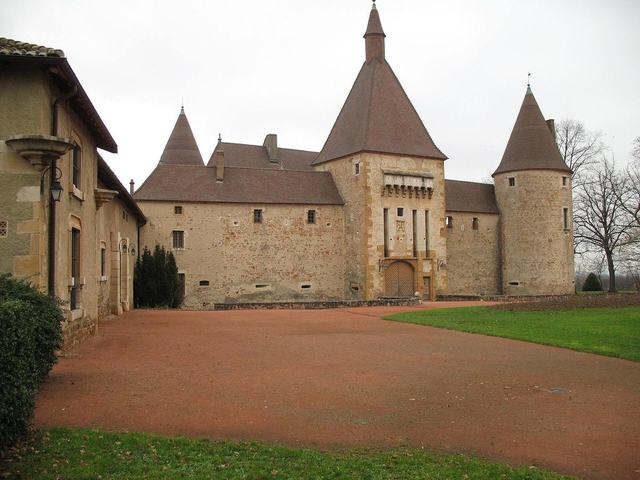
Château de Corcelles-en-Beaujolais
The château de Corcelles was built on a Carolingian-era lookout post. The Douby river that flows at the foot of the château marked the boundary between the dioceses of Autun and Lyon, the counties of Burgundy and the Beaujolais.
Nature and wide open spaces
In Lyon, the Parc de la Tête d'Or and its zoo are a large green space in the middle of the city. To the north, the Musée Espace Pierres Folles presents the geology and fossils of the Beaujolais. The Lac des Sapins, in the upper Beaujolais, is good for swimming and walking.
To the south, the Île du Beurre is a protected natural site on the banks of the Rhône. In the Monts du Lyonnais, the Parc de Courzieu presents wolves and birds of prey. With children, the Grand Lyon aquarium, Mini World Lyon and Labyland are popular outings.
- The Parc de la Tête d'Or is free.
- At the Lac des Sapins, swimming is supervised in summer.
- Allow a day to combine the Beaujolais and Pierres Folles.

Parc de la Tête d'Or
The zoo was created in 1858 in the Parc de la Tête d'Or. It was then the second zoological establishment in France open to the public, after the Ménagerie of the Jardin des Plantes in Paris (1793).

l'Aquarium du Grand Lyon
Come and experience a real world tour of fresh and salt waters. Dive into European rivers and let yourself drift to tropical seas, passing through the Pacific and Atlantic oceans and the great African lakes.

Lac des Sapins
The Lac des Sapins is an artificial lake in the communes of Cublize and Ronno (Rhône), in the Haut-Beaujolais, 65 km north-west of Lyon.

Parc de Courzieu
This 20-hectare park in the Monts du Lyonnais is devoted to both birds of prey and wolves. It specialises in shows: a fun way to discover these animals.
When to go and how to plan
Lyon can be visited all year round. Spring and autumn are ideal for the Beaujolais, with the grape harvest in September. The Festival of Lights, in early December, draws huge crowds: book well in advance.
A four-day trip can combine two days in Lyon (Fourvière, Old Lyon, the Presqu'île, Confluence), one day in the golden-stone Beaujolais and one day in the Rhône valley, between Vienne and Saint-Romain-en-Gal.
- Book accommodation very early for the Festival of Lights.
- Summer can be hot and humid in Lyon.
- Beaujolais roads are narrow: drive slowly.

Château de Montmelas
The château de Montmelas, of which written traces exist from the year 970, was initially a stronghold of the lords of Beaujeu.

Musée gallo-romain de Fourvière
The museum of Gallo-Roman civilisation is in Lyon, near the Roman theatres, on the Fourvière hill, once in the heart of the Roman city of Lugdunum.

Château-Musée de Lacroix Laval
At the gates of the Lyon urban area, the Lacroix-Laval estate houses a sixteenth-century château in the heart of a 115-ha natural park of greenery.
Going further
Explore the départements of this area: