Photo : Karldupart / Wikimedia Commons (CC BY-SA 3.0)
Site historique de Lyon
Inscribed as UNESCO World Heritage since 1998, the Historic Site of Lyon covers one of the largest protected urban ensembles in Europe: nearly 500 hectares that bear witness to two thousand years of continuous history, from the Roman foundation of Lugdunum, capital of the Three Gauls, to the rise of silk-making in the nineteenth century.
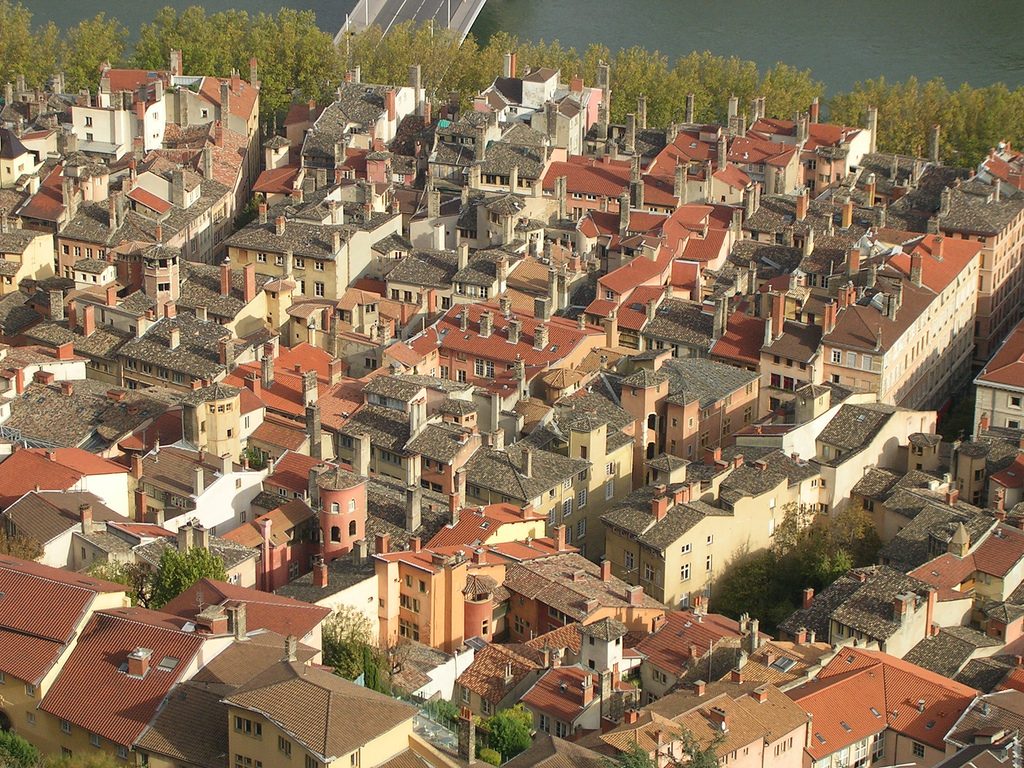
Old Lyon, nestled at the foot of the Fourvière hill, forms the largest Renaissance quarter in France: behind its façades with Italian loggias hides a network of traboules, covered passages that cross buildings from courtyard to courtyard and once let the canuts carry silk sheltered from the weather. On the neighbouring hill, the basilica of Notre-Dame de Fourvière dominates the city with its flamboyant neo-Byzantine architecture, a stone's throw from the remains of the Roman theatre that recall the importance of Lugdunum in Antiquity.
Below, the Presqu'île between Rhône and Saône and the slopes of Croix-Rousse complete this listed landscape. A stroll through the cobbled lanes of Old Lyon, extended by the climb to Fourvière — on foot or by funicular — to enjoy the panorama over the city, remains the best way to discover this exceptional site.


