Discovering Auvergne-Rhône-Alpes: a practical guide
Auvergne-Rhône-Alpes is one of the most varied regions of France: extinct volcanoes, lakes, gorges and caves, historic cities such as Lyon, and the highest peaks in the Alps. It offers as much nature as heritage.
This practical guide helps you choose your stops and organise your trip. Underlined site names link to their detailed pages.
Understanding the region in a few minutes
The region was born from the merger of Auvergne and Rhône-Alpes. It has twelve départements, and is discovered by large areas: volcanic Auvergne, with the Le Puy de Dôme, the Le Lac Pavin and the Plomb du Cantal; the Rhône valley and the Ardèche, with their gorges and caves; the Alps, from Savoie to Haute-Savoie; the Vercors, Chartreuse and Dauphiné; and the Lyon area.
Each area has its own atmosphere. Auvergne is a land of middle mountains, with plateaux, glacial valleys and basalt villages such as Salers. The Alps bring together peaks, passes and lakes, such as Lac d'Annecy. The Rhône and the Ardèche are more southern, with garrigue scrub and gorge landscapes.
For a trip of a few days, it is better to choose one area: for example the Ardèche and Drôme, the lakes of Annecy and Le Bourget, or the volcanoes of Auvergne.
- Distances are long between Auvergne and the Alps: allow three to four hours' drive.
- Mountain roads are slow and sometimes closed in winter.
- For the high mountains, always check the weather.
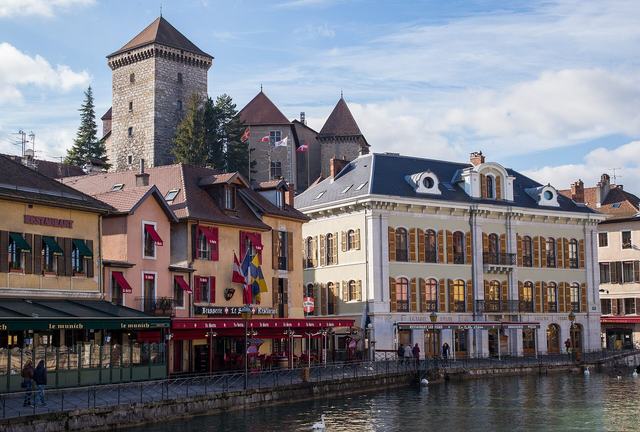
Annecy
Nicknamed the "Venice of the Alps" for its canals lined with colourful houses, this Savoyard prefecture overlooks the clear waters of its lake.
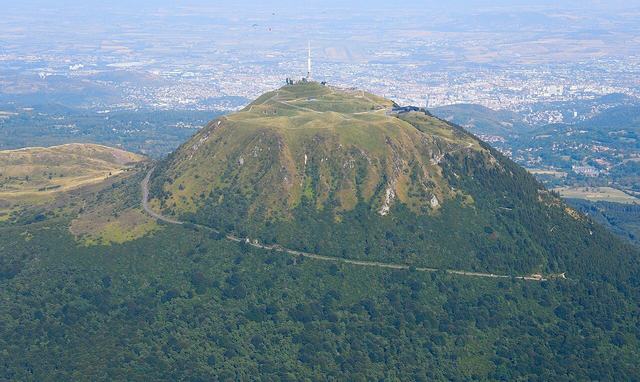
Le Puy de Dôme
The Puy de Dôme is a dormant volcano of the Chaîne des Puys, in the Massif Central. It is about fifteen kilometres from Clermont-Ferrand and gave its name to the Puy-de-Dôme département.
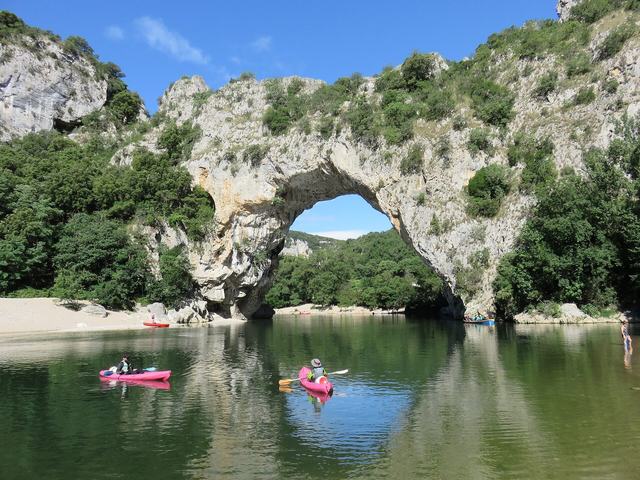
Arche de pont d'Arc
34 metres high and 59 metres wide at water level, the Pont d'Arc is a superb natural arch in the heart of the Ardèche, near Vallon-Pont-d'Arc.

Grenoble
Former capital of the Dauphiné nestled at the confluence of the Isère and the Drac, encircled by three Alpine massifs visible from the city centre.
Culture, history and heritage
Lyon, a World Heritage city of art and history, is the region's great cultural centre, with its historic site, museums such as the history museum and its traboules (covered passageways). Vienne and the Saint-Romain-en-Gal site evoke Roman times.
Romanesque art is very present in Auvergne, with its volcanic-stone churches, and the towns of Le Puy en Velay, Saint-Flour and Lavaudieu with its cloister. Castles are numerous: Château d'Annecy, Château de Crussol, Château de Murol, Château de Chazeron, Château de Rochebaron.
The region also has a rich industrial and scientific heritage: Musée de la Coutellerie de Thiers, L'Aventure Michelin, Vulcania. Spa towns such as Vichy and Aix-les-Bains recall the tradition of taking the waters. Several sites evoke memory, such as the Mémorial des enfants d'Izieu.
- Lyon is explored on foot, by metro and by funicular.
- For Auvergne castles, check opening days: many are seasonal.
- Lyon's museums are often closed one day a week.

Site historique de Lyon
UNESCO World Heritage since 1998, the Historic Site of Lyon is one of the largest protected urban ensembles in Europe: Renaissance Old Lyon and its traboules, the Fourvière hill and its basilica, the Presqu'île and the slopes of Croix-Rousse tell two thousand years of unbroken history since the Roman foundation of Lugdunum.

Le Puy en Velay
Located in the south-east of the Massif Central, starting point of the "Via Podiensis" to Santiago de Compostela in Spain, Le Puy-en-Velay is above all an exceptional site.
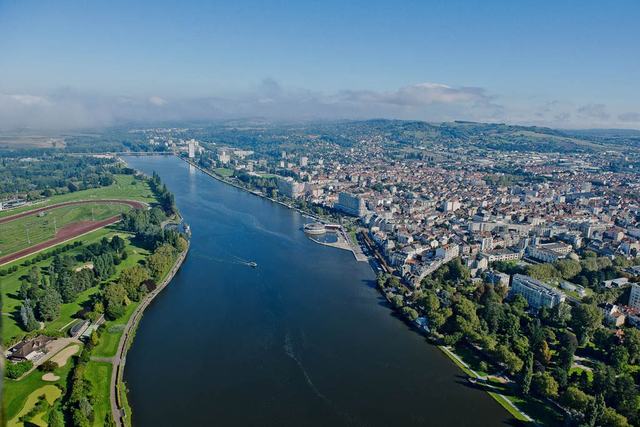
Vichy
Queen of spa towns, Vichy unfolds along the Allier an exceptional Belle Époque heritage — Parc des Sources, thermal baths and villas — which earned it UNESCO World Heritage inscription in 2021.
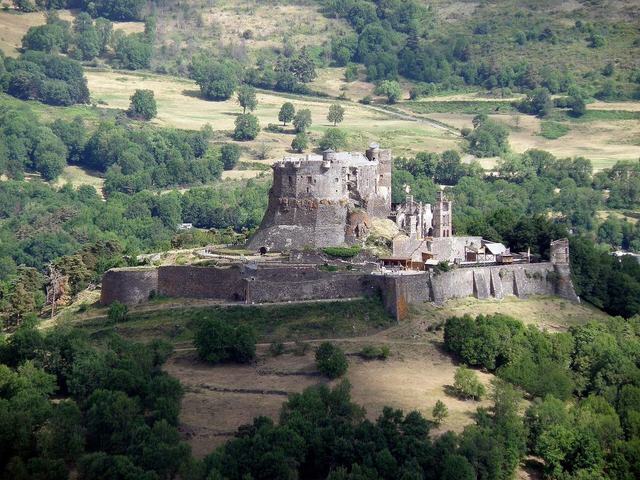
Château de Murol
Built on a basalt cone, the castle overlooks the surroundings. Built in the thirteenth century, the fortress belonged to the Murol and Estaing families. It remains one of the finest medieval ruins in Auvergne.
Food and local produce
The region's table is rich and varied. In Lyon, bouchons serve quenelles, charcuterie and tablier de sapeur (breaded tripe). Auvergne is famous for its cheeses: Cantal, Salers, Saint-Nectaire, Fourme d'Ambert and Bleu d'Auvergne, as well as for its Puy green lentils and charcuterie.
Savoie and Haute-Savoie add fondue, raclette, tartiflette, Reblochon and Savoie wines. The Ardèche and Drôme offer chestnuts, honey, nougat and olive products. Wines include Beaujolais, Côtes-du-Rhône, Savoie wines and those of the Bugey.
Markets and farms are good places to taste local products. Many producers offer visits and tastings, especially in Auvergne and Savoie.
- Book good restaurants in Lyon in advance.
- In the mountains, high-altitude restaurants fill up quickly in summer.
- For cheeses, ask the producer for advice.
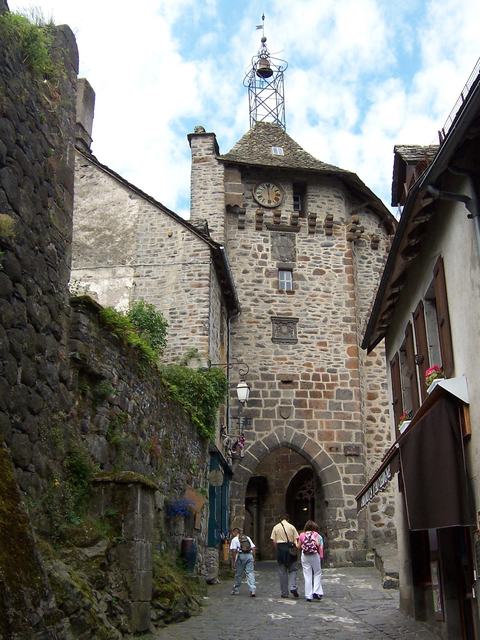
Salers
It was around the castle of the barons of Salers that the town grew up, and it was in the fifteenth century that the ramparts were built to protect against the English.
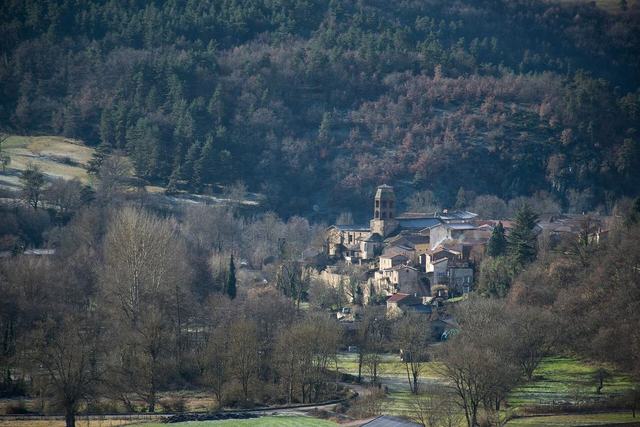
Lavaudieu
Lavaudieu (the valley of God) has much to offer the lover of Romanesque architecture. This village was indeed the site of a Benedictine abbey founded in the eleventh century.
Le Puy en Velay
Located in the south-east of the Massif Central, starting point of the "Via Podiensis" to Santiago de Compostela in Spain, Le Puy-en-Velay is above all an exceptional site.
Nature and wide open spaces
The region offers exceptional natural landscapes. The Auvergne volcanoes form a setting of puys and crater lakes, such as the Le Lac Pavin and the Les Roches Tuilière et de Sanadoire. Waterfalls are numerous: Cascade de Queureuilh, Cascade de la Baume and the La cascade du Ray-Pic.
The Ardèche and Drôme have the Les gorges du Chassezac, the Gorges de la Beaume, the Bois de Paiolive and large caves: Aven d'Orgnac, Aven Grotte de Marzal, Grottes préhistoriques de Soyons. The Vercors and Chartreuse have the Le Mont Aiguille, the Gorges de la Bourne (Les Grands Goulets) and the Grottes de Choranche.
In the Alps, lakes are one of the great pleasures of summer: Lac d'Annecy, Lac d'Aiguebelette, Lac de la Muzelle, Le Lac vert (Passy), Lac Blanc (Aiguilles Rouges). The legendary passes, such as the Col du Galibier, the Col de l'Iseran and the Col de la Croix de Fer, offer high-mountain landscapes.
- For gorges and caves, bring suitable shoes.
- At altitude, the weather changes quickly: pack warm clothes.
- Passes are closed in winter: check before you go.
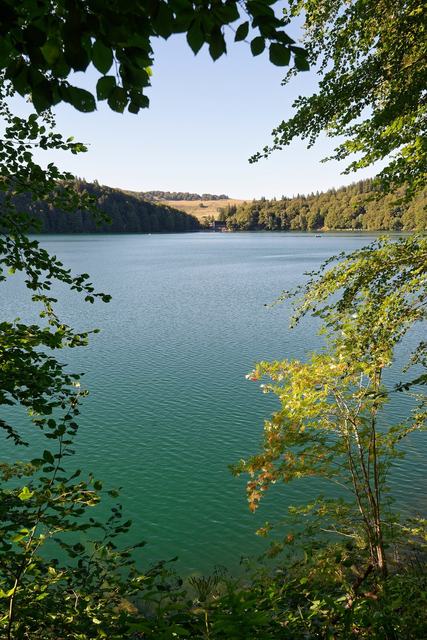
Le Lac Pavin
Due to a powerful volcanic explosion, Lac Pavin is a crater lake carved on the north flank of the Puy de Montchal (1,411 m).

Aven d'Orgnac
The Aven d'Orgnac, first of all: 30,000 m² of developed caves to visit down a staircase of nearly 800 steps that takes you 150 m underground, to discover a world of concretions, stalagmites and stalactites.
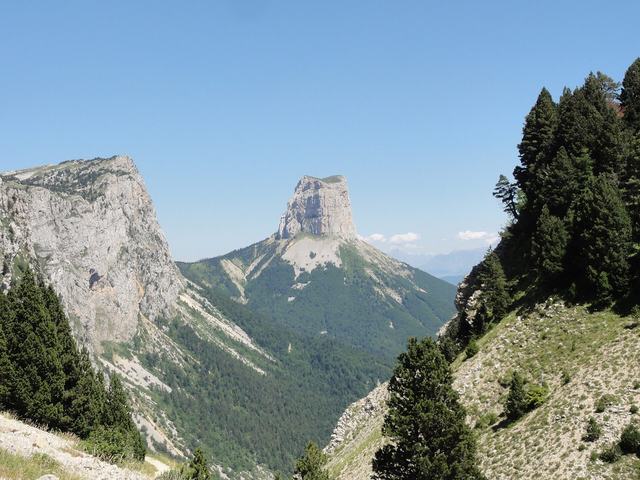
Le Mont Aiguille
Mont Aiguille, one of the seven wonders of the Dauphiné. Mont Aiguille was once called "Mont Inaccessible" because climbing it was thought impossible.
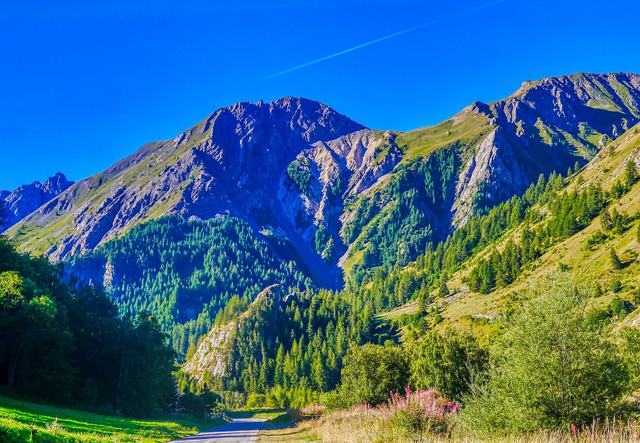
Col du Galibier
At 2,642 metres, one of the most legendary passes of the Tour de France, between the Maurienne and the Briançonnais, offering a 360° panorama over the glaciers of the Vanoise and the Écrins.
When to go and how to plan
Spring and autumn are pleasant for Auvergne, the gorges and the towns. Summer is the best season for the high mountains and lakes, but also the busiest. Winter is the season for winter sports, with many resorts in the Alps, Chartreuse, Vercors and the Massif Central.
A car is useful for exploring Auvergne, the Ardèche and Drôme, where public transport is limited. Big cities such as Lyon, Grenoble, Annecy and Clermont-Ferrand are well served by train. Mountain roads are winding and sometimes closed in winter.
A week's trip can combine two areas: for example the Auvergne volcanoes then the Ardèche, or Lyon then the lakes of Annecy and Le Bourget. Avoid changing base too often: roads are slower than they look.
- Book mountain accommodation in advance in summer.
- Check road conditions in winter, especially at altitude.
- Start hikes early: afternoon storms are frequent.
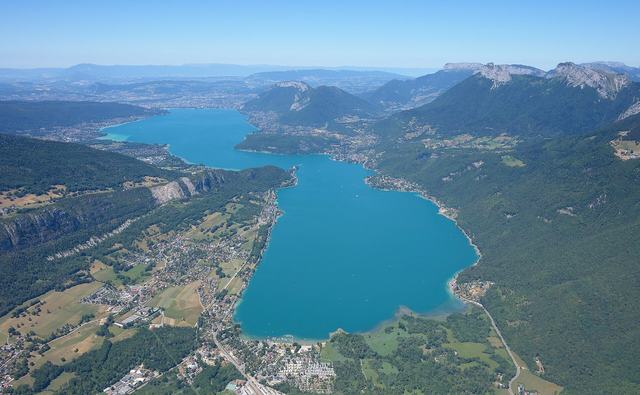
Lac d'Annecy
Lake Annecy, sometimes nicknamed the "blue lake", is a lake in France located in the Alps, in Haute-Savoie.
Le Lac Pavin
Due to a powerful volcanic explosion, Lac Pavin is a crater lake carved on the north flank of the Puy de Montchal (1,411 m).
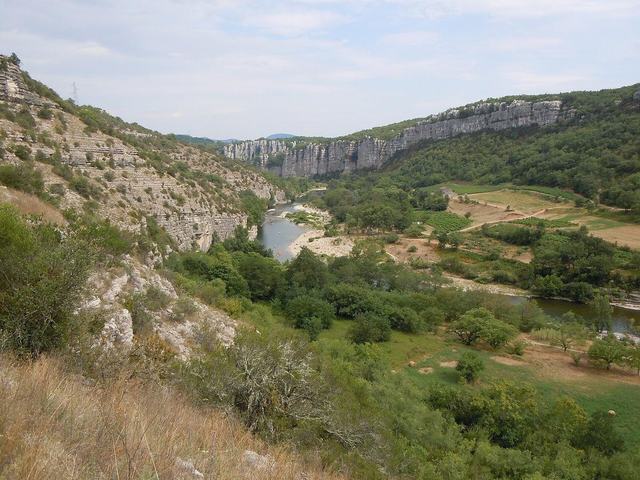
Les gorges du Chassezac
The Chassezac gorges form one of the most impressive canyons in the region. With about 400 metres of drop, its steep cliffs form a rampart between the Massif Central and the Cévennes.
Going further
Find all the sites of the region on the page Auvergne-Rhône-Alpes, or explore a département: