Photo : Zairon / Wikimedia Commons (CC BY-SA 4.0)
Grenoble
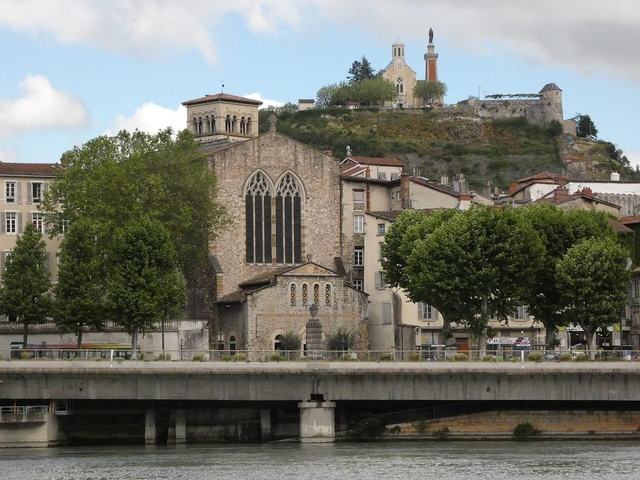
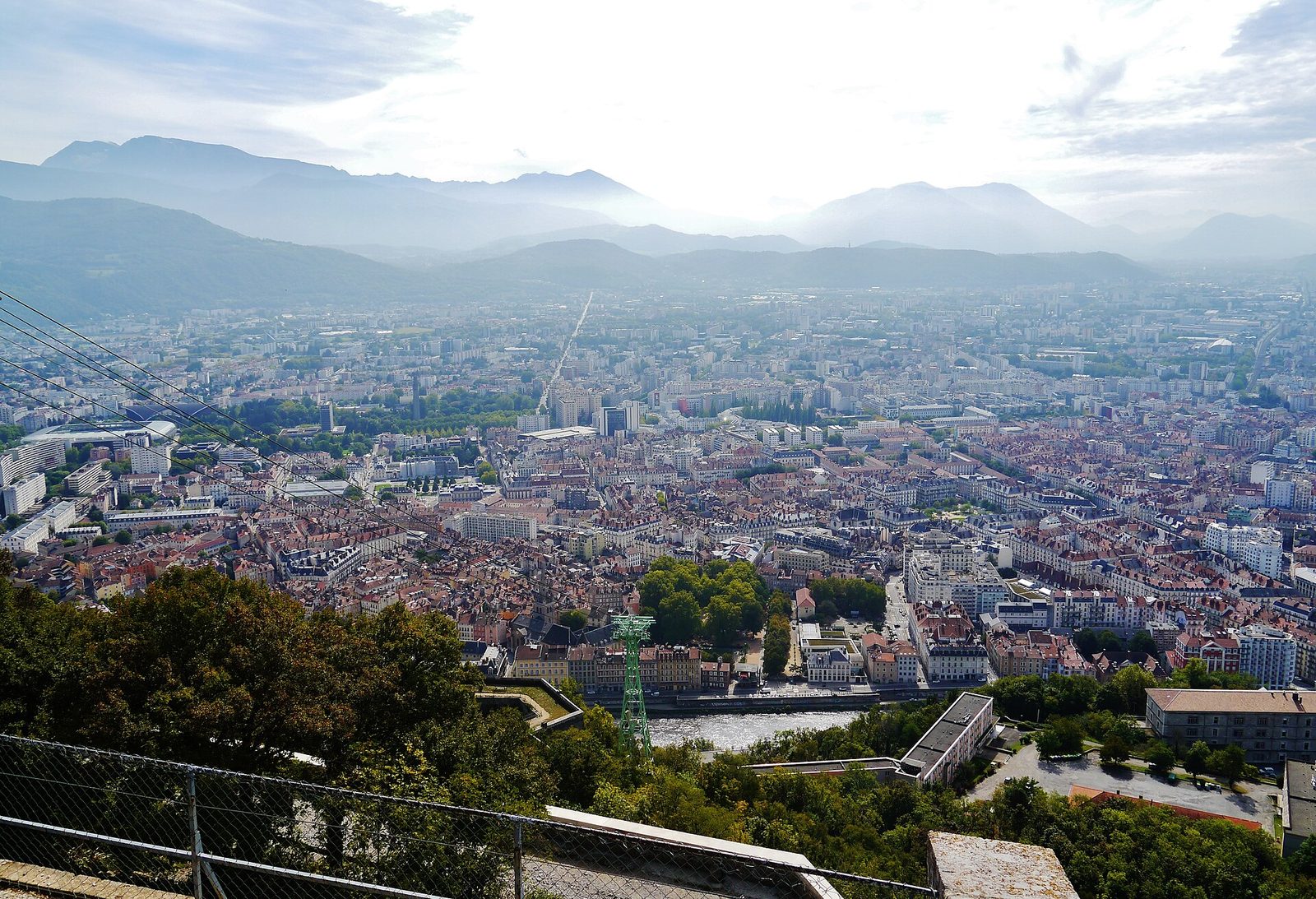
Grenoble is the prefecture of the Isère, in south-eastern France. It has about 156,000 inhabitants, in a conurbation of some 450,000 people. The city spreads across a flat plain, at the confluence of the Isère and the Drac, surrounded by the Chartreuse, Vercors and Belledonne massifs, to the point that Stendhal wrote that at the end of every street rises a mountain.
In Antiquity it was called Cularo, then Gratianopolis in Roman times. In the eleventh century it became the capital of the Dauphiné. It was the site of the Day of the Tiles in 1788, an uprising that preceded the Revolution, and hosted the Winter Olympics in 1968. In the nineteenth and twentieth centuries, its industry relied on glove-making and hydroelectric power.
The Bastille, a fortification overlooking the city, and its cable car with bubble-shaped cabins mark the landscape. Grenoble is today one of Europe's great scientific and technological hubs, which earns it the nickname capital of the Alps.