Discovering Gard: a practical guide
Gard offers exceptional Roman heritage, gorges, caves, stone villages and varied landscapes between the sea, the garrigue scrubland and the Cévennes. It is a département well suited to a stay of a few days.
This practical guide helps you choose your stops and organise your trip. Underlined site names link to their detailed pages.
Understanding Gard in a few minutes
Gard stretches from the Gard Camargue to the foothills of the Cévennes. The main hubs are Nîmes, Uzès, Aigues-Mortes with its Remparts d'Aigues Mortes, the Ardèche and Cèze gorges in Gard, and the Cévennes with the Cirque de Navacelle.
Roads are varied: fast on the plain, winding in the gorges and the Cévennes. For a trip of a few days, choose a base, for example Nîmes or Uzès.
- Nîmes is a good base for Roman heritage.
- Avoid the hot hours in midsummer.
- Book accommodation in advance around the Pont du Gard.

Nîmes
Prefecture of the Gard with exceptional ancient heritage, whose arena and Maison Carrée stand next to the elegant eighteenth-century Jardins de la Fontaine.

Uzès
First duchy of France, an elegant town of art with arcaded squares and blond-stone mansions, dominated by the towers of the Duchy and the cathedral.

Pont du Gard
The Pont du Gard was built shortly before the Christian era to let the Nîmes aqueduct, nearly 50 km long, cross the Gardon.
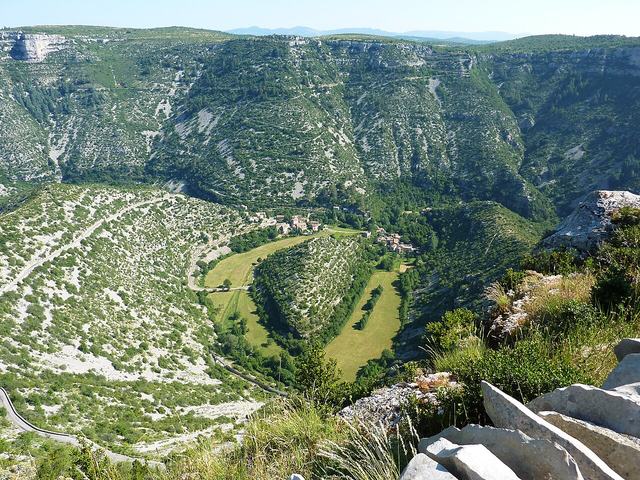
Cirque de Navacelle
Like other famous sites of the Grands Causses, the Cirque de Navacelles is visited every year by millions of tourists who come to admire the cut of the Vis canyon through the limestones and dolomites of the Causse de Blandas.
Culture, history and heritage
Nîmes is a Roman city: Arènes de Nîmes, Maison Carrée à Nîmes, Tour Magne à Nîmes and the Carré d'art for contemporary art. The Pont du Gard is one of the best-preserved Roman aqueducts. The Mas gallo-romain des Tourelles evokes ancient life.
Castles and forts such as Château de Beaucaire, Fort Saint-André, Château de Portes, Château d'Espeyran and Château de Vissec tell the story of the Middle Ages. Characterful villages such as Aiguèze, Montclus and La Roque-sur-Cèze are best discovered on foot. The Musée du Scribe and the Source Perrier are unusual visits.
- A tourist pass lets you visit several monuments in Nîmes.
- At the Pont du Gard, the morning visit is calmer.
- For villages, park at the entrance.

Arènes de Nîmes
The Arènes de Nîmes are a Roman amphitheatre built at the end of the first century, around 90 AD, to host gladiator fights and wild-beast hunts before more than 20,000 spectators seated according to social rank.

Maison Carrée à Nîmes
The Maison Carrée is a hexastyle Roman temple built in the early first century in Nîmes, in the Gard.

Château de Beaucaire
This fortress, one of the largest in France, was rebuilt under Saint Louis after the annexation of Languedoc to the royal domain in 1229.
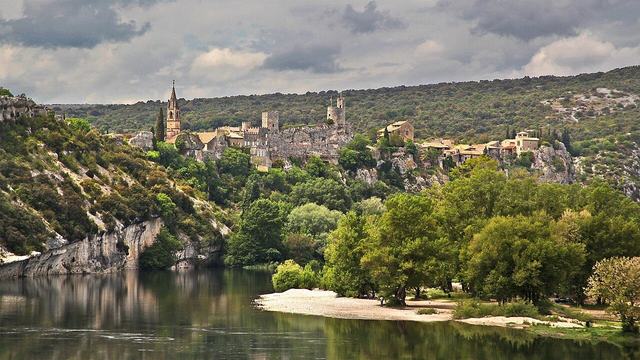
Aiguèze
Aiguèze is a small medieval village that overlooks from its cliff the exit of the Ardèche Gorges, one side perched on a cliff above the Ardèche gorges, the other facing the Côtes du Rhône vineyards.
Food and local produce
Gard cooking is Mediterranean: Nîmes brandade, Camargue bull, sweet Cévennes onions, olives and tapenade. Gard is also wine country, with Costières de Nîmes, Tavel, Lirac and Duché d'Uzès.
The Saturday markets in Uzès are renowned. Festivals and ferrades (bull-branding festivals) are part of the local culture.
- Try Nîmes brandade in a traditional brasserie.
- Nominate a driver for the cellars.
- The Uzès market is very busy on Saturdays.
Uzès
First duchy of France, an elegant town of art with arcaded squares and blond-stone mansions, dominated by the towers of the Duchy and the cathedral.
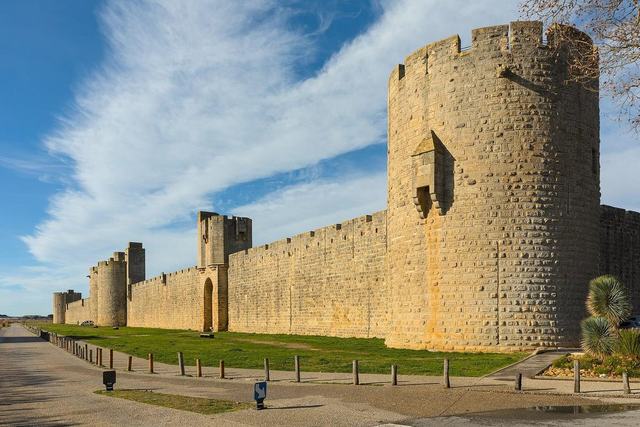
Remparts d'Aigues Mortes
On the marshy expanse of the Camargue stands out the fortified enclosure of Aigues-Mortes, built ex nihilo in the thirteenth century by Saint Louis to give the kingdom of France a port on the Mediterranean.
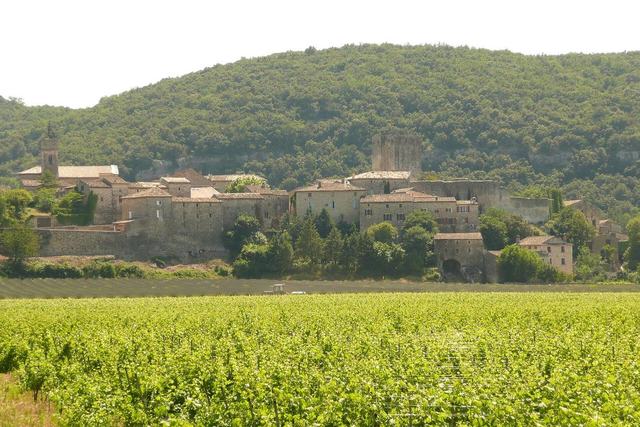
Montclus
The village of Montclus lies in the north-east of the Gard département on a meander of the river Cèze.
Nature and wide open spaces
Gard is rich in gorges and caves: Cirque de Navacelle, Les Concluses de lussan, Grotte du Trabuc, Grotte de la Cocalière, Grotte de la Salamandre, Abime de Bramabiau, Gouffre des Espélugues. Waterfalls such as Cascade du Sautadet, La Baume du Gardon, La Cascade de la Meuse and Source de lafoux are reached on foot.
Les Rochers de Sauve offer a landscape of rocky chaos. For children, the Seaquarium - Musée de la mer and the Musée Le Préhistorama are popular outings.
- In summer, swimming in the rivers is pleasant, but check conditions.
- In the caves, bring something warm.
- Pack good shoes for the gorges.
Cirque de Navacelle
Like other famous sites of the Grands Causses, the Cirque de Navacelles is visited every year by millions of tourists who come to admire the cut of the Vis canyon through the limestones and dolomites of the Causse de Blandas.

Grotte de la Cocalière
The Cocalière cave, in the commune of Courry in the Gard, stretches out its knotty arms, long endless galleries, to visitors who advance, a little intimidated.
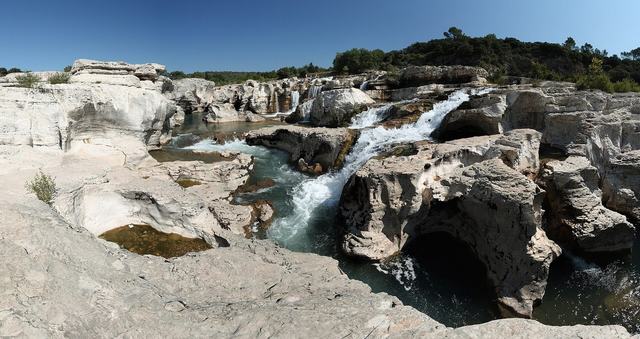
Cascade du Sautadet
The Cèze has carved channels and cavities that end up joining and forming crevasses into which the river rushes.
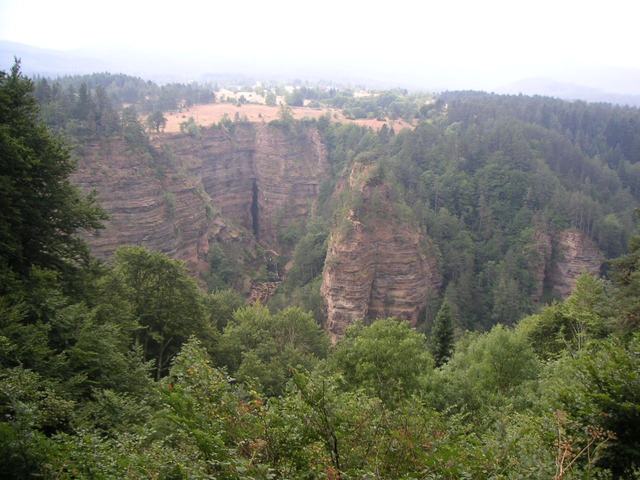
Abime de Bramabiau
The abyss is the only active network (underground river) developed in France.
When to go and how to plan
Spring and autumn are the most pleasant. Summer is hot, with sometimes violent storms in September. Winter is mild, but some sites are closed.
A car is useful for the gorges and villages. Nîmes is well served by train. A four-day trip can combine Nîmes and the Pont du Gard, Uzès and the Cèze gorges, then the Cévennes.
- Book accommodation in advance in summer.
- Avoid the gorges in case of storms.
- Check cave opening hours out of season.

Château de Pondres
It is certain that the original building was built on the foundations of a Ligurian-Celtic village of which nothing remains.
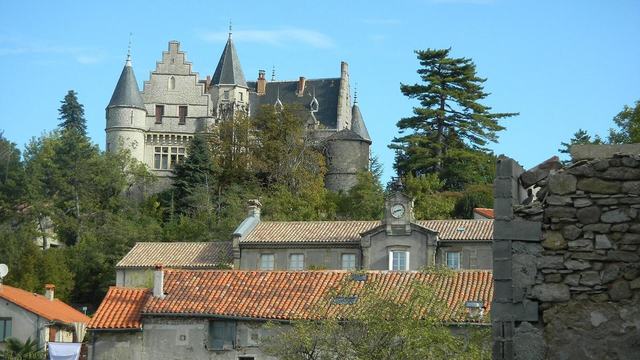
Château de Montdardier
The château de Montdardier is in the commune of Montdardier in the Gard. The fortress built in the twelfth century was several times demolished then restored in 1860 by Viollet-le-Duc.
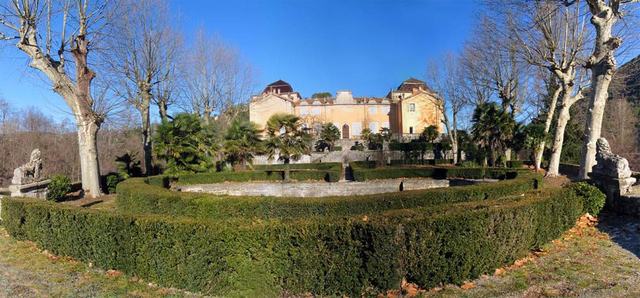
Château de Saint-Laurent-le-Minier
The château de Rochefort, dating from the seventeenth and eighteenth centuries, is the commune's best tourist asset.
Going further
Explore the départements of this area: