Discovering Normandy: a practical guide
Normandy brings together a coast of cliffs and beaches, the valleys of the Seine and the Orne, a bocage of orchards and meadows, great abbeys and memorial sites. It is close to Paris and suits a weekend as well as a week-long stay.
This practical guide helps you choose your stops and organise your trip. Underlined site names link to their detailed pages.
Understanding the region in a few minutes
Normandy has five départements: Seine-Maritime and Eure, in Upper Normandy, and Calvados, Manche and Orne, in Lower Normandy. Seine-Maritime offers the Alabaster Coast and its chalk cliffs, with Les Falaises d'Etretat and Rouen. Calvados brings together the Côte Fleurie, with Honfleur, Plage de Deauville and the D-Day beaches. Manche covers the Cotentin, with Barfleur, Granville and Le Mont Saint Michel. Orne and Eure are more rural, with forests and villages.
Very different landscapes can be found here: cliffs and valleys, sandy coasts, bocage, the Pays d'Auge of apple trees and manors, the Seine valley and its meanders, the forests of Lyons and Eawy. The climate is oceanic, with changeable weather.
Normandy is easy to explore by car. Distances are short: an hour to an hour and a half between two stops is usually enough.
- Allow about two hours' drive from Paris to the coast.
- The weather changes quickly: always pack a windproof layer.
- Tides affect visits to the bay of Mont-Saint-Michel and the coast.
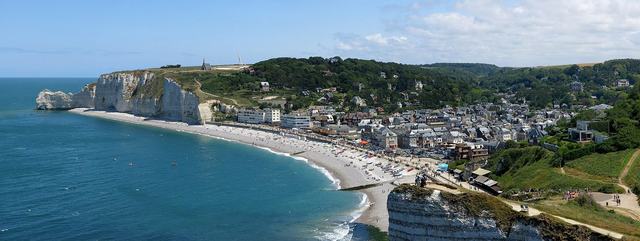
Les Falaises d'Etretat
The cliffs of Étretat are an exceptional natural site where the spectacle of cliffs cut into arches, needles and pinnacles will take your breath away.
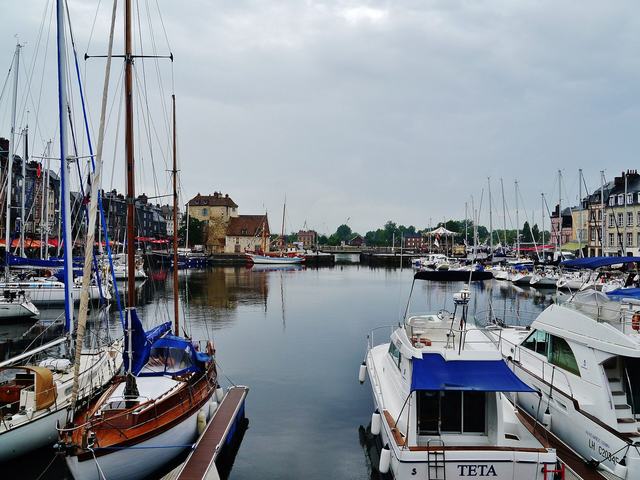
Honfleur
A historic port on the Seine estuary, with its Vieux Bassin lined with tall half-timbered houses, a source of inspiration for the Impressionist painters.

Rouen
Historic capital of Normandy where Joan of Arc was burned, whose Renaissance Gros-Horloge still overlooks a half-timbered shopping street.
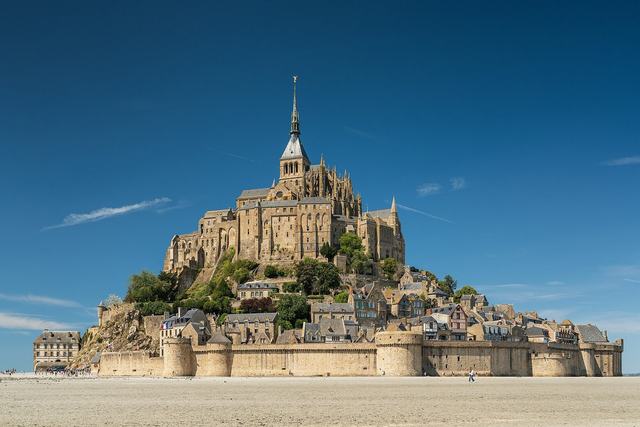
Le Mont Saint Michel
The prodigious architecture of Mont-Saint-Michel and its bay make it the most visited tourist site in Normandy and the third in France (after the Eiffel Tower and the Palace of Versailles), with some 3,200,000 visitors every year.
Culture, history and heritage
Normandy is marked by its history. The Vikings, who settled in the tenth century, gave the region its name. William the Conqueror, Duke of Normandy, conquered England in 1066, and his memory is present at the Château de Caen and the Château de Guillaume-le-Conquérant (Falaise). The Bayeux Tapestry, which you can discover in the town, tells this episode. The Bayeux cathedral is a great Romanesque and Gothic building.
Abbeys are among the region's treasures: the Mont-Saint-Michel abbey, the Abbaye de Jumièges, the Abbaye St Georges de boscherville, the Abbaye de Montivilliers and the Abbaye de Notre-Dame du Bec. Cathedrals such as the Cathédrale Notre-Dame de Rouen and the Cathédrale de Coutances are fine examples of Gothic art.
Several sites recall the Second World War: the Pointe du Hoc, the Le Mémorial de Caen, the Musée du Débarquement Utah Beach, Arromanches 360, the Musée Mémorial d'Omaha, the Mémorial Pegasus and the Centre Juno Beach. Impressionism is also celebrated, with the Fondation Claude Monet and the Musée des impressionnismes Giverny. Rouen also remembers Joan of Arc with the Historial Jeanne d'Arc.
- For the D-Day sites, allow several hours and book in advance in summer.
- The Bayeux tapestry takes about an hour to visit.
- Respect the solemn character of cemeteries and memorials.
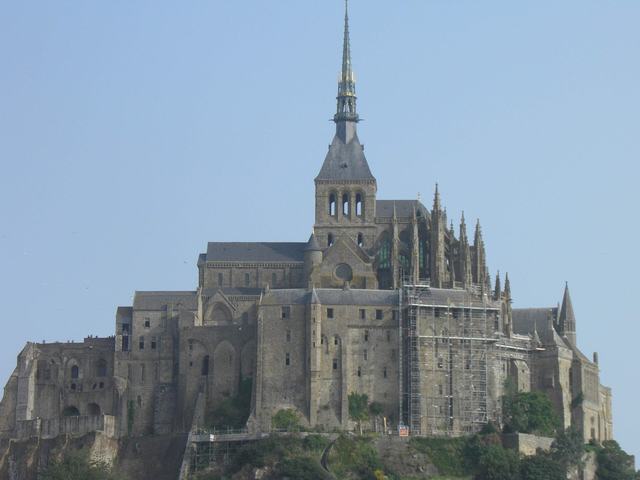
L'Abbaye du Mont-Saint-Michel
On a rocky islet in the middle of immense sands subject to the coming and going of powerful tides, on the border between Normandy and Brittany, rise the "Wonder of the West", a Gothic Benedictine abbey dedicated to the archangel Saint Michael, and the village born in the shelter of its walls.

Château de Caen
Founded in the eleventh century by William the Conqueror, Caen castle has known many vicissitudes during its very long history.
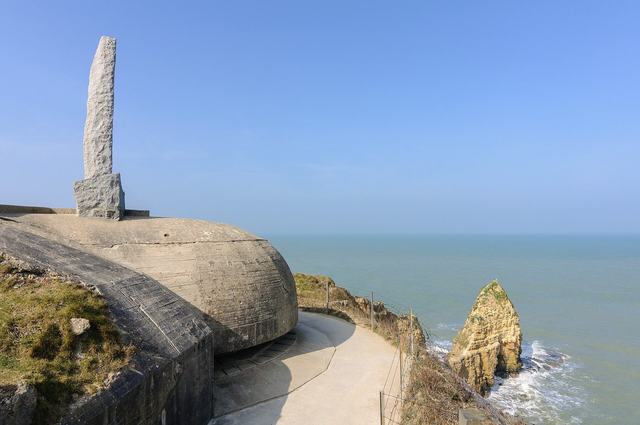
Pointe du Hoc
A steep rocky promontory stormed by the American Rangers on 6 June 1944, whose ground, shattered by craters, and blockhouses still bear witness to the fighting.
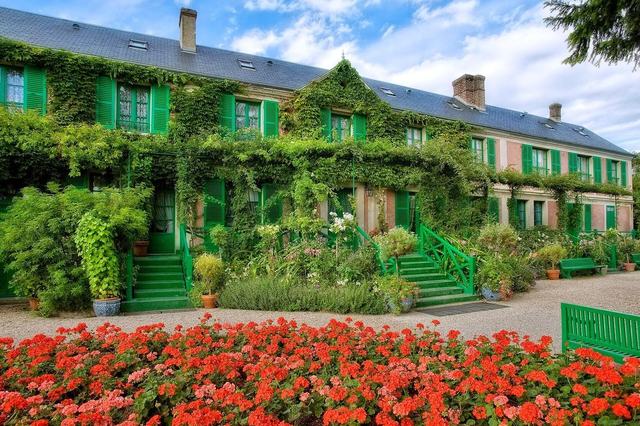
Fondation Claude Monet
The hundreds of thousands of visitors who go to Giverny each year seek fulfilment in the master's gardens.
Food and local produce
Normandy is the land of butter, cream and cheeses: Camembert, Pont-l'Évêque, Livarot and Neufchâtel. The La Maison du Camembert and the Fromagerie Réaux let you discover how they are made. Apples give cider, perry, pommeau and Calvados, which you can taste at the Distillerie Busnel or at the Palais Bénédictine for the liqueur of that name.
The sea provides mussels, oysters, scallops, sole, whelks and shrimps. Specialities include apple tart, tripes à la mode de Caen, sole normande, teurgoule (rice pudding) and caramels. Markets in towns and ports are a good way to taste the produce.
The Chocolatrium and the Maison de la Baie are other places to better understand local know-how.
- For cider and Calvados, favour local producers.
- Seaside restaurants fill up quickly in summer.
- Cheeses are better bought in a cheese shop or at the farm.
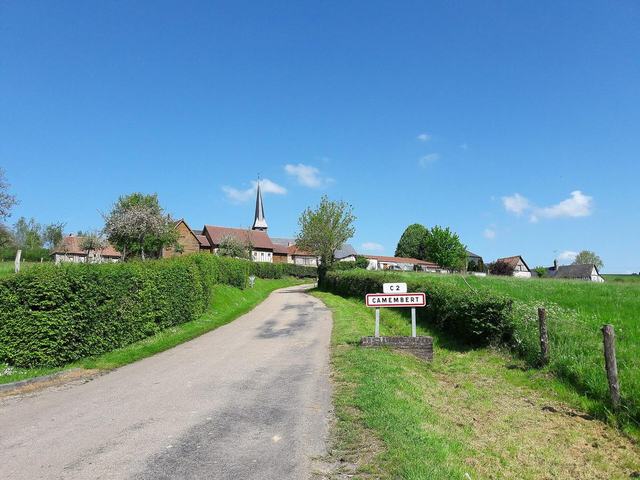
La Maison du Camembert
A fully restored eighteenth-century farm that retraces the history of camembert since 1791, the date of its creation.
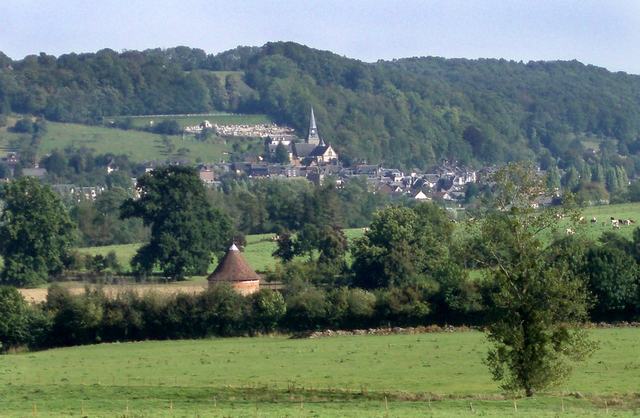
Distillerie Busnel
Visit a working distillery and discover each step of this slow process that turns the apple into an amber nectar, Calvados... In a warm and typically Norman setting, you relive the authentic history of Calvados.
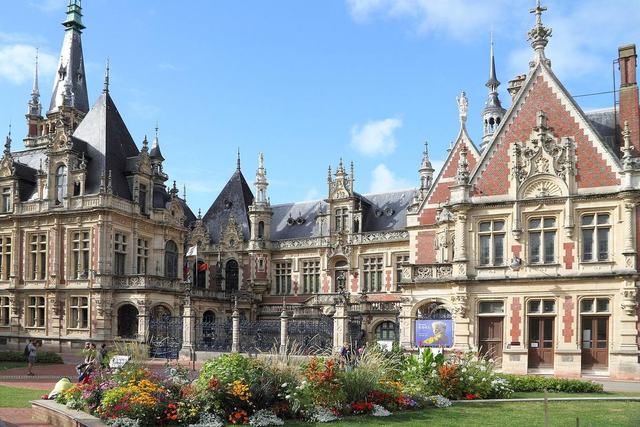
Palais Bénédictine
The Palais Bénédictine is a building mixing neo-Gothic and neo-Renaissance styles, built in the late nineteenth century at Fécamp for Alexandre-Prosper Le Grand, a spirits merchant who made his fortune inventing and marketing the Bénédictine liqueur.
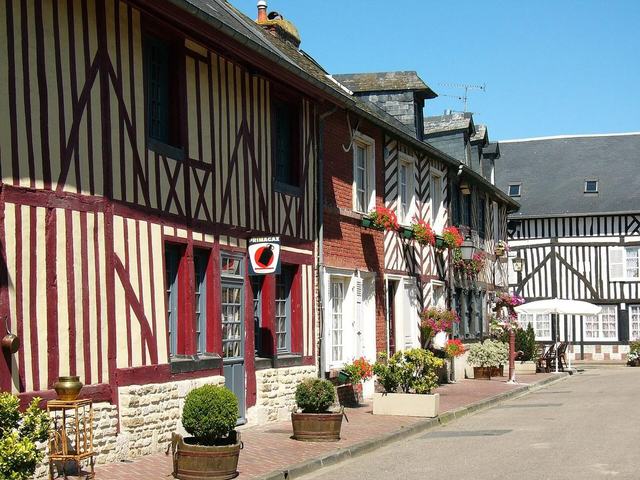
Beuvron-en-Auge
A little jewel of Norman architecture, dominated by half-timbering, Beuvron-en-Auge is classified as a "most beautiful village of France".
Nature and wide open spaces
The coastline is the great asset: chalk cliffs at Les Falaises d'Etretat, Cap d'Antifer and Les Falaises des Andelys, the cliffs of the Les Falaises des Vaches Noires, the bay of Mont-Saint-Michel and Cotentin capes such as the Le Nez de Jobourg. The beaches of Calvados and Manche are huge at low tide. The Phare de Gatteville is a landmark of the Barfleur point.
Inland, gorges and rocks are more discreet: Gorges de la Vire, La Roche d'Oetre, La Brèche du Diable, Fosse Arthour and the Les cascades de Mortain. Forests, such as the Forêt d'Eawy, offer lovely walks, and the Chêne d'Allouville-Bellefosse is a remarkable tree.
To see animals, Normandy has several parks: Le Cerza, Parc Zoologique de Cleres, Le Bois des Aigles. Always follow safety instructions near cliffs and watch the tide times.
- Keep away from the edge of the cliffs.
- Check tide times before going to the beach or the foreshore.
- Pack waterproof shoes for coastal paths.
Les Falaises d'Etretat
The cliffs of Étretat are an exceptional natural site where the spectacle of cliffs cut into arches, needles and pinnacles will take your breath away.
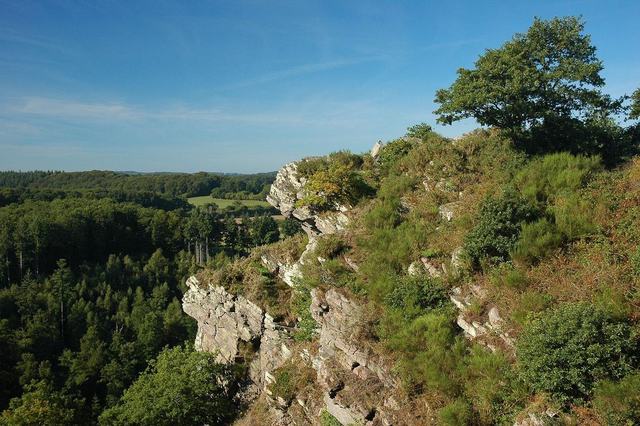
La Roche d'Oetre
The Roche d'Oëtre, locally called "Oître", lies in the heart of the Suisse Normande, in the commune of Saint-Philbert-sur-Orne. It is a magnificent rocky ridge overlooking the Rouvre by about 120 metres.
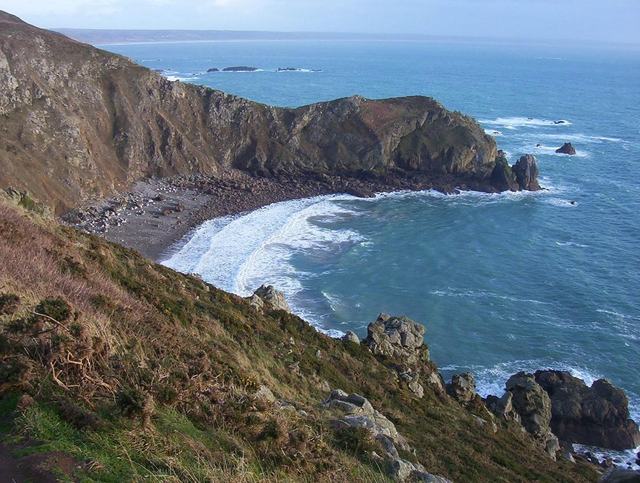
Le Nez de Jobourg
The region's main site is the grandiose Nez de Jobourg, an ornithological reserve. These cliffs are among the highest in Europe (128 m).
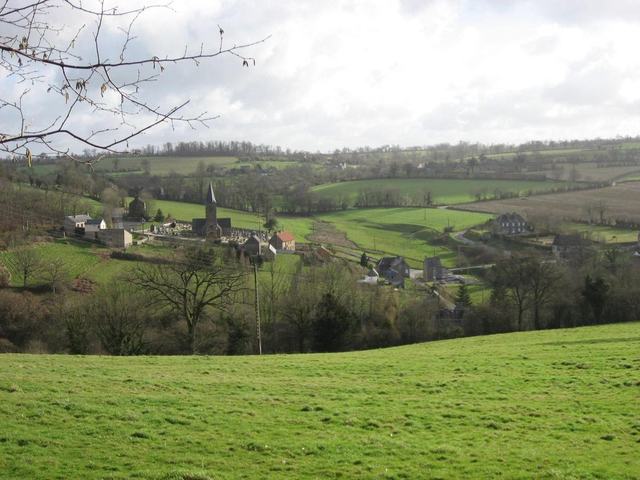
Gorges de la Vire
In the south-west of the département, the Bocage Virois, crossed by the rivers Vire and Souleuvre, lies in a landscape of great variety: granite plateaus alternate with valleys carved by schist, offering a contrasting succession of wooded hills, sheer faces…
When to go and how to plan
From May to September conditions are better and the days long. June and September are excellent months: calmer, with often more stable weather. Summer is very busy on the Côte Fleurie and at Mont-Saint-Michel. Autumn is pleasant, with apple trees laden with fruit; winter is cool, but the beaches are beautiful in clear weather.
A car is the most practical way to get around. Rouen, Caen and Bayeux are explored on foot, and a regional train serves them. To go to Mont-Saint-Michel, start early: it is the most visited site in the region and the crowds are heavy in the middle of the day.
A four- to five-day trip can combine three areas: Rouen, Étretat and the Seine valley; Honfleur, Deauville and the Pays d'Auge; Bayeux, the D-Day beaches and Mont-Saint-Michel.
- Book coastal accommodation in advance in summer.
- Avoid Mont-Saint-Michel in the middle of the day.
- Have a plan B for rain: museums, abbeys and towns.
Rouen
Historic capital of Normandy where Joan of Arc was burned, whose Renaissance Gros-Horloge still overlooks a half-timbered shopping street.
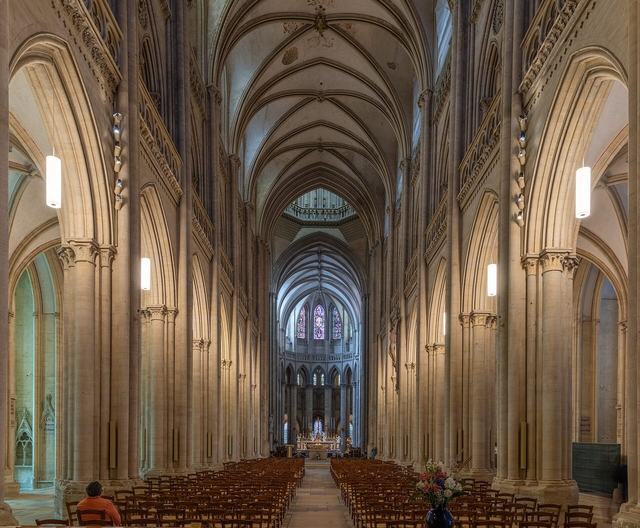
Cathédrale de Coutances
Notre-Dame de Coutances cathedral is a thirteenth-century Gothic cathedral in Coutances, in the Manche département, in Normandy.

Musée des beaux-arts de Rouen
The Fine Arts Museum brings together one of the most prestigious collections in France.

La Cité de la Mer
The Cité de la Mer in Normandy is THE place devoted to the underwater world that you must not miss!
Going further
Find all the sites of the region on the page Normandy, or explore a département: