Discovering Corsica: a practical guide
Corsica is a mountain island ringed with beaches, with scented maquis scrub, stone villages, fortified towns and a strong identity. Within a few kilometres you pass from sea to summit, from sandy beaches to gorges.
This practical guide helps you choose your stops and organise your trip. Underlined site names link to their detailed pages.
Understanding the island in a few minutes
Corsica has two départements: Corse-du-Sud, with Ajaccio, Bonifacio and the Golfe de Porto, and Haute-Corse, with Bastia, Calvi and the Désert des Agriates. The island is crossed by a mountain range that splits the territory in two. The roads are winding: always allow more time than the kilometres suggest.
Each area has its own character: Balagne and Cap Corse in the north, the west coast with its calanques, the mountainous centre, the flatter east coast, and the south with Bonifacio and its cliffs. Distances look short, but are long by car.
For a first trip, it is better to choose one or two areas rather than cross the island.
- Allow about three hours between Ajaccio and Bastia.
- Mountain roads are narrow: drive slowly.
- Always leave some slack in your schedule.
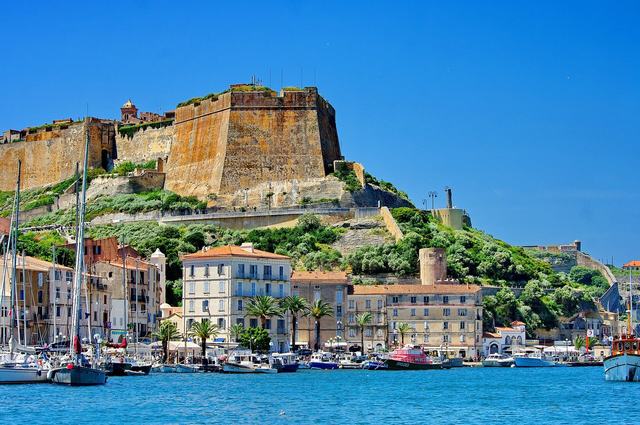
Bonifacio
A fortified town perched on an impressive limestone cliff at the southern tip of Corsica, whose citadel overlooks a deep natural harbour.
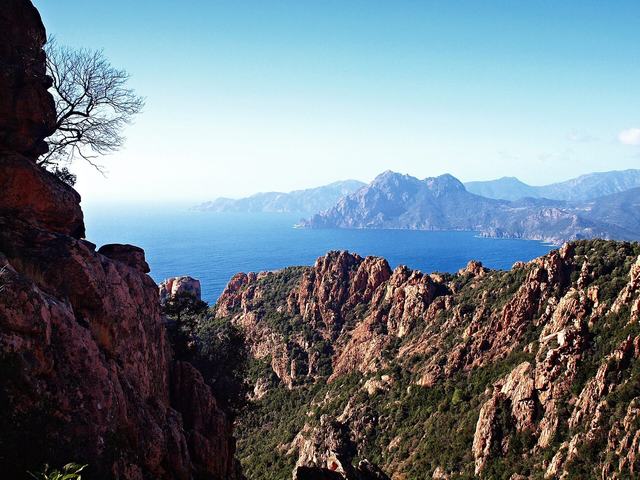
Golfe de Porto
A gulf on Corsica's west coast, UNESCO World Heritage, framed by the red cliffs of the Calanche de Piana and the Capo Rosso massif.
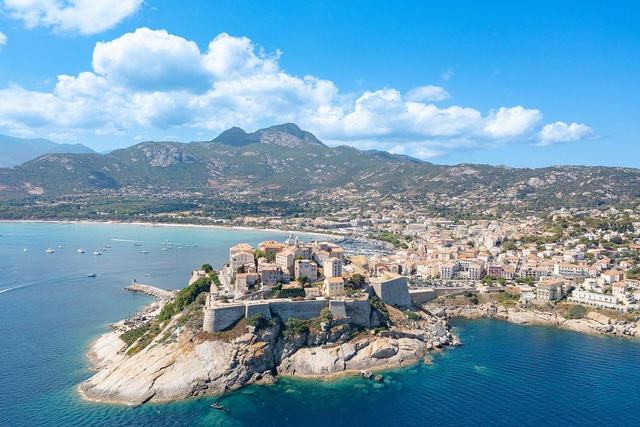
Calvi
Main town of the Balagne, dominated by its Genoese citadel perched on a rocky pinnacle facing a vast gulf lined with fine-sand beaches.
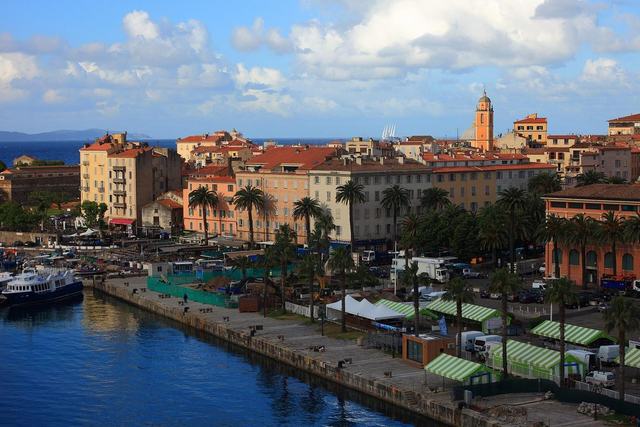
Ajaccio
Prefecture of Corse-du-Sud and chief town of the island, birthplace of Napoleon Bonaparte, nestled at the head of a vast gulf facing the setting sun.
Culture, history and heritage
The history of Corsica is tied to the Mediterranean. The Genoese left coastal towers, citadels and fortified towns, such as Bonifacio and Calvi. The prehistoric site of Site archéologique de Filitosa preserves statue-menhirs. Ajaccio is the birthplace of Napoleon, recalled by the Musée Fesch and the Musée de la Maison Bonaparte.
Mountain villages, such as Piana or Sant Antonino, keep their stone houses and churches. The Corsican language, polyphonic songs and local traditions are part of the island's identity. Museums, such as the Musée de Bastia, help you understand the history.
The Château de la Punta is a remarkable nineteenth-century building, currently being restored.
- For archaeological sites, bring good shoes.
- Ajaccio's museums are often closed one day a week.
- Respect places of worship and local customs.
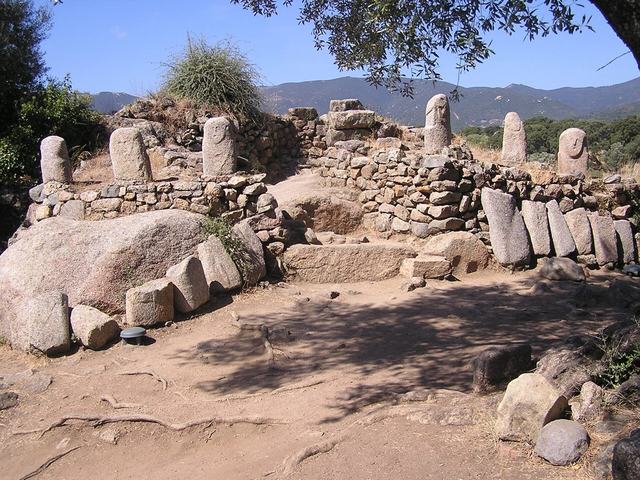
Site archéologique de Filitosa
A prehistoric site in Corse-du-Sud famous for its sculpted statue-menhirs, amid olive trees.
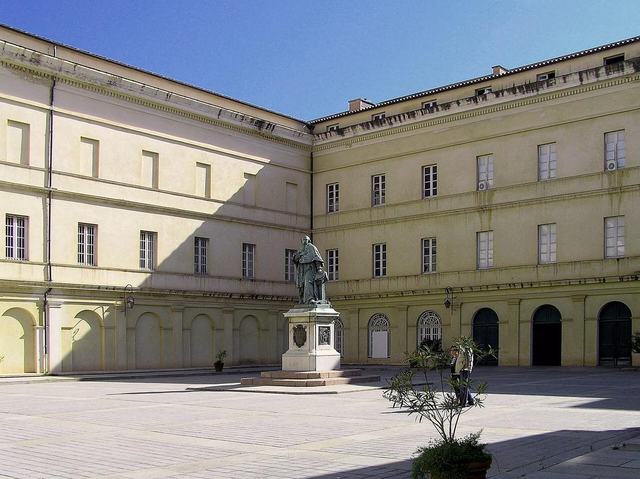
Musée Fesch
Set in the Palais Fesch in the very heart of Ajaccio, the Fine Arts Museum gathers painting collections, a large part of which come from Cardinal Joseph Fesch (1763–1839), Napoleon's maternal uncle, Archbishop of Lyon, Primate of the Gauls, a great art lover and enlightened patron.
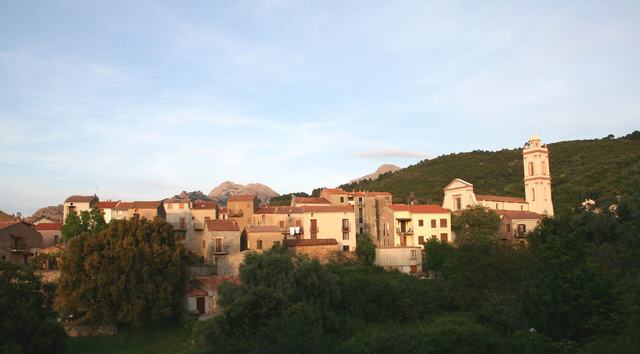
Piana
The village of Piana overlooks the Gulf of Porto, close to an exceptional place: the calanques of sumptuous beauty marrying the blue of the sea with all the pink and red tones of the granite cliffs.

Sant Antonino
The village's origin is said to go back to the ninth century, according to the legend of Ugo Colonna and his companions.
Food and local produce
Corsican cooking is that of the mountains and the sea: charcuterie such as coppa, lonzu and figatellu, sheep's and goat's cheeses such as brocciu, honey, chestnuts, Corsican wines and Mediterranean fish. Fiadone, a brocciu cake, and canistrelli, dry biscuits, are sweet specialities.
The island's produce rests on the maquis, the flocks and the sea. Farm inns in the interior serve simple, generous meals. Local markets are good places to taste.
For wines, several appellations exist, and the estates offer tastings. Remember to nominate a driver on these winding roads.
- Book in advance in summer.
- Brocciu is best tasted fresh in spring.
- Farm inns are good places to try local produce.
Calvi
Main town of the Balagne, dominated by its Genoese citadel perched on a rocky pinnacle facing a vast gulf lined with fine-sand beaches.
Ajaccio
Prefecture of Corse-du-Sud and chief town of the island, birthplace of Napoleon Bonaparte, nestled at the head of a vast gulf facing the setting sun.
Piana
The village of Piana overlooks the Gulf of Porto, close to an exceptional place: the calanques of sumptuous beauty marrying the blue of the sea with all the pink and red tones of the granite cliffs.
Nature and wide open spaces
Corsican nature is exceptional. The coastline offers wild beaches, such as Plage de Saleccia, Plage de Roccapina, Plage de Santa Giulia à Porto-Vecchio, Plage de Palombaggia à Porto-Vecchio, Anse de Rondinara and Plage d'Arone. The Calanche de Piana, the Réserve naturelle de Scandola and the Caps de Girolata are World Heritage sites. The Falaises de Bonifacio and the Archipel des Lavezzi are superb marine sites.
Inland, lakes and pozzines (peat meadows), such as Lac de Melo, Lac de Capitello, Pozzines du Lac de Nino and Les Pozzines de Coscione, offer high-mountain landscapes. Waterfalls are numerous: Cascades d'Aïtone, Voile de la Mariée, La cascade de Radule, Cascade de Bavella.
The Les Aiguilles de Bavella, the La vallée du Fango and the Gorges de la Restonica attract hikers. Many of these sites are fragile: stay on the paths, take your rubbish with you and check access before you go.
- On wild beaches, bring water, shade and a bag for your rubbish.
- In the mountains, start early: afternoon storms are frequent.
- Check swimming conditions, as wind and waves can be strong.
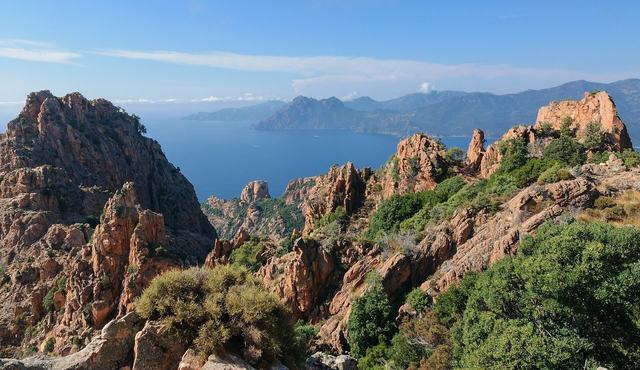
Calanche de Piana
Located in southern Corsica, between the villages of Piana and Porto, the splendid jagged rocks in phenomenal colours stand proudly above a sea of magical reflections.
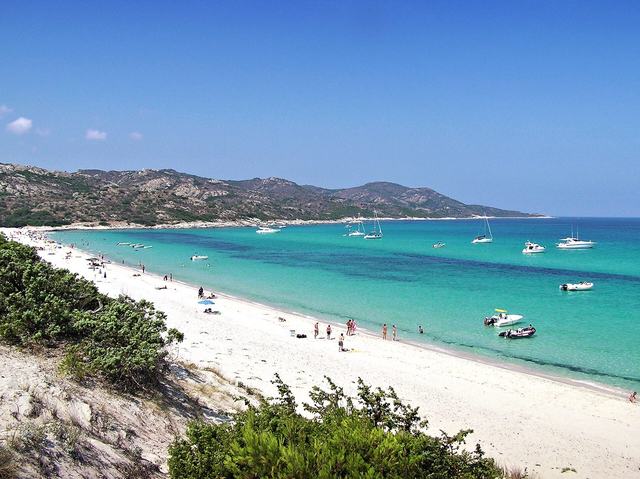
Plage de Saleccia
White-sand beach in the Agriates desert, in Haute-Corse, bordered by dunes and a pine grove.
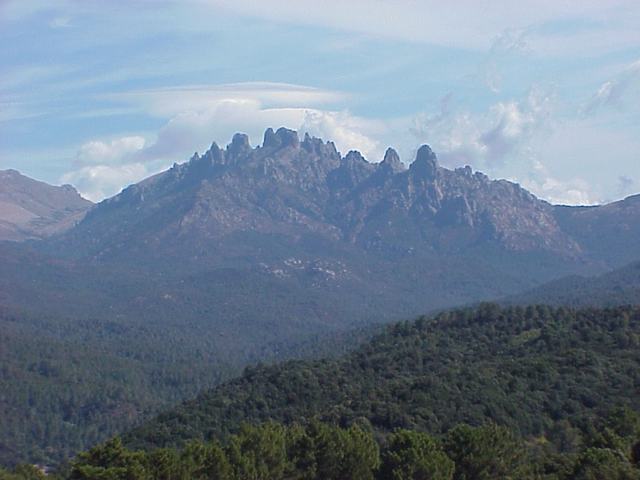
Les Aiguilles de Bavella
The Bavella needles (or "Towers of Asinao") are north-west of Porto-Vecchio, between Zonza and Solenzara in the Bavella massif.
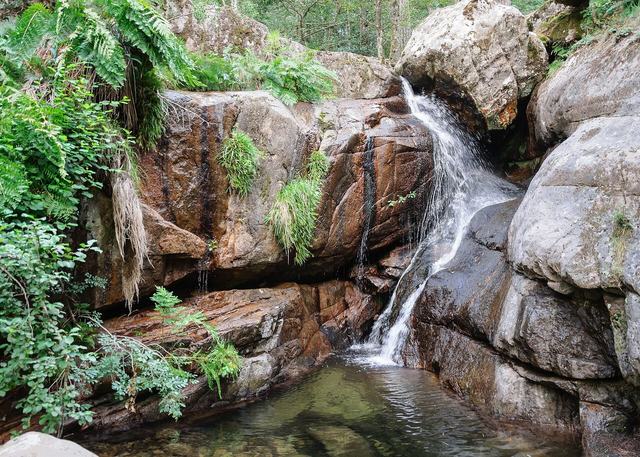
Cascades d'Aïtone
The Aïtone waterfalls and pools are about 4 km after Evisa, following the D84. They are easy to reach from the road (allow about 15 to 20 minutes with children).
When to go and how to plan
May, June and September are the best months: the sea is pleasant, the mountains accessible and the sites less crowded. July and August are very busy, with crowds on the beaches and roads. The high mountains can stay snowy late into spring, and some routes are closed in winter.
A car is almost essential: public transport is limited. Mountain roads are long and winding. To get there you can come by ferry from the mainland with your car, or by plane. Book ahead in summer.
A week's trip can combine two areas: for example the north-west (Calvi, Balagne, Désert des Agriates) and the Gulf of Porto, or the south (Bonifacio, Porto-Vecchio, Bavella). For a longer stay, add the interior of the island.
- Book the crossing and accommodation well ahead in summer.
- Avoid crossing the island every day: choose a few bases.
- Allow extra time for mountain roads.
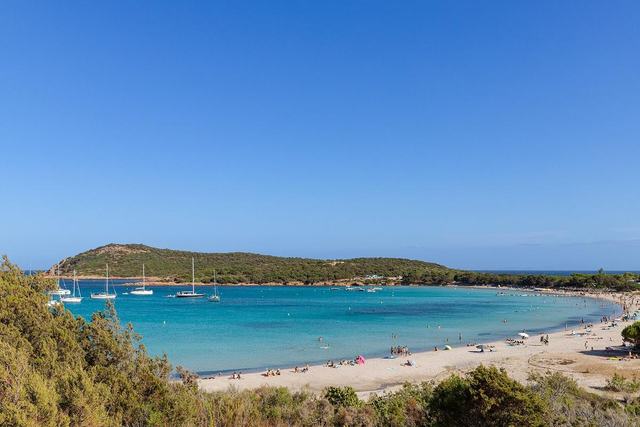
Anse de Rondinara
Pale sand, very pure water, unspoilt environment and perfect geometry... Rondinara is one of the most exotic bays on the island.
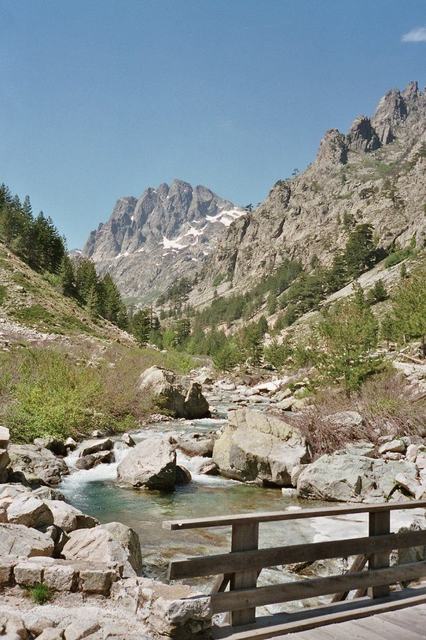
Gorges de la Restonica
The Restonica river rises at 1,711 m altitude in the Rotondo massif, not far from Corte, in Haute-Corse.
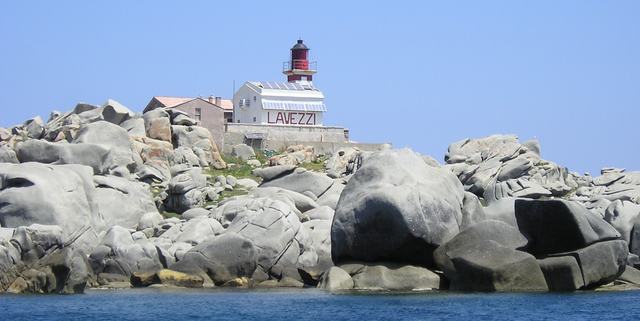
Archipel des Lavezzi
From Corsica to Sardinia, only a few kilometres separate these islands, but many sailors have wrecked their ships on these terrible reefs, as the marine cemeteries of Furcone and Archiarino and the memory of the wreck of La Sémillante in 1855 bear witness.
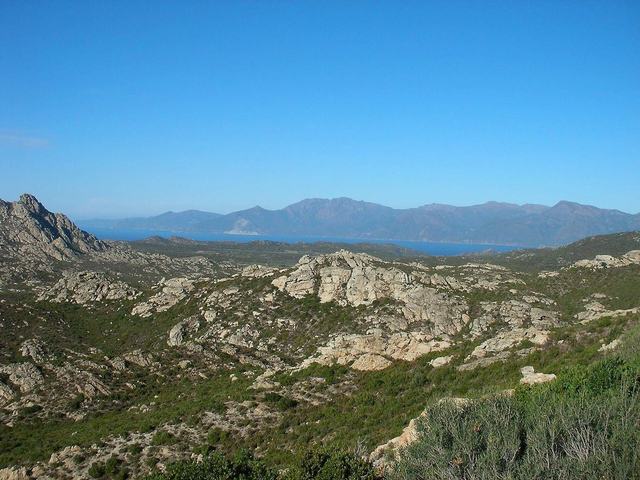
Désert des Agriates
Wedged between Cap Corse and the Balagne, the Agriates desert is a hostile and mysterious zone.
Going further
Find all the sites of the region on the page Corsica, or explore a département: