Discovering the French Pyrenees: a practical guide
The Pyrenees form a mountain range more than four hundred kilometres long, between the Atlantic and the Mediterranean. They offer vast glacial cirques, legendary passes, high-altitude lakes, decorated caves and villages full of character, from the Basque Country to Roussillon.
This practical guide helps you choose your stops and organise your trip. Underlined site names link to their detailed pages.
The Pyrenees in a few minutes
The range divides into major areas. In the west, the Basque Country and Béarn, with Biarritz, Bayonne, Saint-Jean-Pied-de-Port, the Château de Pau and the Grotte de Bétharram. In the centre, the Hautes-Pyrénées, with Cirque de Gavarnie, Le Pic du Midi de Bigorre, Massif du Néouvielle and Col du Tourmalet. Further east, Ariège, a land of caves and castles, and finally the Pyrénées-Orientales, with Pic du Canigou, Collioure and the Galamus gorges.
Haute-Garonne, with Toulouse, gives access to the range from the north. The valleys are narrow and run perpendicular to the range: you often have to go back down to the plain to change valley.
For a trip of a few days, it is better to pick one valley or massif and explore it rather than cross the whole range.
- Choose one valley as your base: links between valleys are long.
- Allow far more time than the map suggests.
- Check the weather before heading into the mountains.
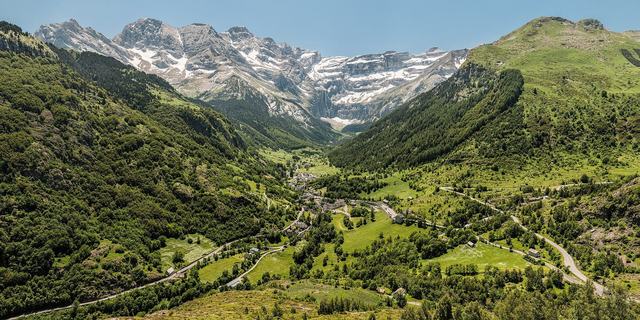
Cirque de Gavarnie
This exceptional mountain landscape, which spreads on both sides of the present national borders of France and Spain, is centred on the Mont Perdu peak, a limestone massif that peaks at 3,352 metres.
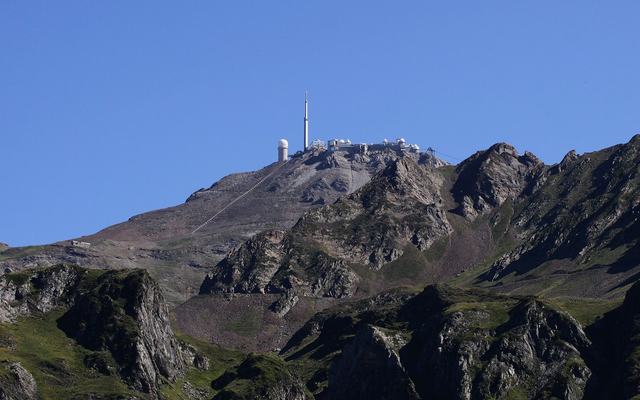
Le Pic du Midi de Bigorre
The Pic du Midi de Bigorre is in the Hautes-Pyrénées, and reaches an altitude of 2,877 metres.
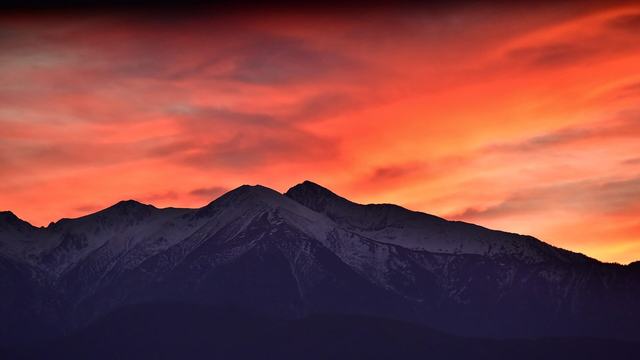
Pic du Canigou
At 2,785 metres, the emblematic summit of the Catalans, the easternmost high point of the Pyrenees, visible from the Mediterranean in clear weather.
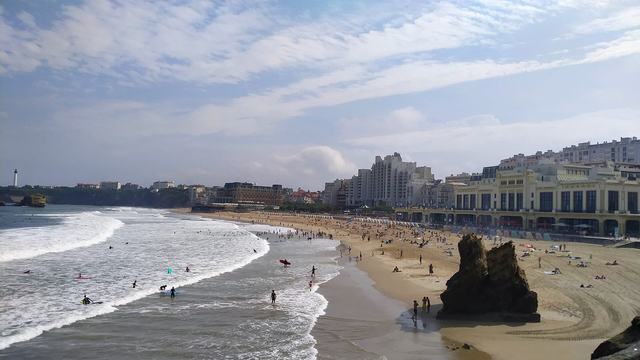
Biarritz
A chic seaside resort of the Basque Country, cradle of European surfing, whose Grande Plage and Rocher de la Vierge overlook the Atlantic Ocean.
Culture, history and heritage
The Pyrenees have a rich history. The Middle Ages left fortresses such as the Château de Montségur, the Château de Mauvezin and the Forteresse de Salses, as well as fortified towns. The Fort Lagarde de Prats-de-Mollo-la-preste is an example of Vauban's fortifications. Villages such as Saint-Lizier, Saint-Bertrand-de-Comminges and Evol have kept their old-world charm.
The region is a place of pilgrimage: the Sanctuaire Notre-Dame de Lourdes attracts visitors from around the world. Prehistory is well represented, with the Grotte de Niaux, the Grotte du Mas-d'Azil, the Grotte de Bédeilhac and the Musée de Tautavel, Centre Européen.
Museums are varied: Musée du Béret à Nay, Aeroscopia in Toulouse and the Museum d'Histoire Naturelle de Toulouse. The Parc National des Pyrénées protects large areas of mountain.
- For decorated caves, book in advance.
- Mountain castles involve some walking: bring good shoes.
- Lourdes is very busy in summer: go early.
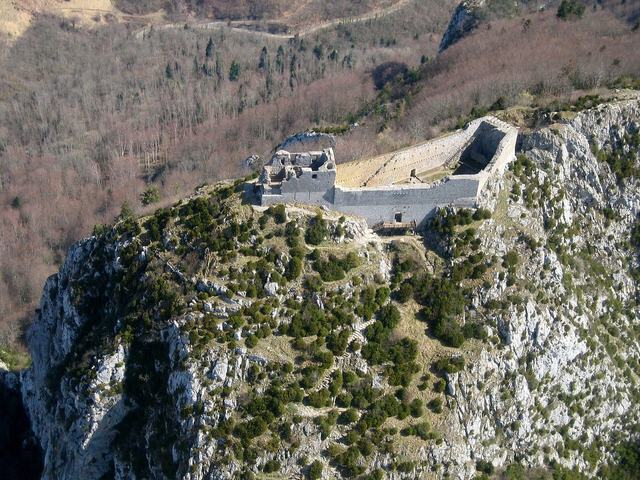
Château de Montségur
Before setting off to assault the "Pog", the path passes close to the stele erected in 1960 "to the martyrs of pure Christian love".
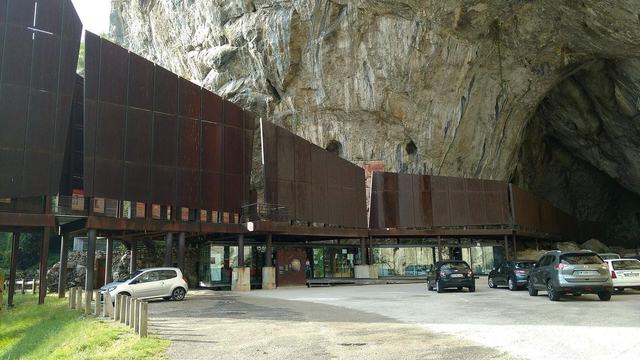
Grotte de Niaux
The Niaux cave, universally known, rivals Lascaux for the high quality and excellent conservation of its cave paintings; for nearly 13,000 years the cave has consisted of several moderately concreted galleries with splendid colours.

Sanctuaire Notre-Dame de Lourdes
Built on the site of the Marian apparitions of 1858, this sanctuary is one of the most visited places of pilgrimage in the world, welcoming about 6 million people every year.
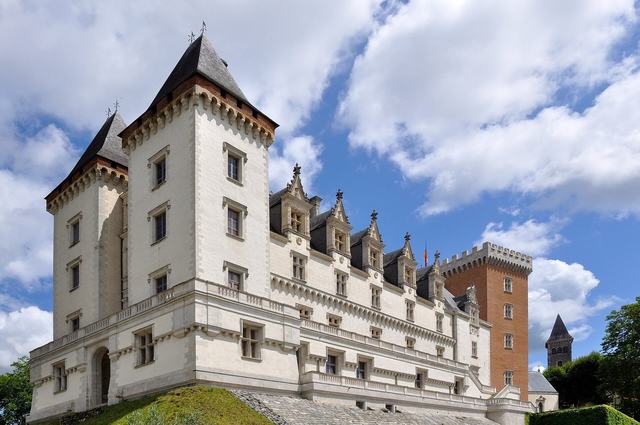
Château de Pau
It was probably before the eleventh century that the first wooden fortification was built, on a rocky spur between the Gave de Pau and one of its tributaries, the Hédas.
Food and local produce
Pyrenean cooking is generous: garbure (a hearty soup), cassoulet, duck confit, Bayonne ham, Espelette pepper, Basque chicken, Basque cake, and sheep's-milk cheeses such as Ossau-Iraty and Tomme des Pyrénées. In Catalonia you can try Collioure anchovies, Catalan cuisine and the wines of Banyuls and Maury.
Village markets are highlights. Mountain farms serve meals and sell produce to take away. Local festivals, including bullfights in some towns, the Bayonne festivals and other events, bring the summer to life.
Several wine appellations are worth knowing: Irouléguy, Madiran, Jurançon and the wines of Roussillon. The estates offer visits and tastings.
- Taste the cheeses straight from the producers.
- Book restaurants in advance in high season.
- For wine tastings, nominate a driver.
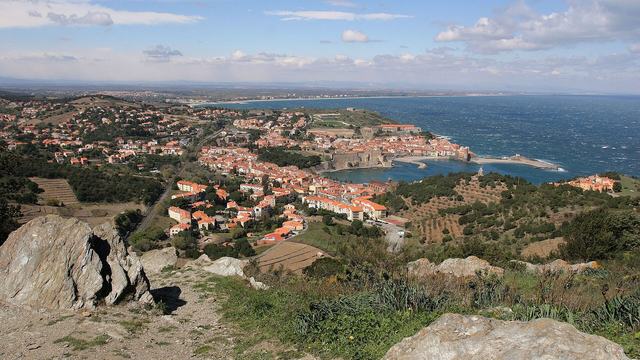
Collioure
A little Catalan port of colourful houses nestled in a cove of the Vermilion Coast, immortalised by Matisse and the Fauvist painters in the early twentieth century.
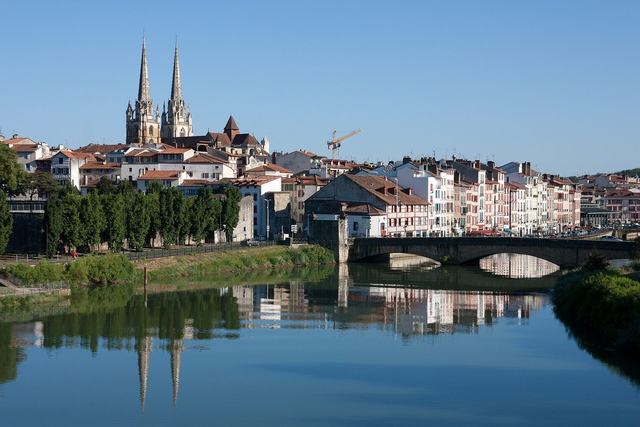
Bayonne
Historic capital of the Basque Labourd at the confluence of the Adour and the Nive, whose Gothic cathedral overlooks a district of colourful half-timbered houses.
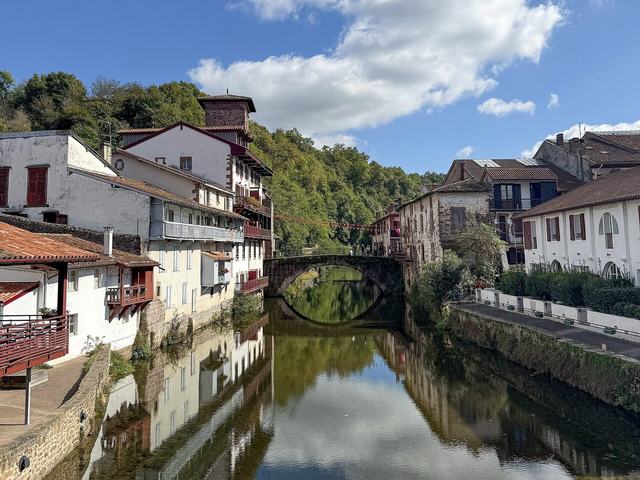
Saint-Jean-Pied-de-Port
In the foothills of the Pyrenean piedmont, between the Basque Coast and the Spanish border, Saint-Jean-Pied-de-Port is an unmissable destination in the Basque Country.
Nature and wide open spaces
The Pyrenees are a paradise for nature lovers. The great cirques, such as Cirque de Gavarnie, Cirque de Troumouse and Le Cirque de Lescun, impress with their scale. Lakes such as Lac Bleu de lesponne, Le Lac d'Oô and Lacs d'Ayous are hiking goals. Waterfalls like Les Cascades de Cauterets, Cascades d'Arizes et Garet and Cascade du lac d'Espingo can be reached on foot.
The gorges are spectacular: Gorges de Kakuetta, Canyons d'holzarté et d'Olhadubi, Les Gorges de Galamus, Les Gorges de la Fou. Les Orgues d'Ille sur Têt is a landscape of stone chimneys. Caves are numerous: Grotte de Bétharram, Grotte de Fontrabiouse, Grotte de lombrives.
The legendary Tour de France passes, such as the Col d'Aubisque, the Col du Tourmalet and the Col de Peyresourde, offer breathtaking views. For children, parks such as Le Donjon des Aigles and Parc animalier de Casteil are easy outings.
- In the mountains, start early: afternoon storms are frequent.
- Follow the national park rules, especially regarding dogs.
- Check road and trail conditions before setting off.
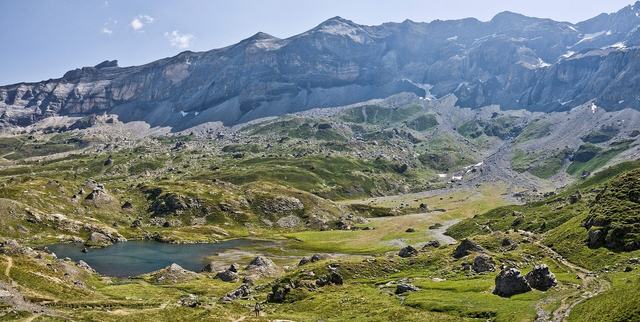
Cirque de Troumouse
Upstream of the Héas gave valley, the Troumouse cirque is the largest glacial cirque in the Pyrenees.
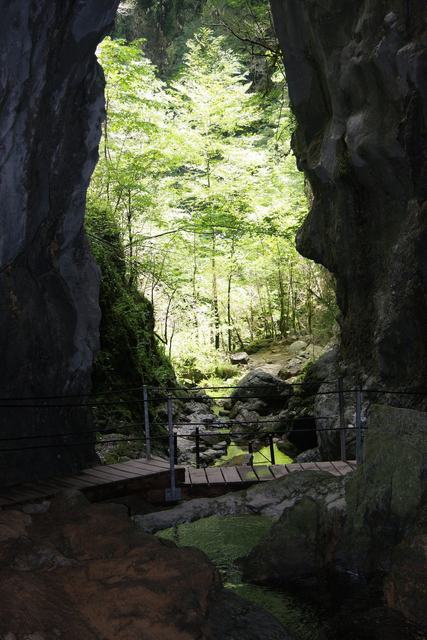
Gorges de Kakuetta
A spectacular 2 km canyon in Haute-Soule, with walls reaching 350 metres high, discovered in 1906 by the speleologist Édouard-Alfred Martel.
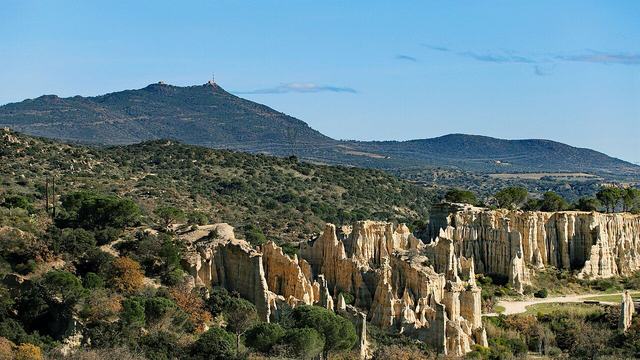
Les Orgues d'Ille sur Têt
"Les Orgues" are strange rock formations eroded by time and shaped like chimneys.
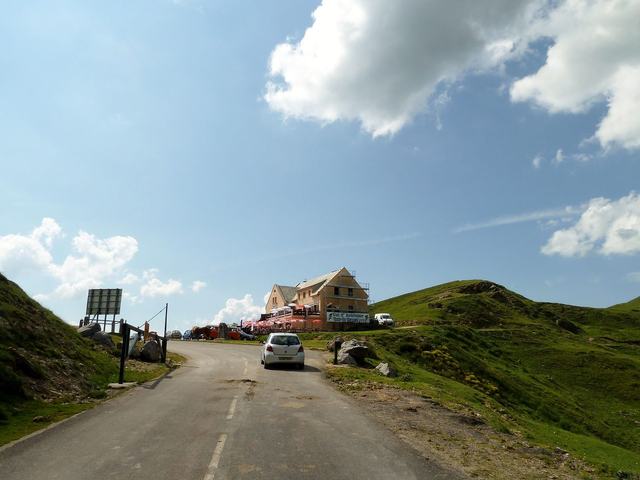
Col d'Aubisque
A mythical Pyrenean pass at 1,709 metres, the scene in 1910 of the first high-mountain stage in the history of the Tour de France.
When to go and how to plan
From June to September, the passes and trails are generally open. Summer is high season, with crowds at the best-known sites. Autumn offers beautiful colours. Winter is ski season, but many mountain roads are closed. Spring is the season of snowmelt and waterfalls.
A car is almost essential for exploring the valleys. Toulouse, Pau, Tarbes, Perpignan and Bayonne are well served by train. Mountain roads are winding and slow. Always check whether the passes are open.
A week-long trip can focus on one area: Basque Country and Béarn; Hautes-Pyrénées and Gavarnie; Ariège and its caves; Pyrénées-Orientales and the Vermilion Coast. To cross the whole range, allow at least ten days.
- Book accommodation in advance in summer.
- Pack warm clothes, even in summer, at altitude.
- Leave some slack in your schedule for the weather.

Toulouse
France's fourth-largest city, nicknamed the "Pink City" for the brick that clads its façades, organised around the monumental Place du Capitole.
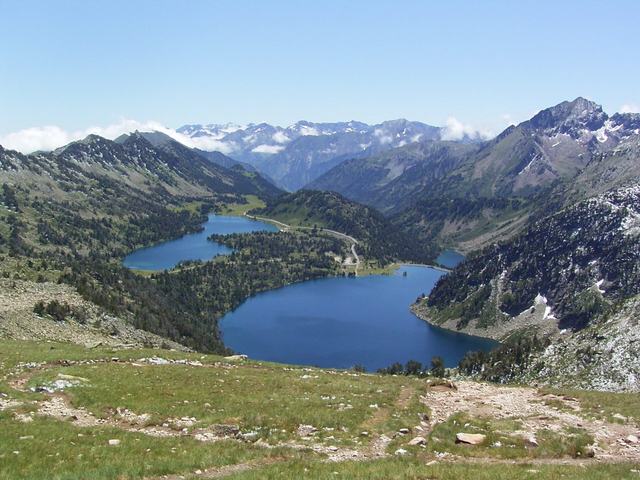
Massif du Néouvielle
A granite massif of the Hautes-Pyrénées peaking at 3,192 m, famous for its many high-altitude lakes such as Aumar, Aubert and Cap de Long.

Parc National des Pyrénées
The Pyrenees National Park, also called the Western Pyrenees National Park, is one of the ten national parks of France in the south of the country in the western part of the Pyrenees mountain range, straddling the Hautes-Pyrénées (Midi-Pyrénées region) and the…
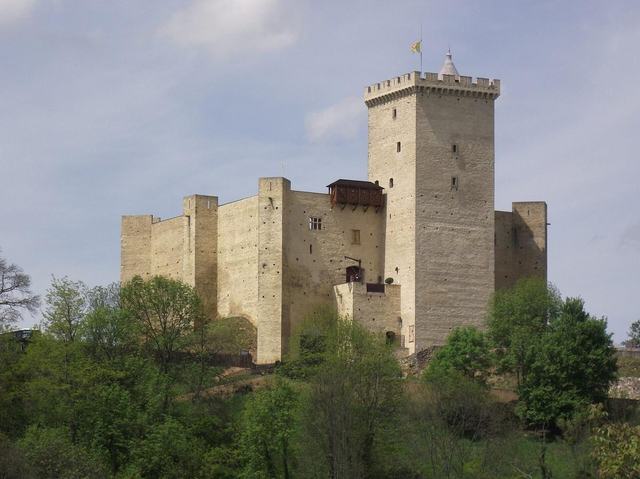
Château de Mauvezin
This fortress, first restored in 1906 and again under restoration, belonged to the counts of Bigorre, the king of France, the Black Prince, Gaston Phoebus, Henry IV.
Going further
Explore the départements of this area: