Discovering Burgundy-Franche-Comté: a practical guide
Burgundy-Franche-Comté combines two worlds: Burgundy, with its vineyards, abbeys and historic towns, and Franche-Comté, with its mountains, lakes, waterfalls and reculées (steep-sided valleys). It is a region of nature and heritage, often quieter than its neighbours.
This practical guide helps you choose your stops and organise your trip. Underlined site names link to their detailed pages.
Understanding the region in a few minutes
The region has eight départements: Côte-d'Or, Nièvre, Saône-et-Loire and Yonne, in Burgundy; Doubs, Jura, Haute-Saône and Territoire de Belfort, in Franche-Comté. Burgundy offers vineyards around Dijon and Beaune, medieval villages such as Semur-en-Auxois, Noyers and Vézelay, and the Morvan massif. Franche-Comté is more mountainous, with the Jura, the Haut-Doubs and the Vosges of Haute-Saône.
The main towns are Dijon, Besançon and Autun. They are explored on foot, and their museums are worth the detour. Small towns such as Arbois, Château-Chalon and Pesmes are good bases.
Distances are short, but mountain roads are slower.
- Allow about an hour and a half by road between Dijon and Besançon.
- Distances between two sites in the Jura are sometimes long because of winding roads.
- Cycling is pleasant along the Burgundy canals.

Dijon
Former capital of the Dukes of Burgundy, a town of art with half-timbered houses and mansions, renowned for its mustard and gingerbread.

Besançon
Former capital of French watchmaking, enclosed in an almost complete meander of the Doubs and dominated by the Vauban citadel listed by UNESCO.
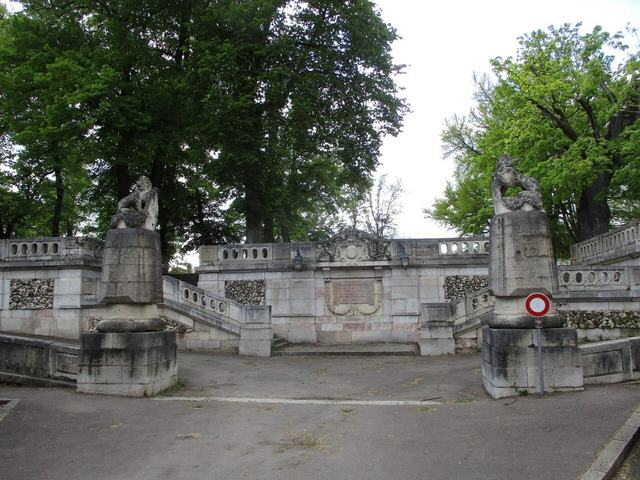
Beaune
Historic capital of Burgundy wines, a fortified town whose ramparts and bastions still ring an old centre renowned for its wine-merchant houses.
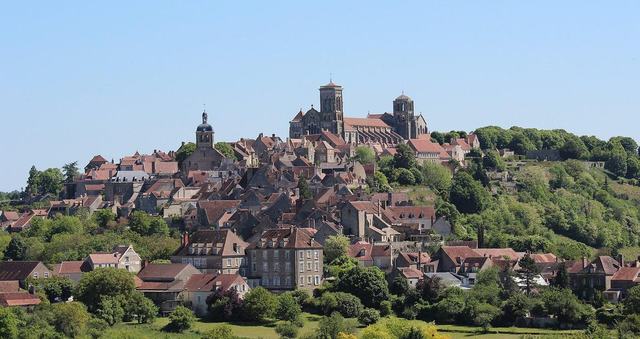
Vézelay
A high place of pilgrimage since the twelfth century, the basilica of Sainte-Marie-Madeleine at Vézelay stands on top of a high hill overlooking the Cure, on the edge of the Morvan regional park.
Culture, history and heritage
Burgundy is a land of abbeys and Romanesque art: L'abbaye de Fontenay, L'Abbaye de Cluny and Vézelay are among the best known. Castles, such as Château de Cormatin, Château de Brancion and Château de Montjeu, tell the story of the dukes and great families. At Guédelon, a medieval building site lets you understand construction techniques.
Franche-Comté left the Saline royale d'Arc-et-Senans, a masterpiece of industrial architecture and a World Heritage site, and the Citadelle de Belfort, where the Le Lion de Bartholdi stands. The Château de Montbéliard and Château de Syam are other sites to see.
Museums are varied: Musée de l'horlogerie de Morteau, Musée du Temps de Besançon, Musée de l'Aventure Peugeot, Bibracte for Gaulish archaeology, and the Théâtre romain d'Autun for Roman times.
- For abbeys, allow one to two hours per visit.
- The Guédelon site is very busy in summer: book in advance.
- The Royal Saltworks can be combined with a stay in Besançon.
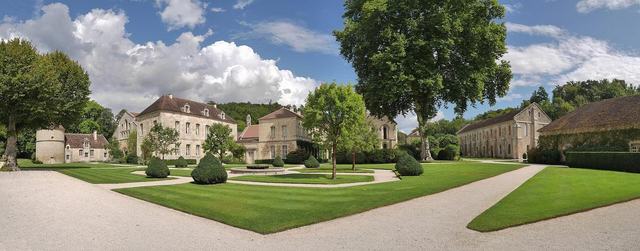
L'abbaye de Fontenay
Fontenay Abbey is a Cistercian abbey founded in 1118 in the French commune of Marmagne, in the Côte-d'Or département and the Burgundy region.
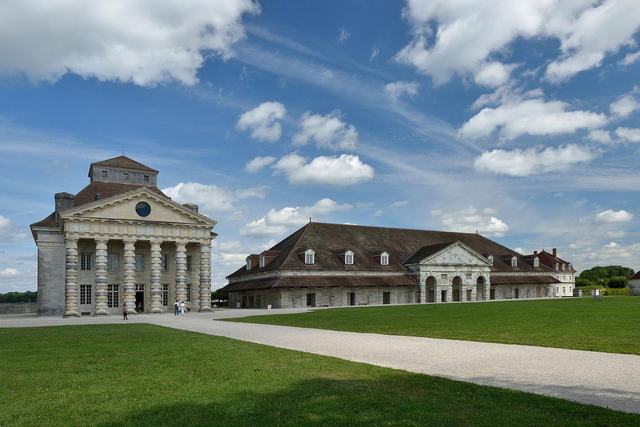
Saline royale d'Arc-et-Senans
The Royal Saltworks of Arc-et-Senans, near Besançon, is the work of Claude-Nicolas Ledoux.
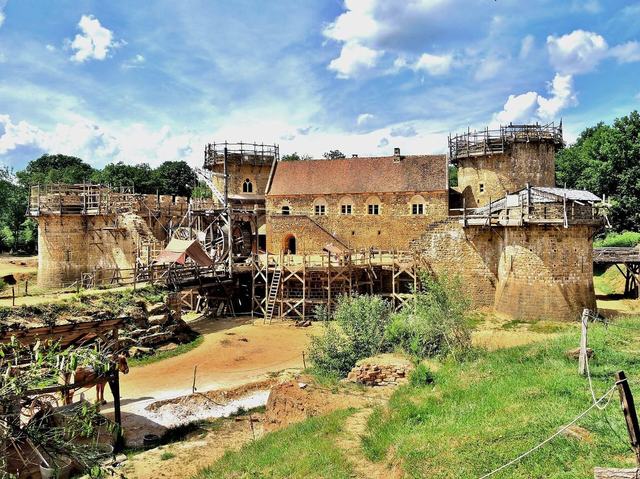
Guédelon
Building in the Yonne, in Burgundy, a fortress with the materials and according to the methods of the 13th century.

Citadelle de Belfort
The Belfort Citadel, also called the Citadel of Liberty, is the most important example of architecture built by Vauban.
Food and local produce
Burgundy is famous for its wines, which you discover on the Route des Grands Crus, from Dijon to Beaune. Here you eat snails, boeuf bourguignon, eggs in red wine sauce, gougères, Dijon mustard and gingerbread. The aniseed sweets of Flavigny-sur-Ozerain are a speciality of the village.
Franche-Comté is the land of Comté, an aged cheese, of Morbier, Mont d'Or and Morteau sausage. Vin jaune, produced around Château-Chalon and Arbois, is a unique speciality. You will also find cancoillotte, a cheese-based preparation.
Fruitières, cooperative cheese dairies, offer visits. Winemakers offer tastings, often by appointment.
- Book tastings with winemakers in advance.
- Comté is tasted at several ages of maturing.
- Fruitières are good places to buy local products.
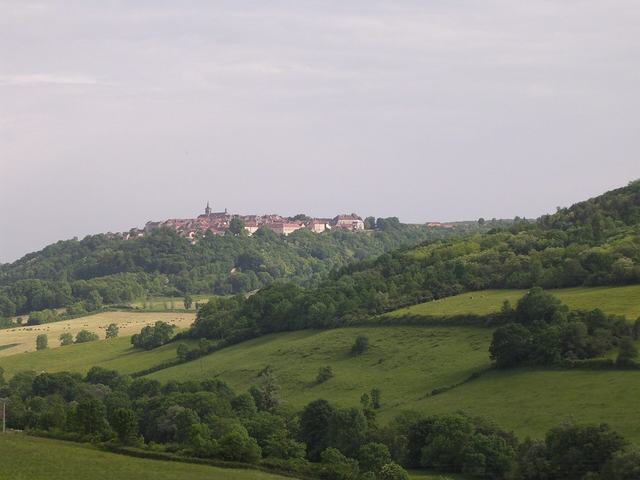
Flavigny-sur-Ozerain
The silhouette of this perched village is punctuated by the imposing volumes of its religious buildings.

Château-Chalon
Famous for its former abbey and its wines, this small village perched on top of a rocky spur has kept the ruins of a fortress built in the Middle Ages to protect a Benedictine nuns' abbey founded on the spot as early as the sixth century.

Arbois
Historic capital of the Jura vineyards where Louis Pasteur carried out his research on fermentation, crossed by the Cuisance and its picturesque Capucins bridge.
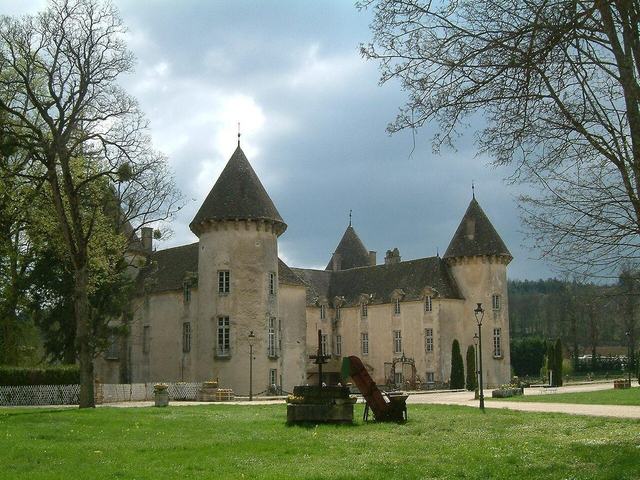
Savigny-lès-Beaune
It is in Burgundy, in the heart of the Côte de Beaune, that the prestigious Château de Savigny-lès-Beaune overlooks a magnificent 12-hectare property, crossed by a river that originally fed the moats of this former fortress.
Nature and wide open spaces
Franche-Comté is the land of waterfalls and reculées, those steep-sided valleys at the edge of a plateau. Among the best known are Cascades du Hérisson, La Cascade Baume les Messieurs, La Source du Lison, Le Saut du Doubs, La Source de l'Ain, Cirque et Gorges de Flumen and La Cascade de la Billaude. The Grotte et Reculée des Planches and the Rivière souterraine de la Bèze are underground sites.
In Burgundy, the La Roche de Solutré overlooks the Mâconnais vineyards, and the La Fosse Dionne in Tonnerre is a remarkable spring. The Morvan offers forests, lakes and rocky chaos, such as the Chaos d'Uchon-Griffe du diable. The Rochers du Saussois attract climbers.
The Parc naturel régional du Haut Jura is a large hiking area. For children, Touroparc is a wildlife park in Romanèche-Thorins.
- For waterfalls, choose spring or snowmelt.
- Pack shoes with good grip: trails are often damp.
- Follow safety instructions near gorges.
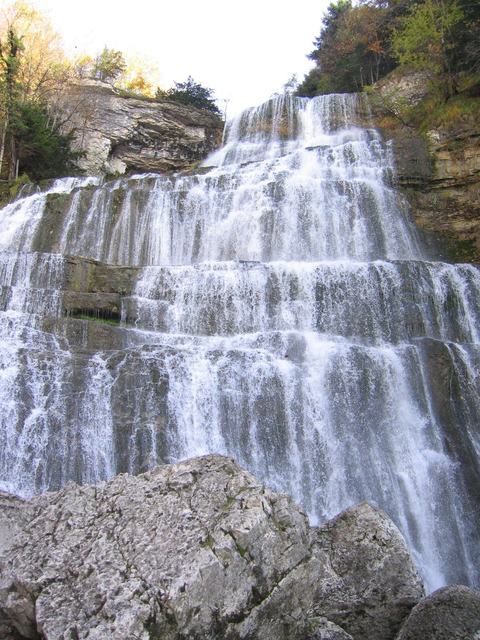
Cascades du Hérisson
The Hérisson Waterfalls, the Éventail and the Grand Saut: they are located near Doucier, in the heart of the lakes region.
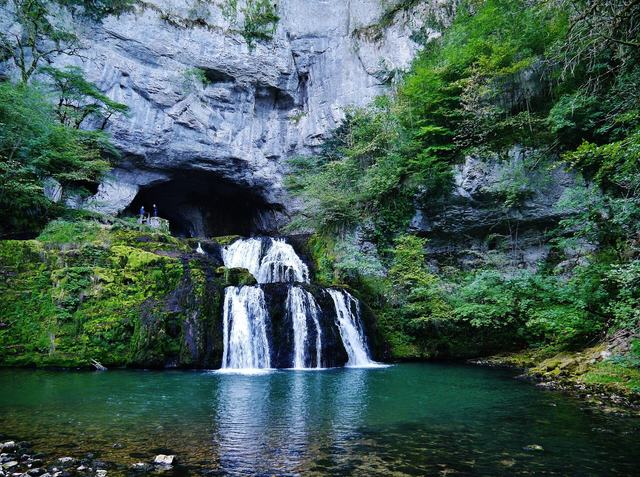
La Source du Lison
Located at the bottom of a reculée, near the edge-tool works of Nans-sous-Sainte-Anne, it is a fine example, like the Loue of which it is a tributary, of a resurgence typical of karst areas.
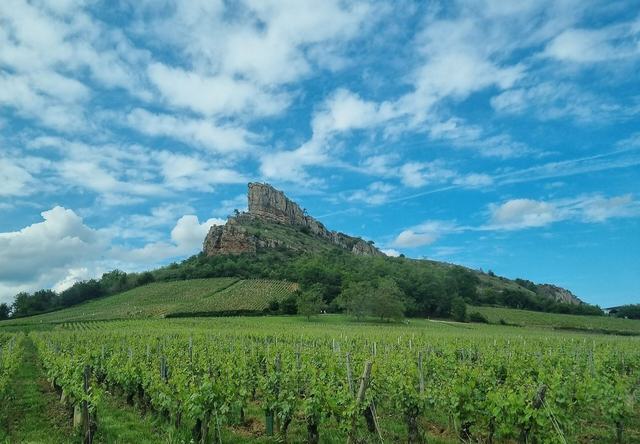
La Roche de Solutré
For geological, prehistoric and historical reasons, the Roche de Solutré is the high point of any visit to the Mâconnais. A walk from the car park south of the rock lets the visitor reach the summit, after a visit to the departmental museum.
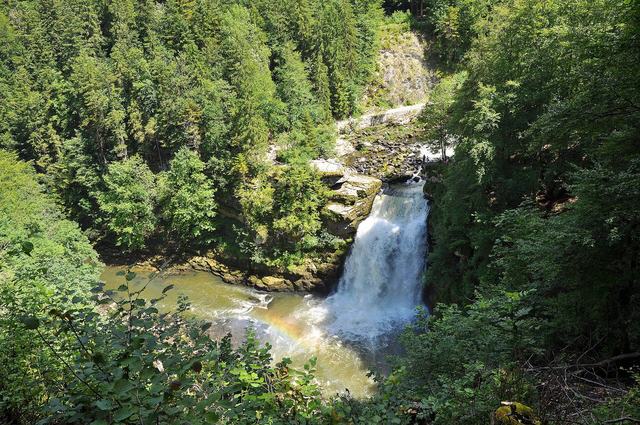
Le Saut du Doubs
Ranked the number-one natural site of Franche-Comté. From Villers-le-Lac, commented cruises of 14 km aboard tour boats offer a grandiose spectacle of the meanders of the Doubs, set in wild gorges.
When to go and how to plan
Spring and autumn are the most pleasant periods, especially for the vineyards and waterfalls. Summer is ideal for lakes and mountains, but busier. Winter is cold and snowy in the Jura and the Doubs, with winter sports and cross-country skiing.
A car is useful for small roads, but Dijon, Besançon, Belfort and Autun are well served. Jura roads are winding: allow slack in travel times. Cycling is pleasant along the canals and in the vineyards.
A five-day trip can combine three areas: Dijon and the Côte-d'Or, the Bresse and Saône-et-Loire, then the Jura and its waterfalls. Each area also deserves a trip of its own.
- Book accommodation in advance in summer.
- Pack warm clothes, even in summer, at altitude.
- Check road conditions in winter.
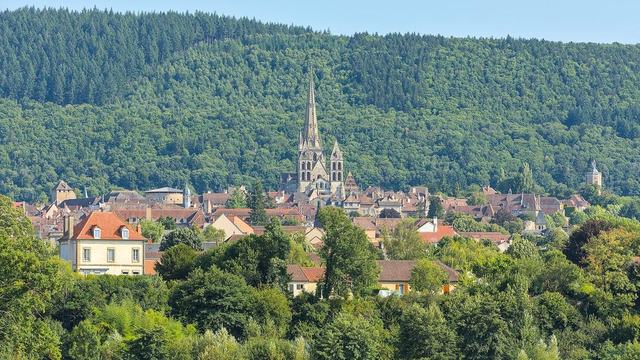
Autun
A former Roman city nicknamed the "sister and rival of Rome", whose tall Gothic spire of the Saint-Lazare cathedral still dominates the rooftops.
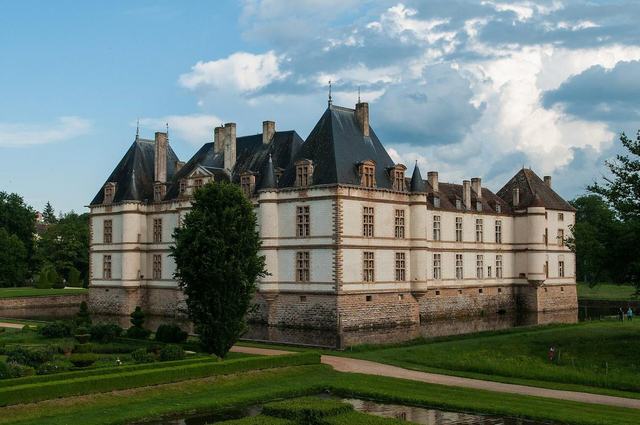
Château de Cormatin
Between Tournus and Cluny, in the heart of southern Burgundy, the Château de Cormatin awaits you amid its gardens and ornamental waters.
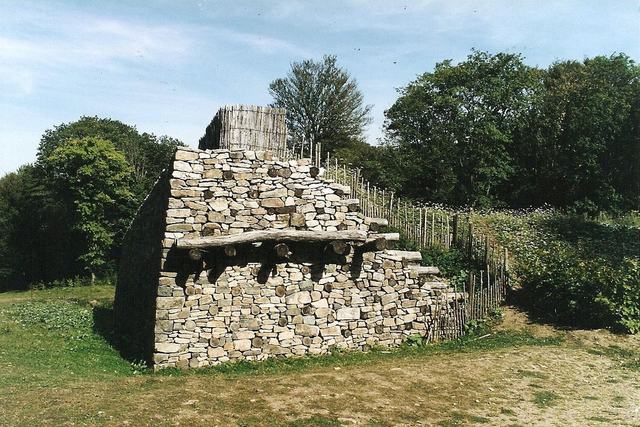
Bibracte
Bibracte is at the summit of Mont Beuvray and the panorama is superb. You arrive by a fortified gate in the middle of a mysterious forest of twisted "queules" beeches.

Musée du Temps de Besançon
An emblematic Renaissance monument in Franche-Comté, the Palais Granvelle was restored between 1988 and 2002 to become the Museum of Time, the history, science and watchmaking museum of Besançon.
Going further
Find all the sites of the region on the page Bourgogne-Franche-Comté, or explore a département: