Discovering Alsace: a practical guide
Alsace is easy to explore: the villages are close together, the wine route links the stops, and castles crown the hills. It is an ideal region for a short stay.
This practical guide helps you choose your stops and organise your trip. Underlined site names link to their detailed pages.
Alsace in a few minutes
Alsace has two départements: Bas-Rhin, with Strasbourg, Obernai and Hunspach, and Haut-Rhin, with Colmar, Kaysersberg and Hunawihr. Between them, the vineyards and the Vosges form the backdrop.
The region is compact: you can go from Strasbourg to Colmar in under an hour. Villages are only a few kilometres apart, often linked by the wine route.
- Choose Strasbourg or Colmar as your base.
- Trains connect Strasbourg, Colmar and Mulhouse.
- Villages are best explored on foot.
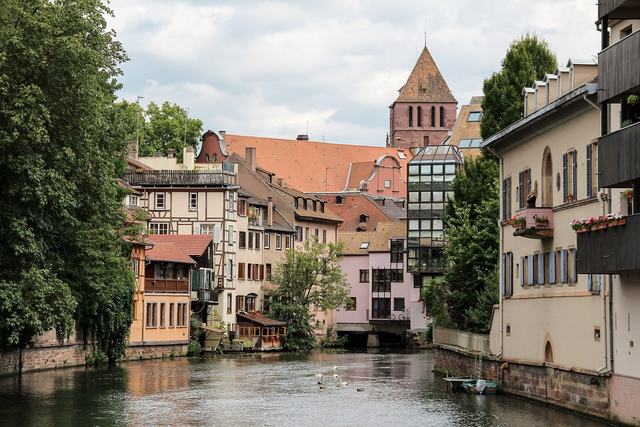
Strasbourg
European and Alsatian capital, whose Petite France district, crossed by canals and lined with half-timbered houses, embodies Franco-German charm.
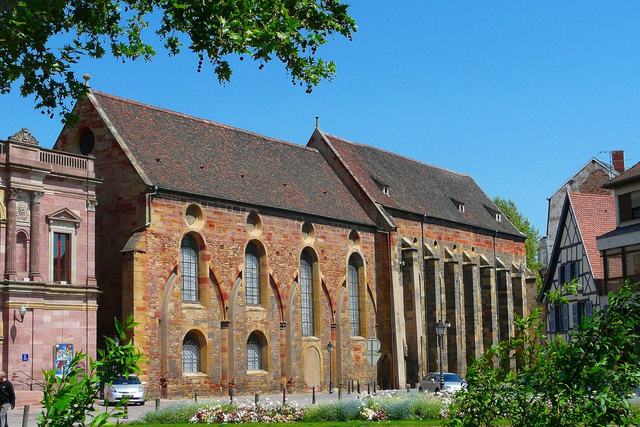
Colmar
Located in the centre of Alsace, between the two other major industrial centres of Strasbourg and Mulhouse, Colmar is an essential stop.
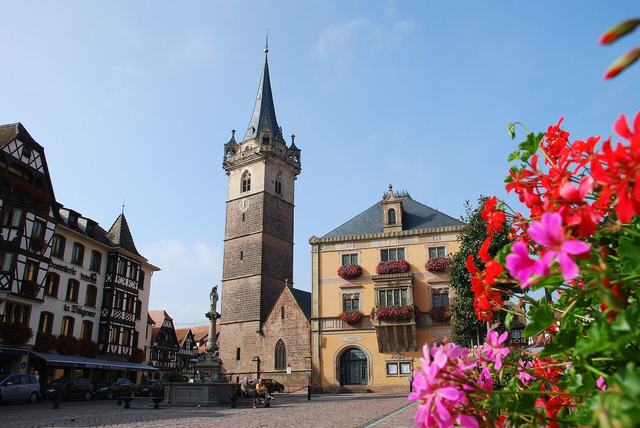
Obernai
A medieval town on the Alsace wine route, whose Gothic Chapel tower overlooks a market square surrounded by half-timbered houses in flower.
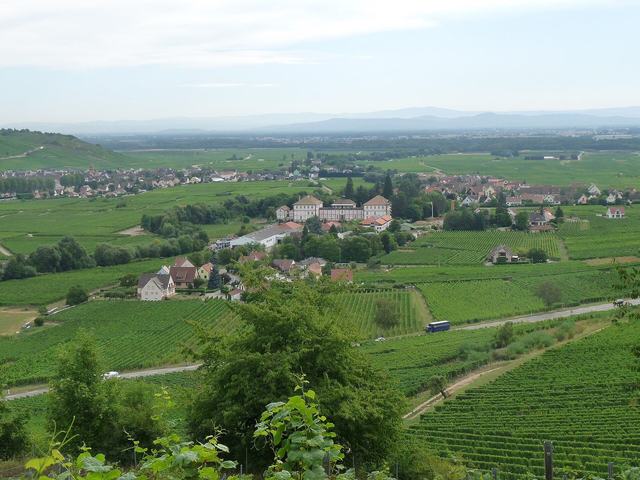
Kaysersberg
Kaysersberg, with its many half-timbered houses, fine historic centre and ruined imperial castle (Kaysersberg means the Emperor's mountain) overlooking the town, has tremendous charm.
Culture, history and heritage
The Cathédrale Notre-Dame de Strasbourg dominates the city. Nearby, the Palais Rohan, the Musée de l'Oeuvre Notre Dame and the Musée d'Art Moderne et Contemporain complete the visit.
Hilltop castles are numerous: Château du Haut-Koenigsbourg, Château du Hohlandsbourg, Château de Saverne, Château du Girsberg, Château du Hohenbourg, Château du Grand-Geroldseck, Château de Spesbourg. Villages such as Mittelbergheim, Bergheim and Neuf-Brisach have kept their characterful architecture.
Mulhouse offers themed museums: the Musée de l'Impression sur Etoffes, the Musée Electropolis and the Musée historique de Mulhouse.
- Book ahead for the Haut-Koenigsbourg in summer.
- Some castles can only be visited in the warmer months.
- Strasbourg is best discovered on foot and by boat.

Cathédrale Notre-Dame de Strasbourg
Strasbourg's Notre-Dame cathedral is a Roman Catholic cathedral built in Strasbourg, representative of Gothic architecture.

Château du Haut-Koenigsbourg
The Haut-Koenigsbourg site, probably one of the most visited of French medieval castles, may put off the lover of unrestored architecture.

Palais Rohan
The Palais Rohan is in the centre of Strasbourg, Bas-Rhin, next to the cathedral.
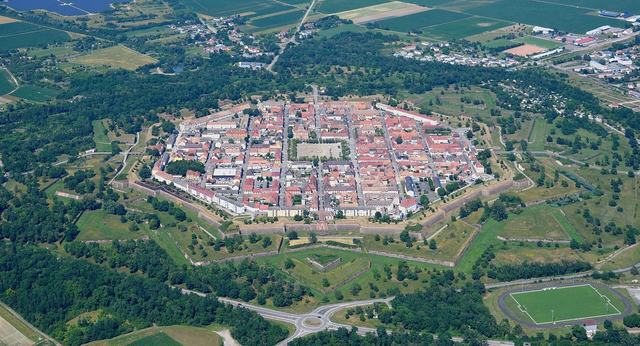
Neuf-Brisach
Octagonal fortified town designed by Vauban, inscribed as UNESCO World Heritage.
Food and local produce
Alsatian cooking is generous: choucroute, baeckeoffe, flammekueche (tarte flambée), spätzle, Munster cheese, kougelhopf and pretzels. The wine route links villages and cellars, with grape varieties such as Riesling, Gewürztraminer and Pinot Gris.
Winstubs, traditional taverns, are the best places to try local dishes. The Christmas markets of Strasbourg and Colmar are famous.
- Book a winstub at weekends.
- Nominate a driver on the wine route.
- Munster is traditionally eaten with caraway seeds.
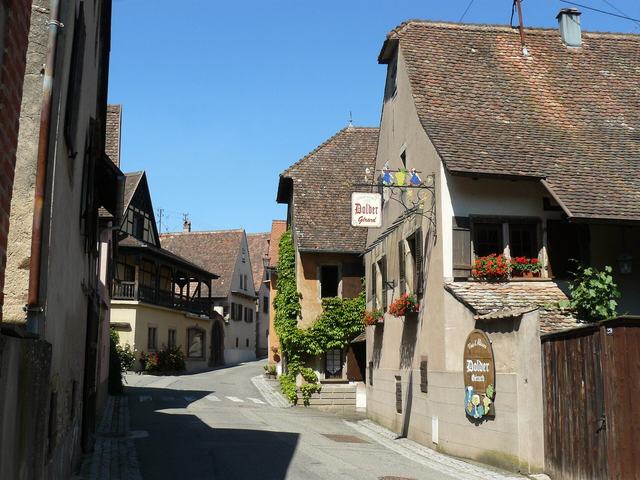
Mittelbergheim
Mittelbergheim stretches over the vine-covered hills of the Rippellsholz. The village, whose name is mentioned as early as 741, was successively the property of several abbeys.
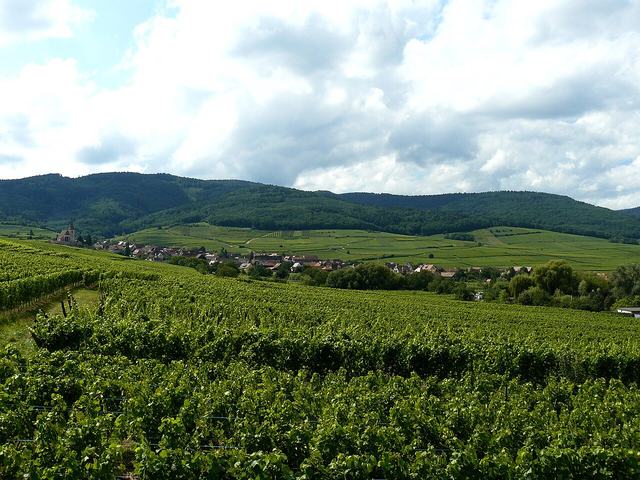
Hunawihr
The village lies half-way up the slopes at the confluence of two watercourses. Surrounded by its little fortified cemetery, the fifteenth-century church emerges among vines that stretch to infinity.
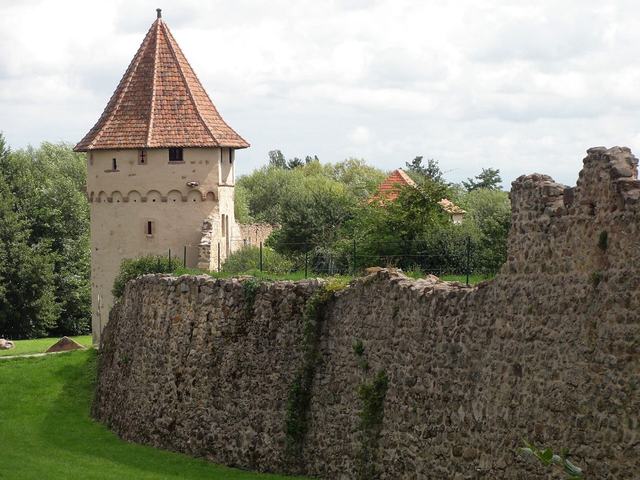
Bergheim
Alsatian wine village enclosed by ramparts and towers, ranked among the Most Beautiful Villages of France.
Nature and wide open spaces
The Vosges offer lakes and waterfalls: Le Lac de Fischboedlé, Cascade de Nideck, Cascade du Bockloch, Cascade du Heidenbad, Cascade de l'Andlau. The Petite Camargue alsacienne is a nature reserve popular with birdwatchers.
For children, La Montagne des Singes, the Parc Zoologique et Botanique de Mulhouse and the Zoo et parc de l'Orangerie are easy outings. Boat trips, for example with Strasbourg au Fil de l'Eau or Promenades en barque à fond plat, make a change from visiting on foot.
- Bring good shoes for the waterfalls.
- Check the weather before going up into the Vosges.
- Book boat trips in advance.
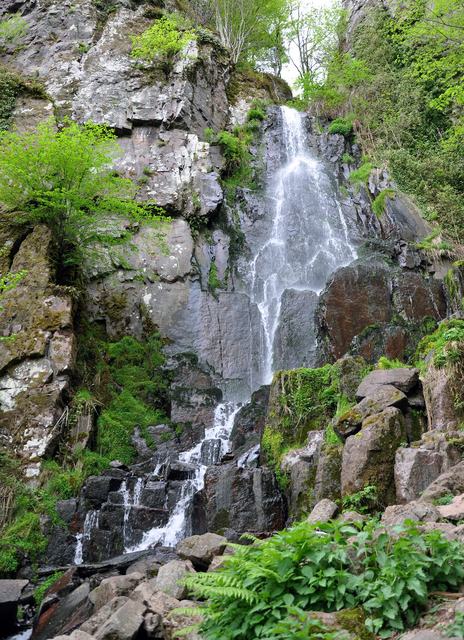
Cascade de Nideck
Nideck waterfall (Oberhaslach): south of the Nideck castle, the cliff forms a sheer drop of about 25 m.

La Montagne des Singes
Come and escape in our park for a surprising walk among 280 Barbary macaques living in freedom in a 24-ha forest.

Petite Camargue alsacienne
This marsh, relic and witness of the Rhine jungle, was classified by a Conseil d'État decree, to become the first protected nature reserve of Alsace.
When to go and how to plan
Spring and autumn are the most pleasant, with the grape harvest in September and October. December is the season of Christmas markets, which are very busy. Summer is hot and lively.
A three- to four-day trip lets you see Strasbourg, the wine route and Colmar. A car is useful for villages and castles, but the train is enough between the big towns.
- Book well ahead in December.
- Allow half a day for each major castle.
- Park your car at the entrance to villages.
Strasbourg
European and Alsatian capital, whose Petite France district, crossed by canals and lined with half-timbered houses, embodies Franco-German charm.
Colmar
Located in the centre of Alsace, between the two other major industrial centres of Strasbourg and Mulhouse, Colmar is an essential stop.
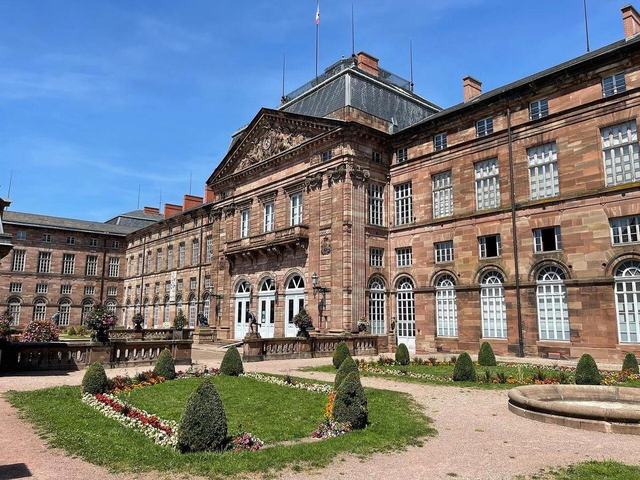
Château de Saverne
Palace of the prince-bishops of Strasbourg, the château de Saverne was rebuilt in the eighteenth century and today shows off its immense pink sandstone façade.
Going further
Explore the départements of this area: