Paris: what to see and do
61 sites listed in the département. A world capital, Paris holds an architectural and cultural heritage without equal, from the Eiffel Tower to Notre-Dame, by way of historic parks such as the Buttes-Chaumont. Each district of the City of Light tells a different side of French history.

Le musée d'Orsay
The Musée d'Orsay is a national museum in Paris, on the left bank of the Seine, in the 7th arrondissement.

Le musée du Louvre
The Louvre is the largest museum in Paris by area. Located in the heart of the city, between the right bank of the Seine and the Rue de Rivoli, in the 1st arrondissement, the building is a former royal palace.
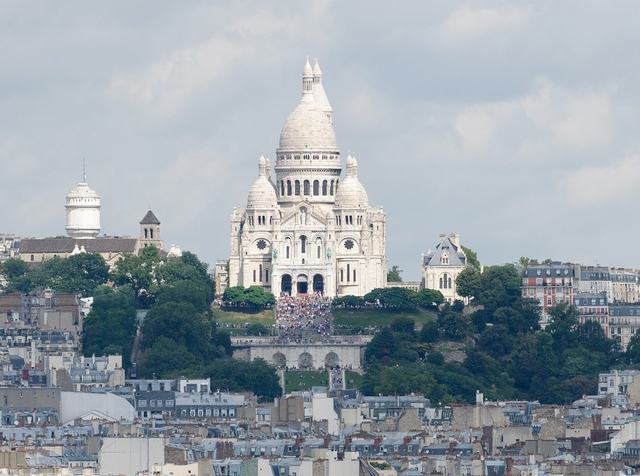
Montmartre
An artists' village perched on the highest hill in Paris, where the Sacré-Cœur basilica overlooks cobbled lanes that have stayed away from the Parisian bustle.
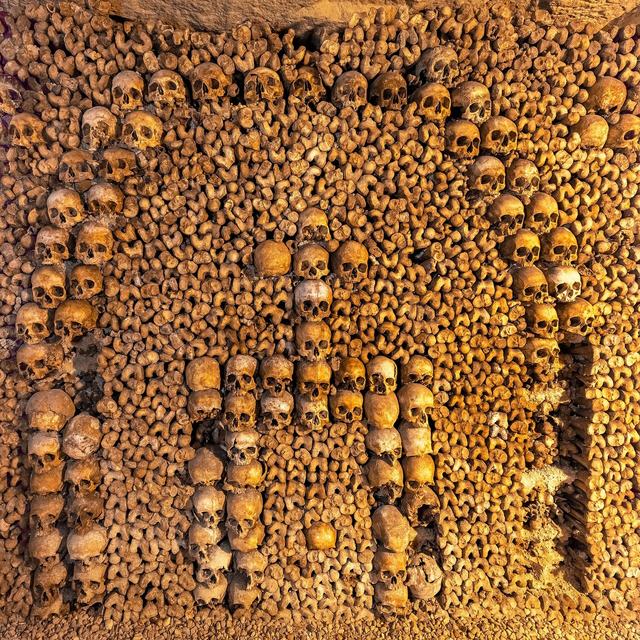
Catacombes de Paris
An underground ossuary developed at the end of the eighteenth century in former quarries, where the bones of several million Parisians are carefully stacked.

Galeries Nationales du Grand Palais
Located in the heart of Paris, on the Avenue des Champs-Élysées, the Grand Palais is the emblematic monument of the Rmn-GP.

La Cathédrale Notre-Dame de Paris
The Cathedral of Notre-Dame de Paris stands in the city of Paris, at the tip of the Île de la Cité.

Muséum national d'histoire naturelle
Seat of the natural history museums of France, the Muséum National d'Histoire Naturelle is in Paris.

l'opéra Garnier
A world-famous architectural masterpiece, the Palais Garnier is the thirteenth opera house in Paris since the founding of this institution by Louis XIV in 1669.

Aquaboulevard
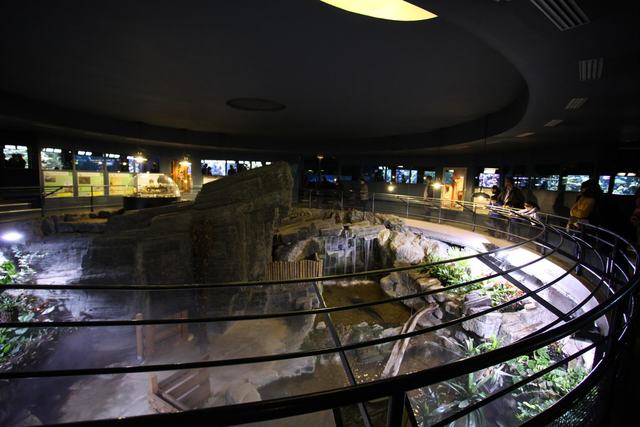
Aquarium Tropical de la Porte Dorée
The collection has about 5,000 animals and 300 species, but these figures vary continually depending on births, deaths, exchanges with other public aquariums, purchases and donations.

Aquarium de Paris - Cineaqua
The Aquarium de Paris – Cinéaqua is an aquarium under the Chaillot hill between the Trocadéro and the Seine in Paris, in the 16th arrondissement.

Arc de triomphe
The Arc de Triomphe is 2.2 kilometres north-west of Place de la Concorde, at the end of the Champs-Élysées avenue.

Centre Georges Pompidou
The Georges Pompidou cultural and art centre, built on the Beaubourg plateau, aroused fierce controversy through the boldness of its architecture due to the architects Rogers, Piano and Franchini.

Château de Bagatelle
An eighteenth-century folly built by the Count of Artois in 1777 following a bet with Queen Marie-Antoinette. Bagatelle gardens: English-style garden, orangery, rose garden.

Château de la Muette
A famous meeting place for hunting parties organised since the Middle Ages, La Muette quickly won its credentials when a château was erected there at the end of the sixteenth century.

Cité de l'architecture et du patrimoine
The Cité de l'architecture et du patrimoine is, with its 22,000 m², the largest architecture centre in the world.
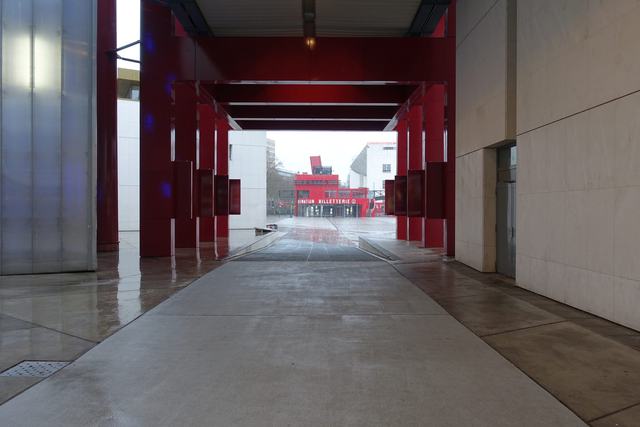
Cité de la musique
The museum presents one of the finest collections of instruments and art objects, restored to their musical, historical and geographical context.
Cité nationale de l'histoire de l'immigration
The Cité nationale de l'histoire de l'immigration (CNHI) is a French immigration museum set in the Palais de la Porte Dorée in eastern Paris and opened to the public in October 2007.

Conciergerie
In the heart of Paris, on the banks of the Seine, visit the Conciergerie, the oldest surviving part of the Palais de la Cité, the capital's first royal residence and a prison during the French Revolution.

Jardin des Tuileries
The Tuileries were once a district of Paris, between the Louvre palace, Rue de Rivoli, Place de la Concorde and the Seine.

Jardin du Luxembourg

L'Adresse Musée de la Poste
L'Adresse Musée de La Poste, until 2009 the Musée de la Poste, is the company museum of La Poste devoted to French postal history and philately.

La Basilique du Sacré-Coeur

La Cité des Sciences de Paris la Villette

La Géode

La Tour Eiffel
The Eiffel Tower is one of the symbolic monuments of Paris. Built in puddled iron, it stands on the Champ-de-Mars and measures 324 metres (with its antenna).

Le Jardin d'Acclimatation
The Jardin d'Acclimatation remains a place of discovery and relaxation much appreciated by Parisians who come to stroll there breathing the scents of yesteryear.

Le Musée de l'Armée

Le Palais de la découverte

Le Panthéon
The Panthéon is a monument on the Montagne Sainte-Geneviève, in the 5th arrondissement of Paris, in the heart of the Latin Quarter.

Le musée Rodin
Behind a facade of sobriety hides a jewel of an eighteenth-century mansion, which houses the permanent collections of the Rodin Museum.

Musée Carnavalet
The Musée Carnavalet is the Paris municipal museum devoted to the history of Paris from the origins of the city to the present day.

Musée Grévin
The Musée Grévin is a private wax museum (owned by Grévin & Cie, a subsidiary of Compagnie des Alpes since its privatisation) in the 9th arrondissement of Paris, France, bringing together wax reproductions of famous people; it is the museum of illusion.

Musée Gustave Moreau
The Gustave-Moreau museum is a national museum at 14 rue de La Rochefoucauld in Paris, in the former studio of the Symbolist painter Gustave Moreau, bequeathed by the artist to the French State in 1897 so that his work be preserved and presented there.

Musée Jacquemart-André

Musée Maillol

Musée Marmottan Monet
The Musée Marmottan, now the Musée Marmottan Monet, is a fine arts museum in Paris in the Ranelagh district: it is the gift by the art historian Paul Marmottan of his townhouse and his Renaissance and Napoleonic-era collections to the Académie des Beaux-Arts in…

Musée Picasso

Musée d'Art Moderne de la Ville de Paris

Musée de Cluny
The Musée de Cluny, officially the Musée national du Moyen Âge – Thermes et hôtel de Cluny, is in the 5th arrondissement of Paris, in the heart of the Latin Quarter, at 6 place Paul-Painlevé, along rue Du Sommerard, in a fifteenth-century townhouse, the Hôtel de Cluny, and in the adjoining Cluny Baths.

Musée de l'Orangerie
The Musée de l'Orangerie is a museum of Impressionist and Post-Impressionist paintings in the Tuileries Garden, at the western end of the Terrasse du bord de l'eau, Place de la Concorde, in Paris.

Musée des Arts forains
Discover the 3 spaces of the museum through our participatory guided tours for young and old. On the programme: carousels, show, attraction and a little history to relive the Belle Époque fairground, in the 19th century.

Musée des arts asiatiques Guimet
From its creation by Émile Guimet in 1889 to today, the museum has never stopped enriching its collections and diversifying them.

Musée des plans-reliefs

Musée du Petit Palais
The Petit Palais is a historic monument of Paris, now used as a fine arts museum, which was built for the 1900 Universal Exhibition by the architect Charles Girault.

Musée du quai Branly
The Musée du quai Branly, or museum of the arts and civilisations of Africa, Asia, Oceania and the Americas, is on quai Branly in the 7th arrondissement of Paris, at the foot of the Eiffel Tower, on the site formerly occupied by the Ministry of Foreign Trade.

Musée national de la Marine
The Musée national de la Marine comes from a collection offered to King Louis XV by Henri Louis Duhamel du Monceau.

Ménagerie du Jardin des Plantes
With its astonishing architectural elements (mostly from the eighteenth and nineteenth centuries), the menagerie is the oldest zoo in the world preserved in its original appearance.
All sites (13)
- Palais du Louvre · Paris
- Palais du Luxembourg · Paris
- Palais-Royal · Paris
- Parc Floral de Paris · Paris
- Parc Monceau · Paris
- Parc Zoologique de Paris · Paris
- Parc de Bagatelle à Paris · Paris
- Paris Canal · Paris
- Sainte-Chapelle · Paris
- Tour Montparnasse · Paris
- Cascade des Buttes-Chaumont · Paris
- Cimetière du Père-Lachaise · Paris
- Grande Cascade du Bois de Boulogne · Paris