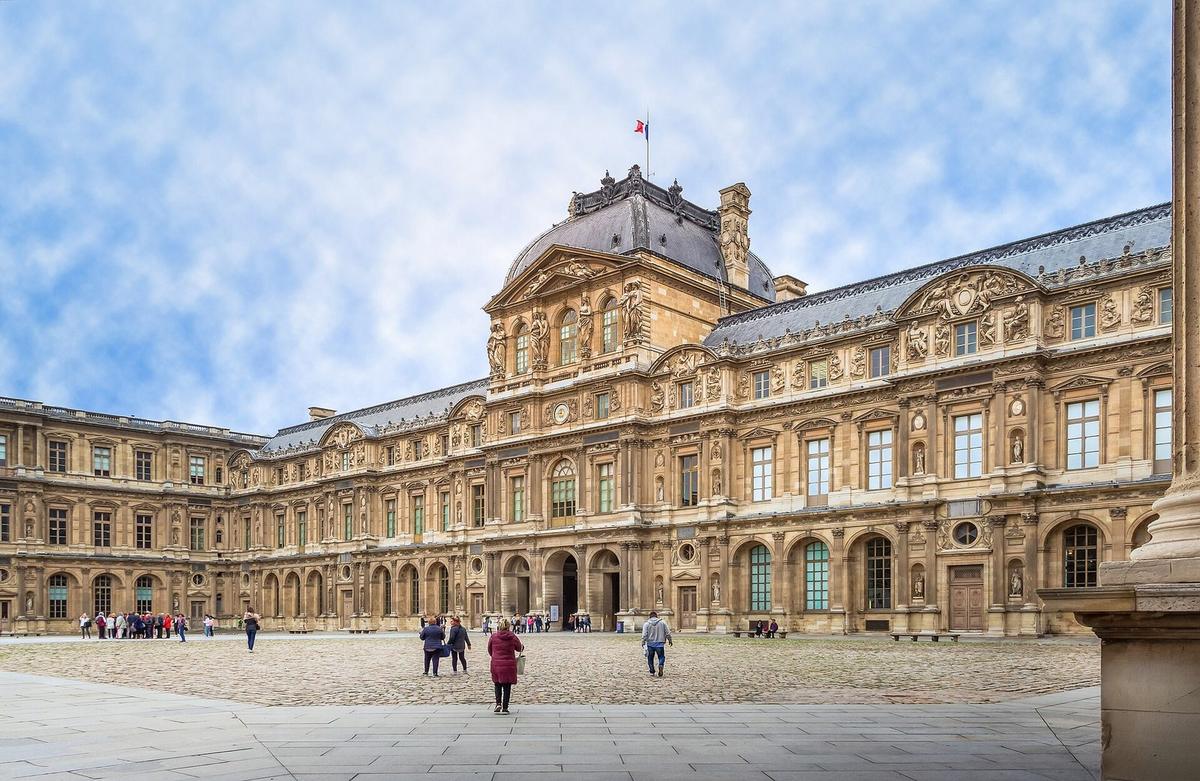
Photo : Ali Sabbagh / Wikimedia Commons (CC0)
Palais du Louvre
The palace of the kings of France, marked by history from the Middle Ages to the year 2000. Today the Louvre museum, the Louvre palace was built on a place called "Lupara", a word that according to historians comes either from Old French "lauer", meaning watchtower, or from Saxon "leovar", fortified castle. This spot is said to date from the 5th century, when King Clovis was trying to repel the Anglo-Saxon invasions. The first known fortress was erected in the 12th century, under Philip Augustus, to protect the city from Plantagenet assaults. The building consisted of a medieval keep, 31 metres high and 19 metres wide, and already bore the name Louvre. Enlarged under Philip the Fair, it was only under Charles V that the fortress became a royal residence: the building was transformed into a château, notably with a grand spiral staircase, called "la grande vis", decorated with the effigies of the royal family. Magnificently preserved remains of this castle are part of the visit. What to see: the building itself, the arcades of the Palace, the Cour Carrée of the Louvre, the modern Louvre pyramid, the statue of Louis XIV, the Carrousel du Louvre, the perspective onto the Tuileries garden.


