Discovering Île-de-France: a practical guide
Île-de-France is not just Paris. Around the capital, the region offers great royal castles, forests, villages, museums and gardens, all reachable by train or car in under an hour.
This practical guide helps you choose your stops and organise your trip. Underlined site names link to their detailed pages.
Understanding the region in a few minutes
The region has eight départements: Paris, Hauts-de-Seine, Seine-Saint-Denis, Val-de-Marne, Essonne, Yvelines, Seine-et-Marne and Val-d'Oise. Paris and the inner suburbs are very urban. The outer ring is greener, with forests, valleys and villages.
Paris offers famous monuments: La Tour Eiffel, La Cathédrale Notre-Dame de Paris, Sainte-Chapelle, Arc de triomphe, Palais du Louvre, and neighbourhoods such as Montmartre. To the west, Palais et parc de Versailles and Château de Saint-Germain-en-Laye; to the south, Palais de Fontainebleau; to the east, Provins and Château de Vaux-le-Vicomte.
Public transport is excellent: metro, RER and trains. Many sites around Paris can be visited in a day.
- Use the RER and trains for Versailles, Fontainebleau and Provins.
- Avoid combining too many sites in the same day.
- Get a transport pass suited to the length of your stay.

La Tour Eiffel
The Eiffel Tower is one of the symbolic monuments of Paris. Built in puddled iron, it stands on the Champ-de-Mars and measures 324 metres (with its antenna).

Palais et parc de Versailles
A favoured residence of the French monarchy from Louis XIV to Louis XVI, the Palace of Versailles, embellished by several generations of architects, sculptors, ornamentalists and landscape designers, was for more than a century the model in Europe of what a royal residence should be.

Palais de Fontainebleau
Used by the kings of France since the twelfth century, the hunting lodge of Fontainebleau, in the heart of a great Île-de-France forest, was transformed, enlarged and embellished in the sixteenth century by Francis I, who wanted to make it a "new Rome".
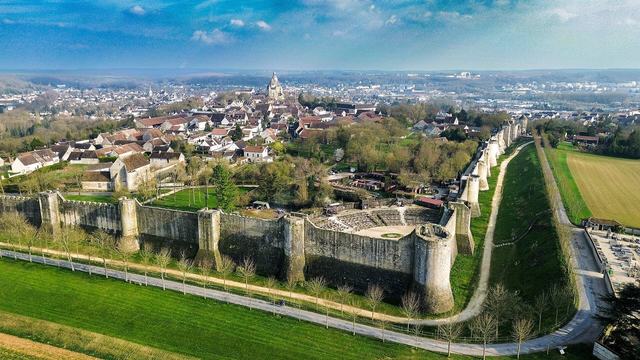
Provins
In Seine-et-Marne, about 80 km south-east of Paris, the fortified medieval town of Provins offers an exceptional architectural heritage.
Culture, history and heritage
Île-de-France is the cradle of the history of the monarchy. Versailles, Fontainebleau, Saint-Germain-en-Laye, Château de Vincennes, Château de Maisons-Laffitte and Château de Rambouillet tell the story of the kings of France. Château de Vaux-le-Vicomte is a masterpiece of the seventeenth century.
Paris has the greatest museums: Le musée du Louvre, Le musée d'Orsay, the Le Panthéon, the Musée Gustave Moreau, the Musée Fragonard. The Catacombes de Paris and the Conciergerie evoke other periods of history. The Basilique Cathédrale de Saint Denis is the necropolis of the kings of France.
The region also has many more discreet sites: Château de Champs-sur-Marne, Château de Breteuil, Château de Thoiry, Château de La Roche-Guyon, Musée de la Grande Guerre du pays de Meaux. Specialist museums, such as the Cité de l'architecture et du patrimoine and the Cité nationale de l'histoire de l'immigration, complete the offer.
- Book tickets for Versailles and the major museums in advance.
- National museums are often closed on Mondays or Tuesdays.
- To avoid crowds, favour mornings and quiet weeks.

Le musée du Louvre
The Louvre is the largest museum in Paris by area. Located in the heart of the city, between the right bank of the Seine and the Rue de Rivoli, in the 1st arrondissement, the building is a former royal palace.

Le musée d'Orsay
The Musée d'Orsay is a national museum in Paris, on the left bank of the Seine, in the 7th arrondissement.

Château de Vincennes
A royal residence from the twelfth to the eighteenth century, the Château de Vincennes has kept its enclosure, medieval towers, the fourteenth-century keep and the Sainte-Chapelle with its sixteenth-century stained glass.
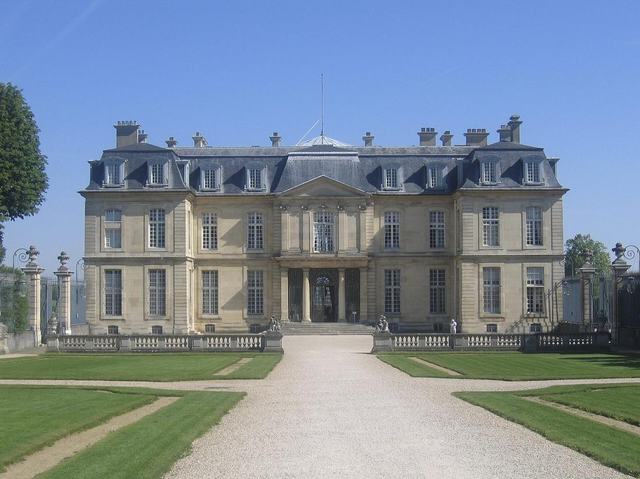
Château de Champs-sur-Marne
Near Paris, the château de Champs-sur-Marne was part of the vast estate assembled by the financier Poisson de Bourvallais at the end of Louis XIV's reign.
Food and local produce
The Île-de-France table reflects the diversity of Paris: bistros, brasseries, starred restaurants and restaurants from all over the world. Among the specialities are Brie de Meaux, Brie de Melun, jambon de Paris, apple tart and macarons.
In the outer ring, farms, markets and pick-your-own farms let you taste local produce. The vineyards of Montmartre and of several Île-de-France communes remain small, but they exist. The Musée des Arts forains is a curiosity to visit with the family.
To find good addresses, favour restaurants frequented by locals and neighbourhood markets.
- Book restaurants in central Paris, especially at weekends.
- Brie is best tasted fresh, from Seine-et-Marne producers.
- Neighbourhood markets are good moments of conviviality.
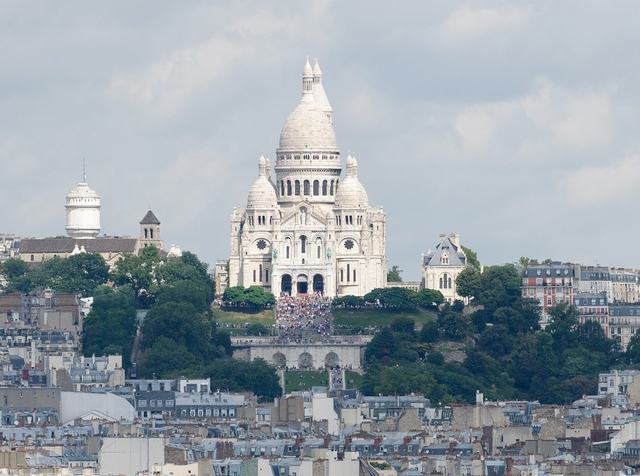
Montmartre
An artists' village perched on the highest hill in Paris, where the Sacré-Cœur basilica overlooks cobbled lanes that have stayed away from the Parisian bustle.

Musée des Arts forains
Discover the 3 spaces of the museum through our participatory guided tours for young and old. On the programme: carousels, show, attraction and a little history to relive the Belle Époque fairground, in the 19th century.
Provins
In Seine-et-Marne, about 80 km south-east of Paris, the fortified medieval town of Provins offers an exceptional architectural heritage.
Nature and wide open spaces
The region has great forests: the Fontainebleau forest, famous for its rocks, the Rambouillet forest and the Saint-Germain forest. Valleys, such as Les Vaux de Cernay, offer walks near Paris. L'Eléphant d'Apremont is a natural curiosity.
For children, wildlife parks are numerous: Thoiry, Parc des Félins, Réserve zoologique de Sauvage, Ménagerie du Jardin des Plantes. Aquariums such as the Aquarium de Paris - Cineaqua and the Aquarium Tropical de la Porte Dorée are outings for rainy days.
The Muséum national d'histoire naturelle presents natural science collections in Paris. Parks and gardens, numerous, offer breaks between visits.
- In the forest, stay on the marked paths.
- For wildlife parks, check opening hours.
- On summer weekends, roads to the forests are busy.

Les Vaux de Cernay
Nestled in the Yvette valley, on the edge of the Rambouillet forest, the Vaux de Cernay form a rolling site where ponds, waterfalls and rocks follow one another along a stream.
Parc des Félins
The Parc des Félins is a zoological park in the commune of Lumigny-Nesles-Ormeaux in Seine-et-Marne.

Muséum national d'histoire naturelle
Seat of the natural history museums of France, the Muséum National d'Histoire Naturelle is in Paris.

L'Eléphant d'Apremont
Regarded as the "Green Lung" of Île-de-France, the Fontainebleau forest offers varied landscapes and exceptional sites: the chaos and desert of Apremont, famous for its piles of rocks; the heights of La Solle, for the panorama below over the racecourse and...
When to go and how to plan
Spring and autumn are the most pleasant: mild temperatures, gardens in flower or colour. Summer is very busy, and some monuments are packed. Winter is calmer, with Christmas lights, but the days are short.
Public transport is very efficient. For Versailles, Fontainebleau, Provins or Saint-Germain-en-Laye, the train or RER is enough. A car is useful for forests and small villages. In Paris, walking and the metro are the best ways to get around.
For a five-day trip, you can spend three days in Paris and two days in the surroundings: for example Versailles and Fontainebleau. For a weekend, focus on one neighbourhood or one major site.
- Book tickets for very popular sites in advance.
- Pack comfortable shoes.
- Avoid rush hour on public transport.
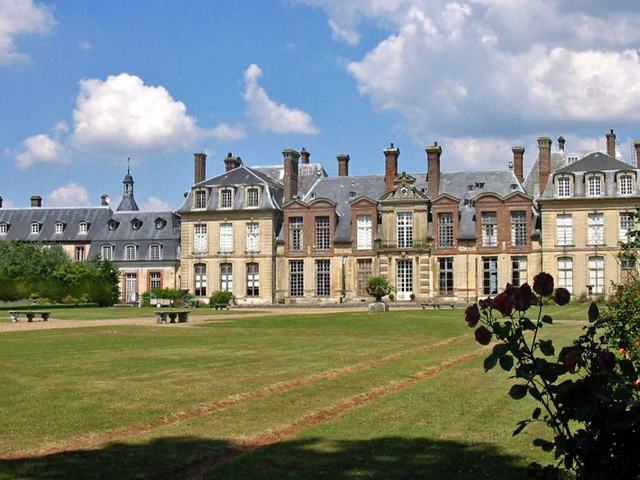
Château de Thoiry
The Château de Thoiry in the Yvelines, 40 km west of Paris and 25 km north of Versailles.

Château de Rambouillet
The fourteenth-century fortified castle has housed illustrious figures over the centuries who gradually transformed it into a pleasure residence acquired by Louis XVI in 1783.
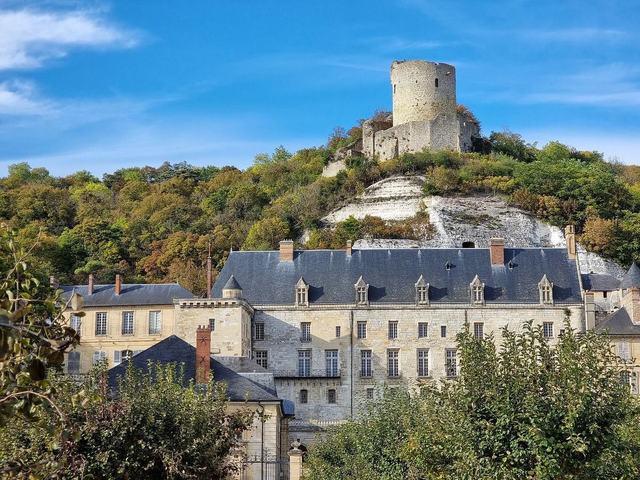
Château de La Roche-Guyon
A true landmark in the landscape, the keep stands as guardian of the Château de La Roche-Guyon and the centuries of history it has seen pass by.

Château de Maisons-Laffitte
On the banks of the Seine, the château de Maisons-Laffitte is one of the best examples of French classical art.
Going further
Find all the sites of the region on the page Île-de-France, or explore a département: