Photo : Diego Delso / Wikimedia Commons (CC BY-SA 4.0)
Catacombes de Paris
The Paris catacombs are part of former limestone quarries, dug about twenty metres beneath the 14th arrondissement, whose stone was used to build much of the capital. At the end of the eighteenth century, faced with the overcrowding of Paris cemeteries, notably that of the Innocents, these galleries were turned into a municipal ossuary. The work was consecrated on 7 April 1786 and transfers of bones continued until 1861.
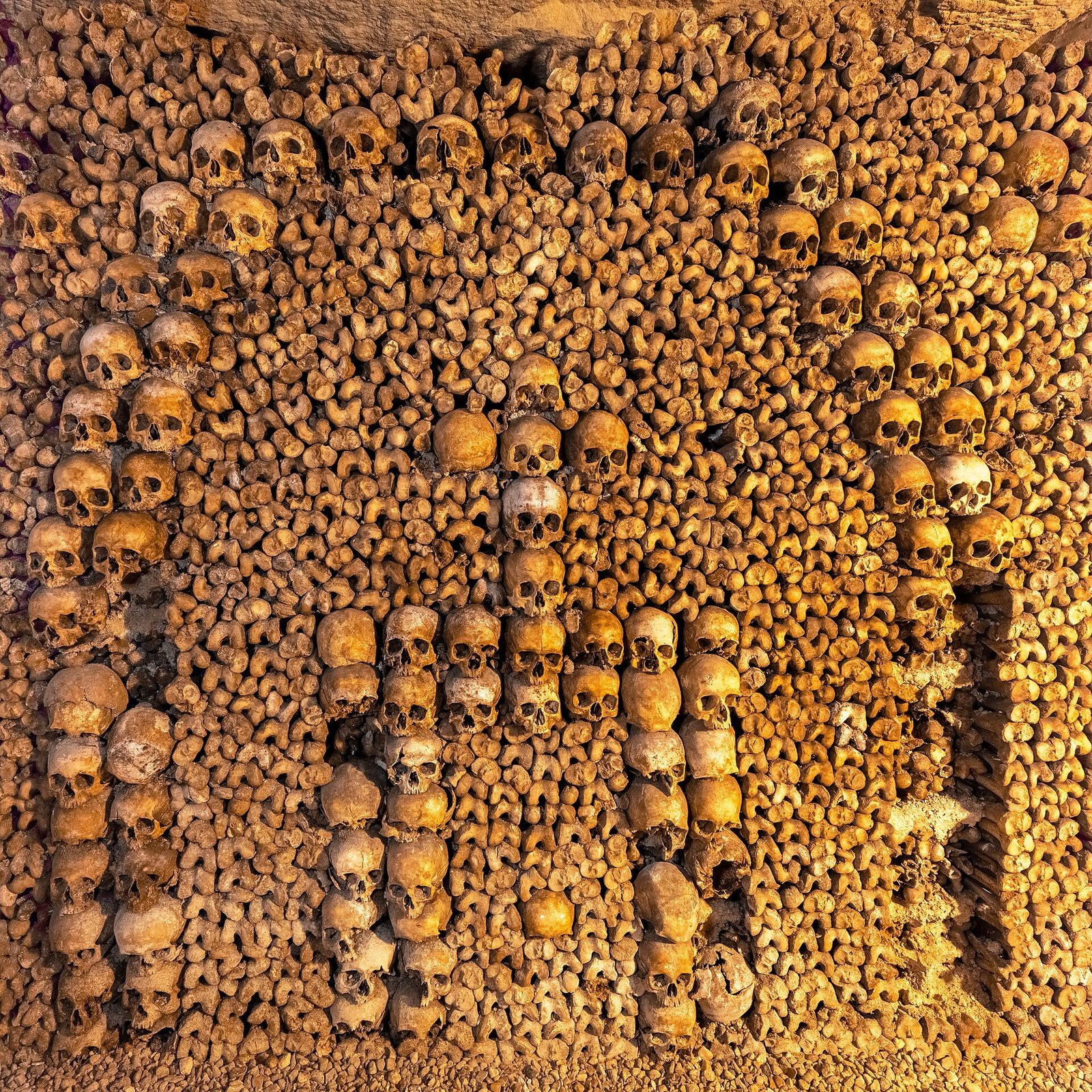
About six million people rest there. The Inspection générale des carrières, led by Charles-Axel Guillaumot, carried out the consolidation work and the transfer of the remains. The bones are stacked in an orderly way along the galleries. The route open to the public is about two kilometres long, which is only a small fraction of the some 300 kilometres of galleries that extend beneath Paris. The entrance is on Place Denfert-Rochereau, and the site is now managed by the Musée Carnavalet.