Discovering Paris: a practical guide
Paris packs famous monuments, great museums, gardens, characterful neighbourhoods and a very rich cultural life into a few kilometres. The city is explored on foot and by metro, and three to four days is enough to see the essentials.
This practical guide helps you choose your stops and organise your trip. Underlined site names link to their detailed pages.
Understanding Paris in a few minutes
The Seine divides Paris into a Right Bank and a Left Bank, and the city is organised into twenty arrondissements arranged in a spiral. On the Right Bank are Le musée du Louvre, Palais-Royal, l'opéra Garnier and Montmartre. On the Left Bank are Le musée d'Orsay, Le musée Rodin, Le Panthéon and the Latin Quarter. In the middle, the Île de la Cité has La Cathédrale Notre-Dame de Paris, Sainte-Chapelle and the Conciergerie.
Distances between sights are often short. Group your visits by neighbourhood to limit travel.
- The metro is the fastest way to get around.
- Group your visits by neighbourhood.
- Bring good shoes: you will walk a lot.

La Tour Eiffel
The Eiffel Tower is one of the symbolic monuments of Paris. Built in puddled iron, it stands on the Champ-de-Mars and measures 324 metres (with its antenna).

Le musée du Louvre
The Louvre is the largest museum in Paris by area. Located in the heart of the city, between the right bank of the Seine and the Rue de Rivoli, in the 1st arrondissement, the building is a former royal palace.
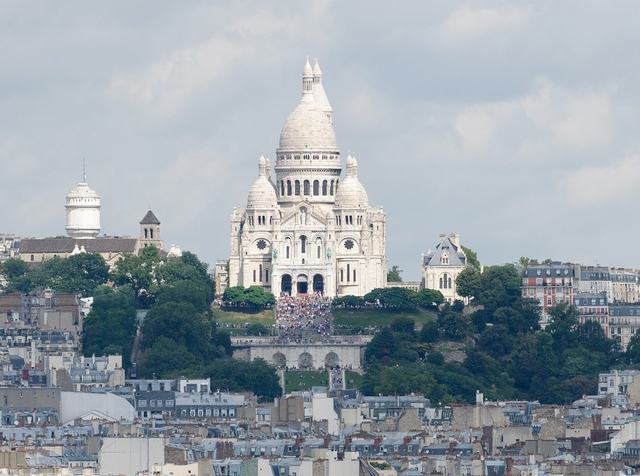
Montmartre
An artists' village perched on the highest hill in Paris, where the Sacré-Cœur basilica overlooks cobbled lanes that have stayed away from the Parisian bustle.

La Cathédrale Notre-Dame de Paris
The Cathedral of Notre-Dame de Paris stands in the city of Paris, at the tip of the Île de la Cité.
Culture, history and heritage
Museums are the main attraction: Le musée du Louvre, Le musée d'Orsay, Musée de l'Orangerie, Le musée Rodin, Centre Georges Pompidou, Musée de Cluny, Musée Gustave Moreau, Musée des arts asiatiques Guimet, Musée national de la Marine, Galeries Nationales du Grand Palais. Monuments are just as famous: La Tour Eiffel, Arc de triomphe, Tour Montparnasse, Sainte-Chapelle, Conciergerie.
For more unusual visits, the Catacombes de Paris, the Musée des Arts forains, the Musée Grévin and the Cité de l'architecture et du patrimoine are options. The Cité nationale de l'histoire de l'immigration, the Cité de la musique and L'Adresse Musée de la Poste complete the offer.
- Book Louvre, Eiffel Tower and Catacombs tickets in advance.
- Many museums close on Mondays or Tuesdays: check.
- A museum pass can save money if you visit several.

Le musée d'Orsay
The Musée d'Orsay is a national museum in Paris, on the left bank of the Seine, in the 7th arrondissement.

Sainte-Chapelle
The Sainte-Chapelle, also called Sainte-Chapelle du Palais, is a chapel built on the Île de la Cité, in Paris, at the request of Saint Louis to house the Crown of Thorns, a piece of the True Cross, and various other relics of the Passion that he had acquired from 1239.

Arc de triomphe
The Arc de Triomphe is 2.2 kilometres north-west of Place de la Concorde, at the end of the Champs-Élysées avenue.
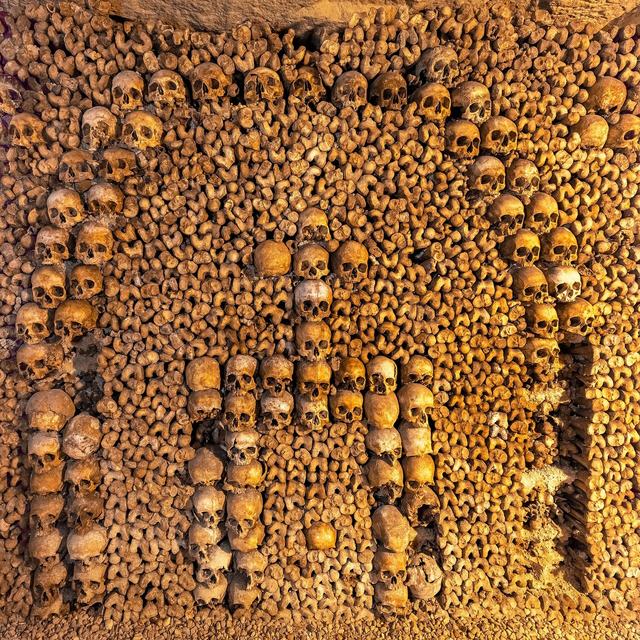
Catacombes de Paris
An underground ossuary developed at the end of the eighteenth century in former quarries, where the bones of several million Parisians are carefully stacked.
Food and local produce
Paris is a gastronomic capital: bistros, brasseries, bakeries, pastry shops and markets. Try the croissant, the baguette, the jambon-beurre, onglet steak, steak-frites, croque-monsieur and macarons.
Neighbourhood markets are good places to taste produce. For restaurants, booking is advisable in the evening and at weekends.
- Book in the evening and at weekends.
- Avoid restaurants right in front of the monuments.
- Try a pastry from a neighbourhood bakery.
Montmartre
An artists' village perched on the highest hill in Paris, where the Sacré-Cœur basilica overlooks cobbled lanes that have stayed away from the Parisian bustle.

Palais-Royal
A stone's throw from the Louvre, the Palais-Royal was built at the request of Cardinal Richelieu in 1633.

Jardin des Tuileries
The Tuileries were once a district of Paris, between the Louvre palace, Rue de Rivoli, Place de la Concorde and the Seine.
Nature, gardens and family outings
Paris has many gardens: Jardin des Tuileries, Le Jardin d'Acclimatation, and the Château de Bagatelle with its park. The Muséum national d'histoire naturelle and the Ménagerie du Jardin des Plantes are good outings for families. The Parc Zoologique de Paris is one of the capital's big zoos.
To see the city differently, Paris Canal offers cruises on the Canal Saint-Martin and the Seine. The Aquarium de Paris - Cineaqua and the Aquarium Tropical de la Porte Dorée are other outings for children.
- Gardens are nicest early in the morning.
- Pack an umbrella in any season.
- For cruises, compare timetables.
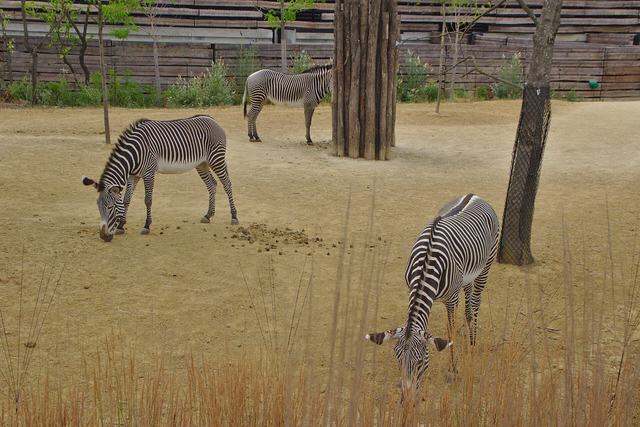
Parc Zoologique de Paris
In a 15-ha wooded park, in the heart of the Bois de Vincennes, the Paris Zoological Park is one of the most renowned zoos in France. It offers a change-of-scene walk that lets you approach nearly 500 animals.

Le Jardin d'Acclimatation
The Jardin d'Acclimatation remains a place of discovery and relaxation much appreciated by Parisians who come to stroll there breathing the scents of yesteryear.

Paris Canal
The Canal Saint-Martin is a canal 4.55 km long lying entirely in the 10th and 11th arrondissements of Paris.

Ménagerie du Jardin des Plantes
With its astonishing architectural elements (mostly from the eighteenth and nineteenth centuries), the menagerie is the oldest zoo in the world preserved in its original appearance.
When to go and how to plan
Spring and autumn are the most pleasant. Summer is hot and very busy. Winter is cool, but museums are less crowded and the Christmas decorations are beautiful.
Paris is well served by train and plane. Once there, leave the car behind: the metro, buses and walking are enough. A three-day trip can combine the Île de la Cité and the Louvre, Montmartre and the Opéra, then the Eiffel Tower and Orsay.
- Book accommodation in advance.
- Keep an eye on your belongings in the metro and near monuments.
- Leave half a day free for wandering.

Château de la Muette
A famous meeting place for hunting parties organised since the Middle Ages, La Muette quickly won its credentials when a château was erected there at the end of the sixteenth century.

Musée national de la Marine
The Musée national de la Marine comes from a collection offered to King Louis XV by Henri Louis Duhamel du Monceau.
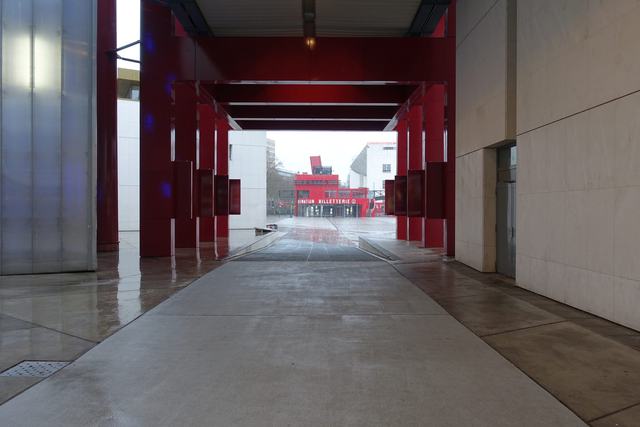
Cité de la musique
The museum presents one of the finest collections of instruments and art objects, restored to their musical, historical and geographical context.
Going further
Explore the départements of this area: