Discovering Provence-Alpes-Côte d'Azur: a practical guide
The Provence-Alpes-Côte d'Azur region is one of the most contrasting in France: in a few hours' drive you go from Mediterranean beaches to Alpine peaks, from lavender fields to deep gorges, from ancient towns to hilltop villages.
This practical guide helps you choose your stops, understand the region and organise your trip. Underlined site names link to their detailed pages.
Understanding the region in a few minutes
The region has six départements: Bouches-du-Rhône, Var, Alpes-Maritimes, Vaucluse, Alpes-de-Haute-Provence and Hautes-Alpes. Broadly speaking you can tell apart Provence, from the Rhône to the mountains of the hinterland, the Côte d'Azur, from Var to the Italian border, and the Southern Alps, inland.
Each area has its own atmosphere. Vaucluse is the land of hilltop villages and ochre landscapes, with Gordes, Séguret, Lourmarin and the Colorado Provençal. Bouches-du-Rhône brings together Marseille, Arles, the Camargue and the Cassis calanques. Alpes-de-Haute-Provence offers the Plateau de Valensole, gorges and lakes. Var and Alpes-Maritimes face the sea, with hilltop villages in the hinterland.
The difficulty is not to try to do too much: in Provence-Alpes-Côte d'Azur it is better to choose one area and take the time to discover it.
- Choose a central base and make day loops from it.
- Allow plenty of travel time in summer on the coast.
- Alternate villages, nature and shady breaks to avoid fatigue.
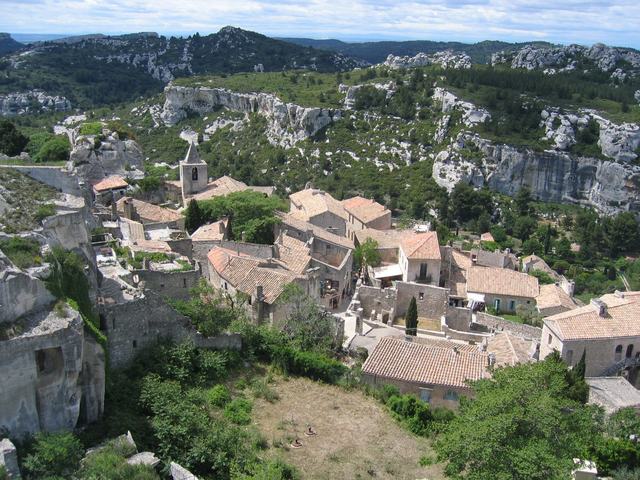
Les Baux-de-Provence
Between a dizzying precipice and the impressive ruins of its long-impregnable fortress, the most visited village in France sits on a rocky spur of the Alpilles, between the Vallon de la Fontaine and the Val d'Enfer.
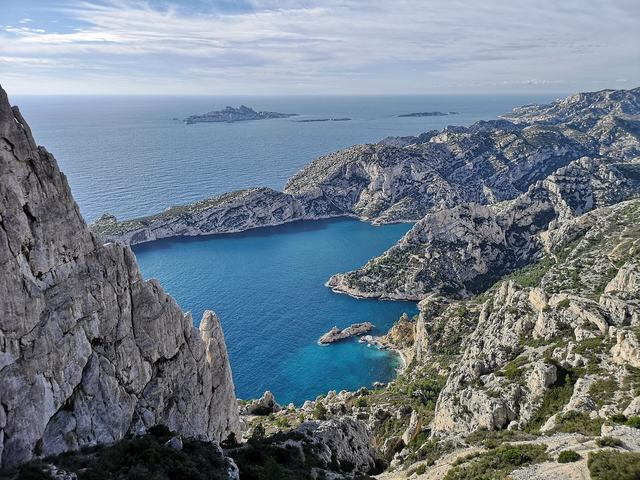
Les calanques de Cassis
The Calanques massif, at the gates of Marseille, offers a postcard landscape.
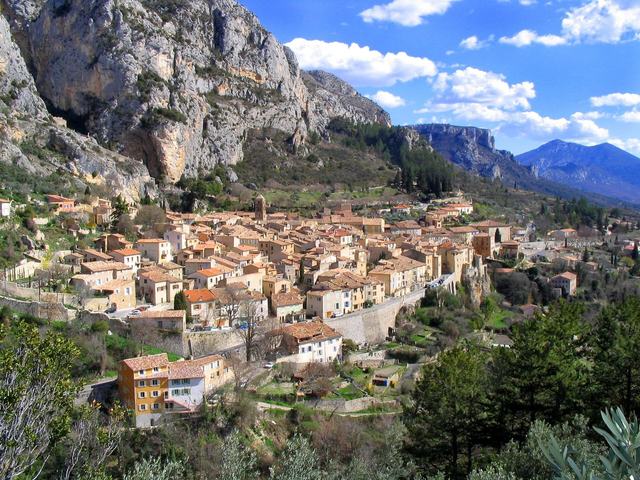
Moustiers-Sainte-Marie
Clinging to the foot of cliffs, in the hollow of a fault where a torrent flows and olive trees have grown, with fields of lavender, lavandin, thyme and cork oaks on the horizon, this village at the edge of the Verdon gorges and near the artificial Lake Sainte-Croix is one of the wonders of Provence.
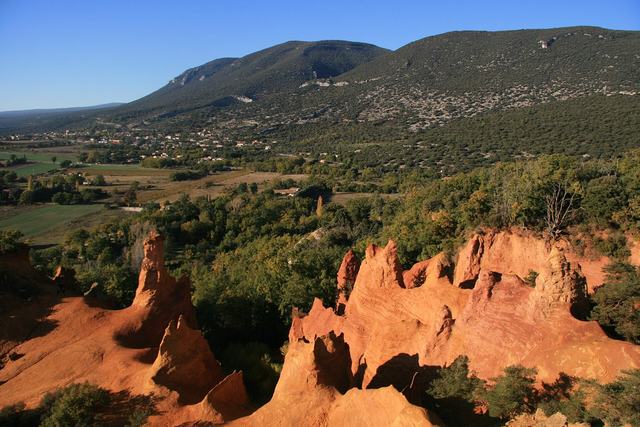
Colorado Provençal
Former open-air ochre quarries, worked until 1992, forming a landscape of blazing colours reminiscent of American canyons.
Culture, history and heritage
The region was a crossroads from very early on: Greeks, Romans, the Counts of Provence, the Avignon popes and then the kingdom of France all left their mark. Ancient heritage is particularly rich: the Théâtre antique d'Orange, the monuments of Arles, such as the Musée de l'Arles antique, and the remains of Vaison la Romaine.
The Middle Ages are evoked by the Palais des papes in Avignon and the Pont d'Avignon, but also by hilltop castles, Cistercian abbeys, including the Abbaye de Sénanque, and fortified villages.
The region is also a land of artists: Cézanne and the Montagne Sainte-Victoire, Van Gogh in Arles, Picasso in Antibes. Several museums bear witness, such as the Fondation Vincent Van Gogh en Arles, the Musée Picasso (Antibes) and the Musée des Beaux- Arts de Marseille. The Carrières de Lumières, at Les Baux-de-Provence, offer spectacular projections in former quarries.
- Combined tickets let you save on museums in the same town.
- Major monuments are more pleasant early in the morning in summer.
- For historic towns such as Arles or Avignon, allow at least half a day.

Palais des papes
The Palace of the Popes is the symbol of the Church's influence over Christian Europe in the fourteenth century.

Théâtre antique d'Orange
Located in Provence, the Ancient Theatre of Orange is the best-preserved Roman theatre in the West, listed as a UNESCO World Heritage site.
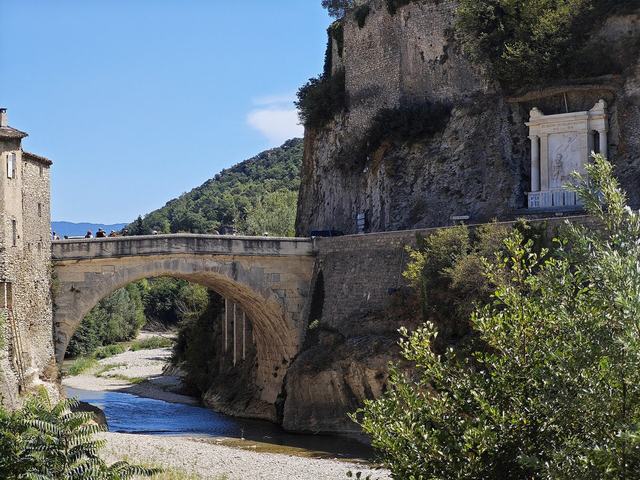
Vaison la Romaine
Between the Rhône valley and Mont Ventoux, Vaison is very close to the Dentelles de Montmirail, in hill country scented with vines and olive trees.
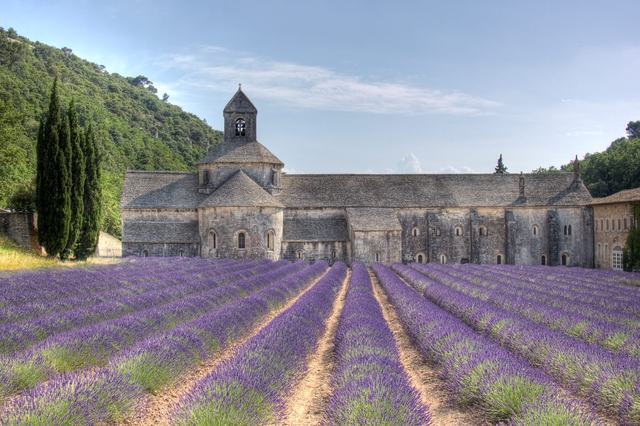
Abbaye de Sénanque
Notre-Dame de Sénanque is a working Cistercian monastery in the commune of Gordes (Vaucluse), in the valley where the Sénancole flows.
Food and local produce
Provençal cooking is the food of the sun: olive oil, tomatoes, garlic, herbes de Provence and Mediterranean fish. Try ratatouille, bouillabaisse in Marseille, tapenade, anchoïade and market produce.
The wines are varied: Côtes-du-Rhône in Vaucluse, Provence wines, Var rosés and Bandol wines. Cellars often offer tastings; remember to nominate a driver. Local products also include lavender honey, goat's cheeses, Aix calissons and Cavaillon melons.
Village markets are a highlight of a trip. The liveliest take place in the morning, and it is best to arrive early to enjoy the stalls and the cool.
- Find out the market day of each village.
- Book seaside restaurants in summer.
- Taste seasonal produce rather than the most touristy specialities.
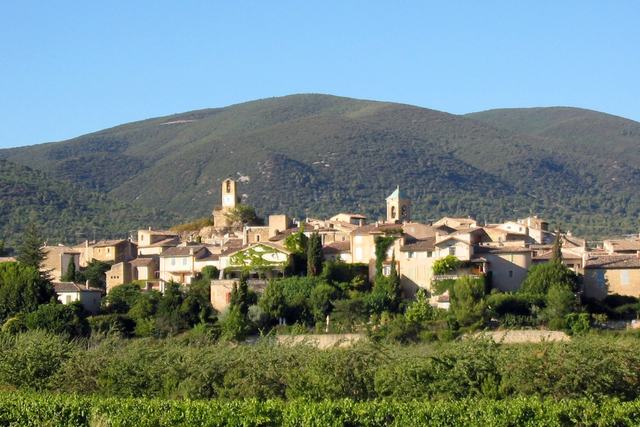
Lourmarin
It was in the sixteenth century that the inhabitants of the Protestant village were massacred by Maynier d'Oppède.
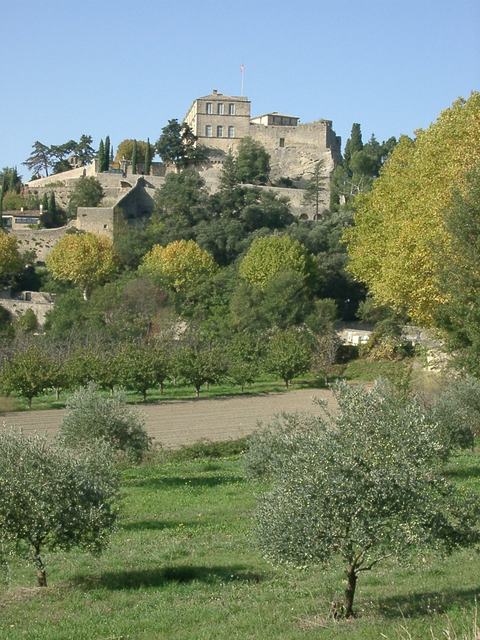
Ansouis
In the Middle Ages, Ansouis occupied an ideal position to control the road between Aix-en-Provence and Apt.
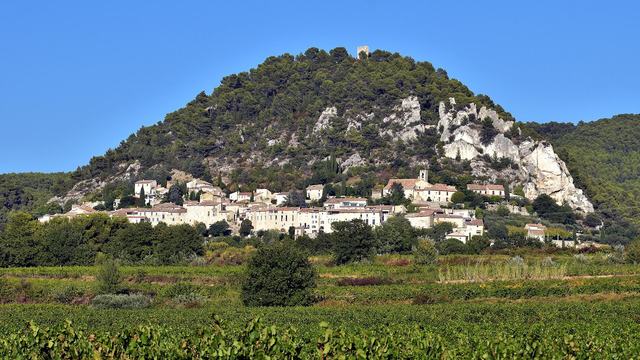
Séguret
Foremost among Séguret's charms shine the Clock Tower topped by a caged bell, the fine Reynier gate, the fifteenth-century belfry, the twelfth- and thirteenth-century Romanesque church of Saint-Denis, the chapel of Notre-Dame-des-Grâces and the seventeenth-century Mascarons fountain, in Baroque style.
Nature and wide open spaces
The region offers a great variety of natural landscapes. On the coast, the calanques, the Giens peninsula, the Port-Cros National Park and the beaches of Porquerolles and Plage de Pampelonne attract many visitors.
Inland, the gorges are spectacular: the Verdon, the Daluis gorges, the Cians gorges and the Clue de carejuan. Lake Sainte-Croix is a large body of water for swimming and water sports.
In the mountains, the Col de la Bonette, the Col d'Izoard, the Casse Déserte, the Clarée valley and lakes such as Lac du Goléon and Lac d'Allos offer high-altitude landscapes. The ochre landscapes of the Colorado Provençal and the Mines de Bruoux are easier to reach.
Many natural sites are fragile and subject to access rules, especially in summer. Access to the calanques is regulated in summer, and forest massifs are sometimes closed when there is a fire risk: check before you go.
- Check access restrictions to the massifs before you go.
- In the mountains, check the weather and whether the passes are open.
- Always bring water, a hat and good shoes.
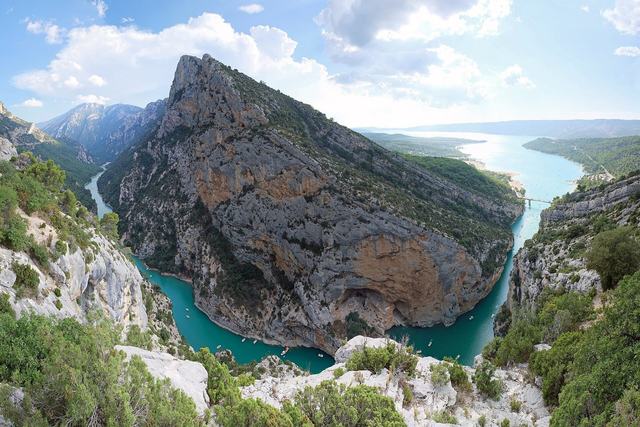
Canyon du verdon
A famous canyon with limestone walls. Above all see: the Point Sublime (400 m high), the Barre de l'Escalès (cliff), the Baume aux Bœufs tunnel cave, the St-Maurin waterfalls...
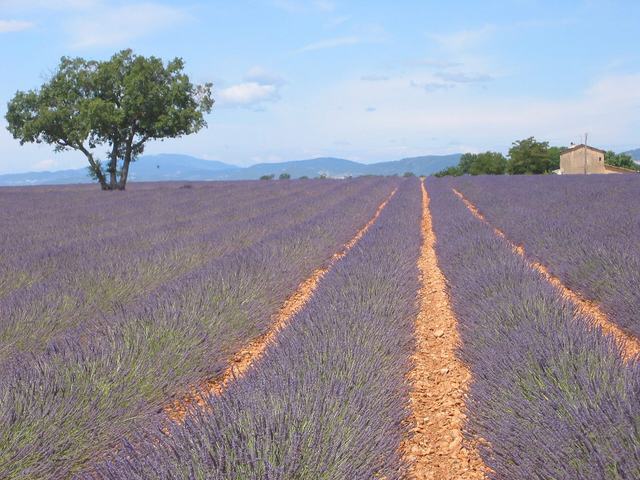
Plateau de Valensole
A huge farming plateau covered with lavender fields as far as the eye can see; in July Valensole offers one of the most photographed landscapes of Provence.
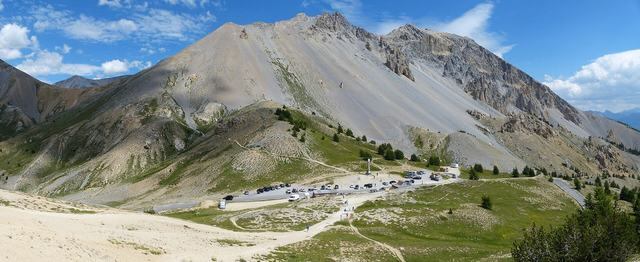
Col d'Izoard
Crossed at 2,362 metres between the Briançonnais and the Queyras, the Col d'Izoard is one of the legendary giants of the Tour de France, famous for its lunar setting of the Casse Déserte.
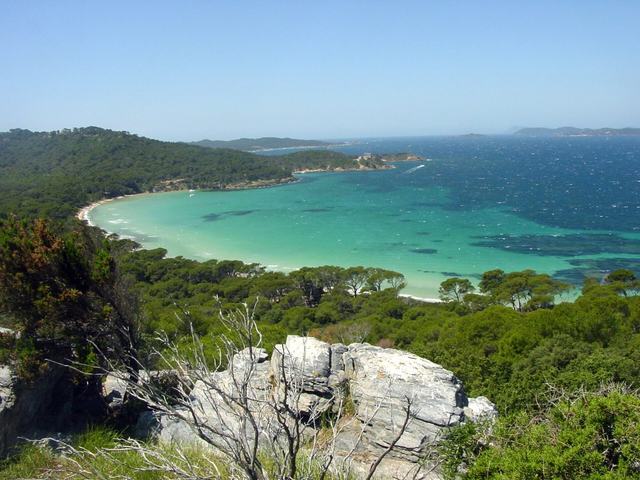
Plage Notre-Dame (Porquerolles)
White-sand beach on the island of Porquerolles, often cited among the most beautiful in the Mediterranean.
When to go and how to plan
Spring and autumn are the best seasons: mild temperatures, colourful landscapes and less crowded sites. Summer is very hot, especially inland, and very busy on the coast. Lavender flowers in early summer and attracts many visitors. Winter is mild on the coast, but cold at altitude, with ski resorts in the Alps.
A car is almost essential to get between villages and natural sites. Big towns such as Marseille, Avignon, Arles and Nice are visited on foot and by public transport. In the mountains, roads are winding and sometimes closed in winter.
For a trip of eight to ten days, you can combine three areas: the Luberon and Vaucluse, the Camargue and Arles, then the Verdon gorges and the Valensole plateau. Our guides by département, listed at the bottom of the page, detail each area.
- Start early in summer: heat and crowds build quickly in the middle of the day.
- Book accommodation and very popular sites in advance.
- Respect lavender crops: they are not photo-shoot locations.
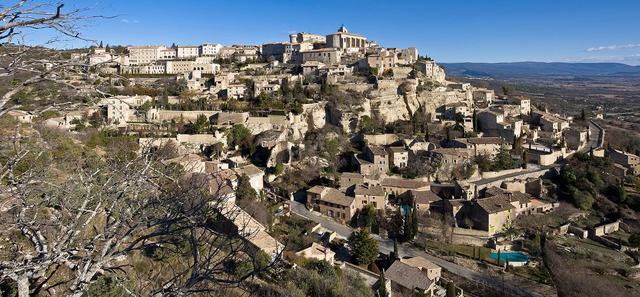
Gordes
This village perched on a promontory seems to stand guard over the Apt valley and the Cavaillon plain.
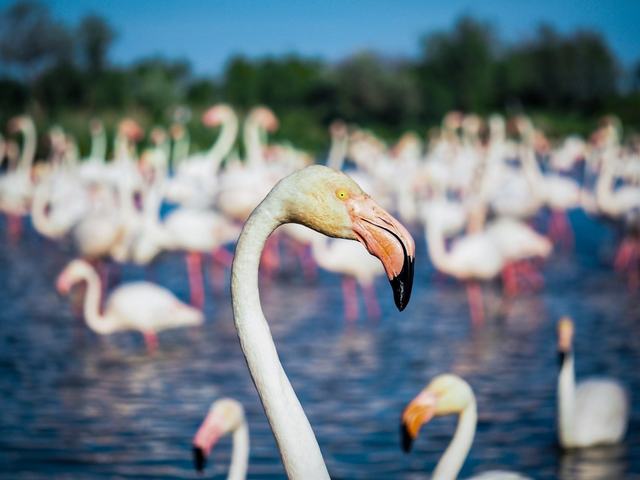
Camargue
A delta shaped by the arms of the Rhône, the Camargue unrolls ponds, salt marshes and rice fields as far as the eye can see. White horses, black bulls and colonies of pink flamingos make up one of the most recognisable natural landscapes in France.
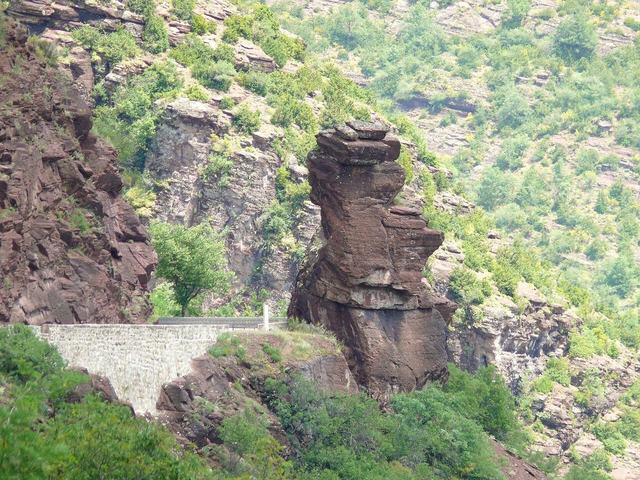
Les Gorges de Daluis
The red gorges: the name Daluis comes from the name of a commune on the right bank of the Haut-Var, downstream of the magnificent gorges of red Permian schists that make this tourist circuit world-famous. Of the same nature as the Cians gorges, the Daluis gorges are...
Going further
Find all the sites of the region on the page Provence-Alpes-Côte d'Azur, or explore a département: