Discovering Nouvelle-Aquitaine: a practical guide
Nouvelle-Aquitaine is the largest region of mainland France. It brings together the Atlantic coast, the Landes forest, the vineyards of Bordeaux and Cognac, the Périgord, the Limousin, the Basque Country and the Pyrenees.
This practical guide helps you choose your stops and organise your trip. Underlined site names link to their detailed pages.
Understanding the region in a few minutes
The region has twelve départements: Gironde, Dordogne, Lot-et-Garonne, Landes, Pyrénées-Atlantiques, Charente, Charente-Maritime, Deux-Sèvres, Vienne, Haute-Vienne, Creuse and Corrèze. Several large areas stand out: the Atlantic coast, with La Rochelle, Dunes de l'Ile de Ré, Dunes de l'Ile d'Oléron, the Bassin d'Arcachon and the La Dune du Pilat; the Périgord, a land of castles and caves; the vineyards of Bordeaux and Cognac; the Basque Country and Béarn, with Biarritz, Bayonne and Château de Pau; and the Limousin, more rural, with forests, lakes and small towns.
Each area has its own atmosphere: beaches and pine forests on the coast, hills, bastides and castles in the Périgord, bocage landscapes in Poitou, mountains and colourful villages in the Basque Country.
Distances are large: it is better to choose one or two areas for a trip of a few days.
- Allow about three hours' drive between Bordeaux and Bayonne or Limoges.
- A car is useful outside the big cities.
- The weather is oceanic: mild, but sometimes rainy.
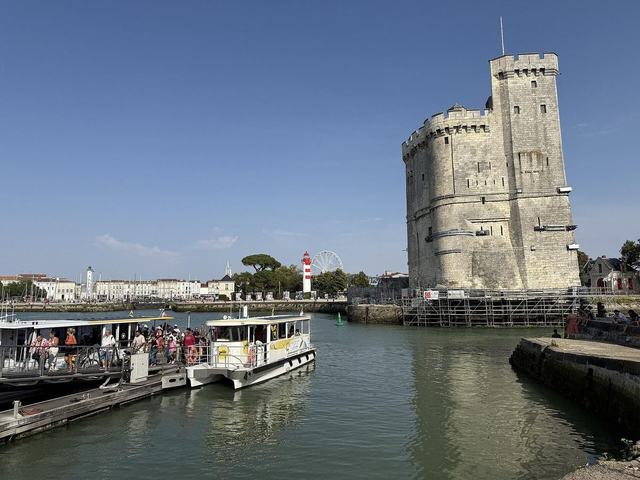
La Rochelle
Prefecture of Charente-Maritime and a great historic Atlantic port, famous for its medieval towers guarding the entrance to the Old Port.
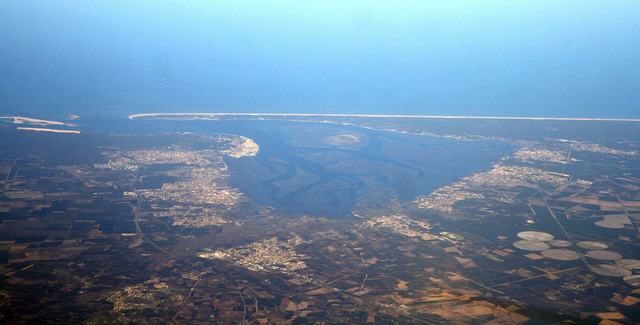
Bassin d'Arcachon
A large lagoon open to the Atlantic in the heart of the Landes forest massif, Arcachon Bay combines oyster farming, stilt huts (cabanes tchanquées) and the neighbouring Dune du Pilat. A territory of variable geometry, between high tide and low tide.
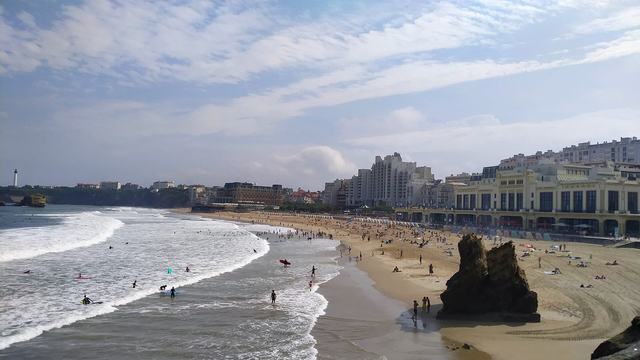
Biarritz
A chic seaside resort of the Basque Country, cradle of European surfing, whose Grande Plage and Rocher de la Vierge overlook the Atlantic Ocean.
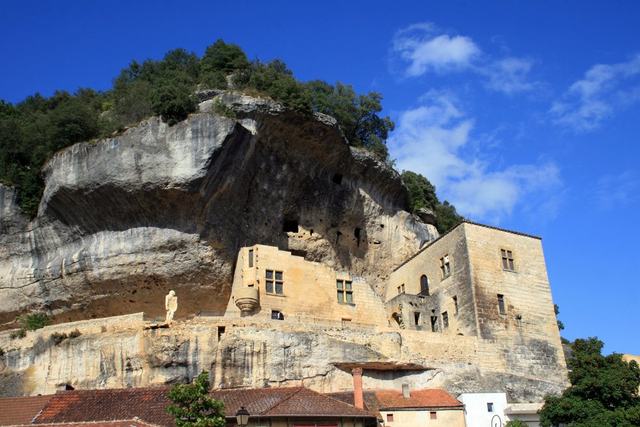
Les Eyzies
A village nestled at the foot of high troglodyte limestone cliffs, nicknamed the "world capital of prehistory" for the exceptional density of its Palaeolithic deposits.
Culture, history and heritage
Nouvelle-Aquitaine offers very varied heritage. Prehistory is celebrated in the Dordogne with the Grotte de Lascaux, the La Grotte du Grand Roc and the Gouffre de Proumeyssac. The Middle Ages left many fortresses: Château de Castelnaud, Château de Beynac, Château de Bonaguil, Château de Hautefort, Château de Biron, Château de Cadillac and the Citadelle de Blaye.
Religious heritage includes the Saint-Front cathedral in Périgueux, the Romanesque churches of Saintonge and Poitou, and the stages of the Ways of St James, such as Saint-Jean-Pied-de-Port. Historic towns such as Saint-Emilion, Bayonne and Dax are also worth discovering.
More recently, industrial and maritime history is evoked by the Musée de l'Hydraviation, the Le Bunker de La Rochelle and the comics centre in Angoulême. The Les Cabanes Du Breuil bear witness to rural dry-stone building.
- For decorated caves, book in advance: access is limited.
- Périgord castles are very busy in summer: start early.
- Bordeaux and La Rochelle are easy to explore on foot.
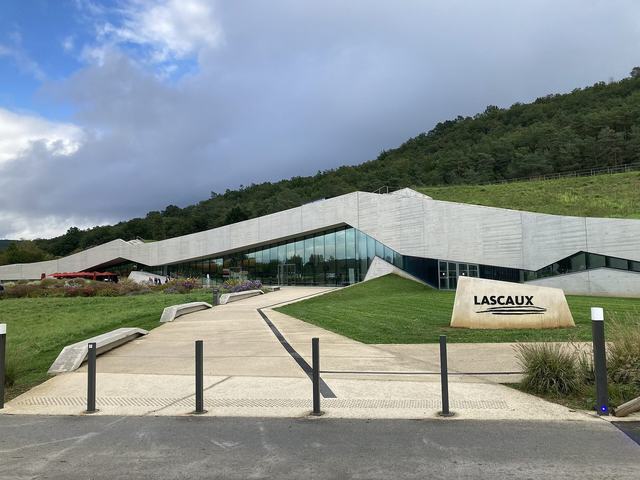
Grotte de Lascaux
Located in the Dordogne near the village of Montignac-sur-Vézère, in the heart of the Périgord Noir, the Lascaux cave is the masterpiece of prehistoric art.
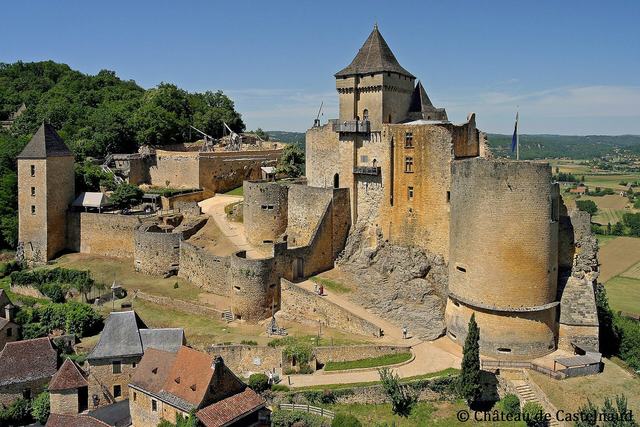
Château de Castelnaud
Facing the Château de Beynac, whose implacable rival it was in the endless conflicts that punctuate the history of the Middle Ages.
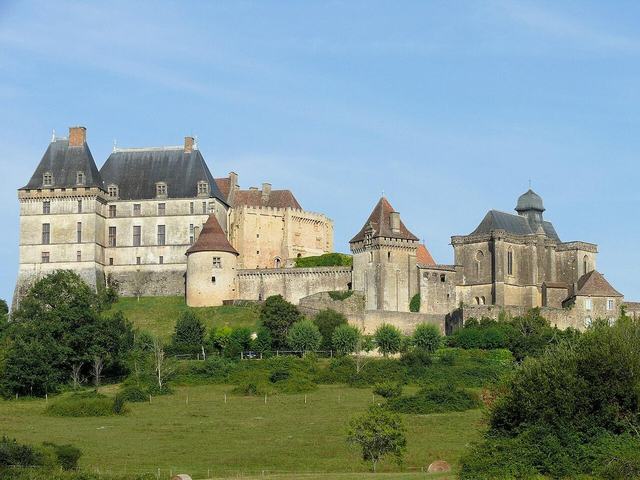
Château de Biron
Seat of one of the four baronies of Périgord, this original fortress has undergone many architectural alterations over the centuries.
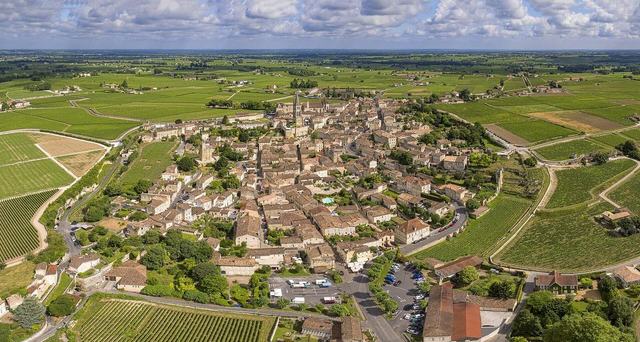
Saint-Emilion
Saint-Émilion is a commune in south-west France, in the Gironde département and the Aquitaine region.
Food and local produce
The table is generous and varied. In the Périgord, you can taste foie gras, duck confit, walnuts and ceps, as well as truffles. Gironde and the Charentes are famous for their wines and brandies: Bordeaux, Saint-Émilion, Cognac and Pineau des Charentes. The Château de Cognac evokes this history.
On the coast, people eat oysters from Arcachon Bay and Marennes-Oléron, bouchot mussels, fresh fish and seafood. In the Basque Country, Espelette pepper, Bayonne ham, fruit tourte and sheep's cheese are the stars. Markets, especially in Bordeaux, Périgueux and Bayonne, are an excellent way to taste them.
To understand the terroir, visits to wine estates and producers let you meet the professionals. Remember to nominate a driver for tastings.
- Book restaurants on the coast in high season.
- For vineyards, make an appointment in advance.
- Morning markets are the liveliest.
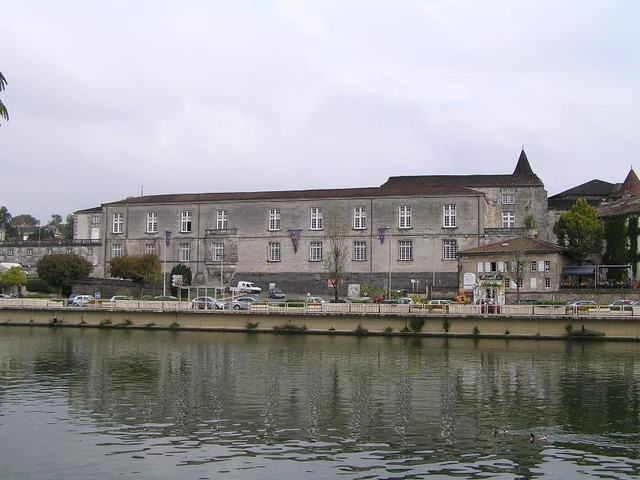
Château de Cognac
Castle of the Valois where Francis I was born in 1494 (fine Renaissance rooms, Governor's lodging, helmet room). It has been the property of Otard cognacs since the late eighteenth century.

Arcachon
A seaside resort created in the nineteenth century on the shores of the bay, famous for its Ville d'Hiver with extravagant villas nestled in the pine forest.
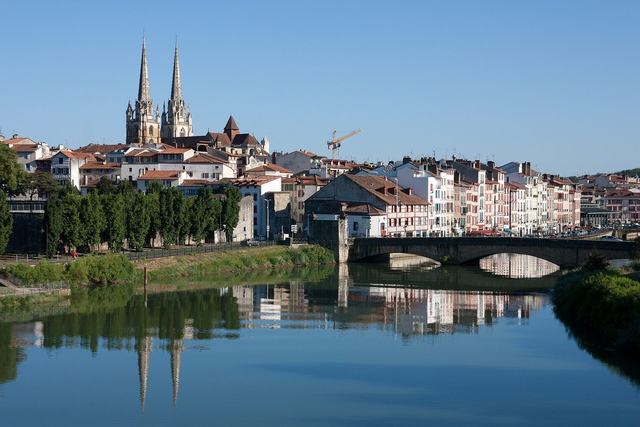
Bayonne
Historic capital of the Basque Labourd at the confluence of the Adour and the Nive, whose Gothic cathedral overlooks a district of colourful half-timbered houses.
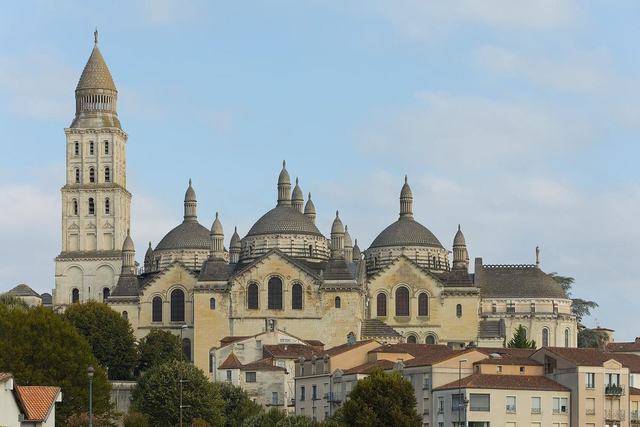
Périgueux et la Cathédrale Saint Front
You discover Périgueux like leafing through a history book. Come and wind back the time machine and set off to discover our history.
Nature and wide open spaces
Nature is one of the region's great assets. The La Dune du Pilat is the tallest dune in Europe, and the Bassin d'Arcachon and the Banc d'Arguin offer landscapes of sand and water. Cap Ferret, the Forêt des Landes and the Le Courant d'Huchet complete the picture of the coast. The Le Marais Poitevin, nicknamed the Green Venice, is discovered by boat.
In the Pyrenees, the La Corniche Basque, the Gorges de Kakuetta, the Canyons d'holzarté et d'Olhadubi and the Col d'Aubisque are major sites. The Limousin and Corrèze have the les cascades de gimel, the Orgues de bort les orgues and many lakes.
Caves and chasms are particularly numerous in the Dordogne and Charente: les grottes du Quéroy, Grottes du Régulus, Le gouffre de la fage. For all outings in nature, check the weather and the state of the paths.
- For the Dune du Pilat, avoid the hot hours and bring water.
- By the sea, check tides and swimming flags.
- In the mountains, start early to avoid afternoon storms.

La Dune du Pilat
Nestled between ocean and forest, the largest dune in Europe proudly overlooks the entrance to Arcachon Bay from its 109 m. The beauty of its landscape, endlessly sculpted by wind and tides, makes it a true wonder of nature, ephemeral and fragile.
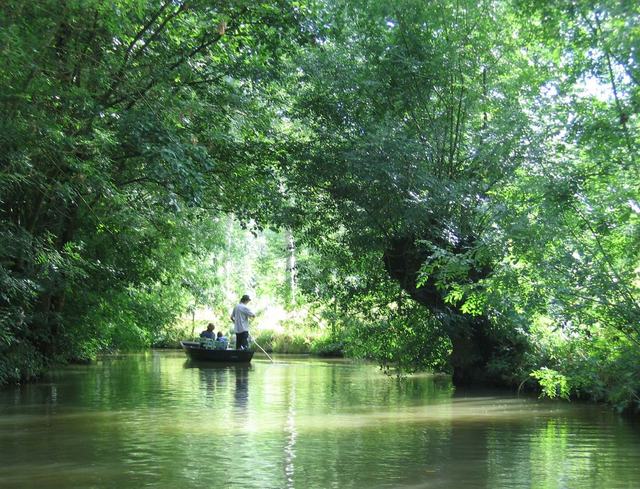
Le Marais Poitevin
The second-largest wetland in France by area, the Marais Poitevin lies on the edge of two Atlantic coast regions (Pays de la Loire and Poitou-Charentes) and straddles the three départements of Vendée, Deux-Sèvres and Charente-Maritime.
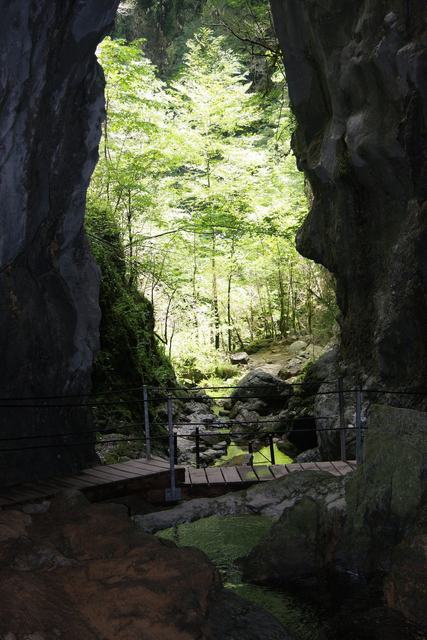
Gorges de Kakuetta
A spectacular 2 km canyon in Haute-Soule, with walls reaching 350 metres high, discovered in 1906 by the speleologist Édouard-Alfred Martel.
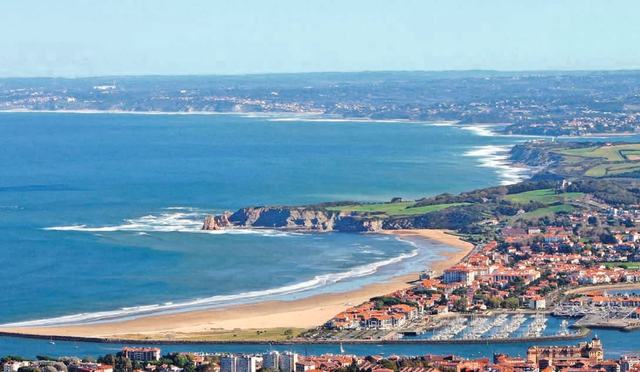
La Corniche Basque
The Basque Corniche is a unique natural site. It is 6 km long on the part belonging to Urrugne.
When to go and how to plan
Spring and autumn are very pleasant, with mild temperatures. Summer is the season of the coast, but also the busiest, especially on the Atlantic coast and in the Basque Country. Winter is mild on the coast, colder in the Limousin and the Pyrenees.
A car is essential for exploring the Périgord, the Limousin and the hinterland. Bordeaux, Poitiers, Limoges, La Rochelle and Bayonne are explored on foot. Trains serve the big cities, and links to the interior are more limited.
A week's trip can combine two areas: for example Bordeaux, Arcachon Bay and the Périgord, or La Rochelle, the islands and Cognac. For the Basque Country and the Pyrenees, a dedicated trip is better.
- Book in advance in summer on the coast.
- Start early for the most visited sites.
- Have a plan B for rain: museums, towns and cellars.
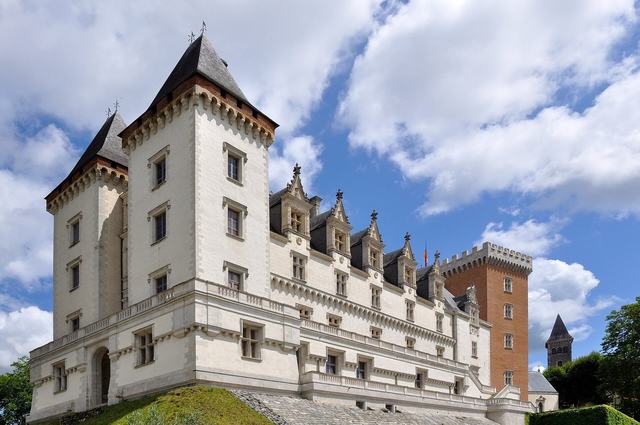
Château de Pau
It was probably before the eleventh century that the first wooden fortification was built, on a rocky spur between the Gave de Pau and one of its tributaries, the Hédas.
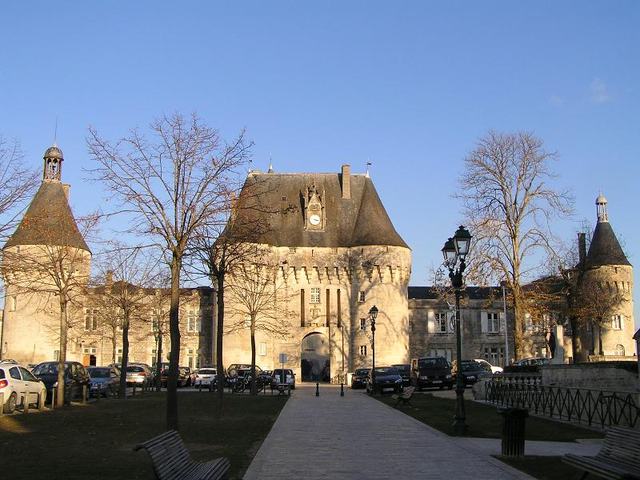
Château de Jonzac
In 1073, the castle already existed; the first known lord is Guillaume de la Rochandry at the beginning of the twelfth century.

Château de Taillebourg
The site of the battle of Taillebourg in 1242 (Saint Louis and Henry III of England). The last fortress of the late fifteenth century destroyed by the wars of religion and during the Fronde (only a medieval tower remains).
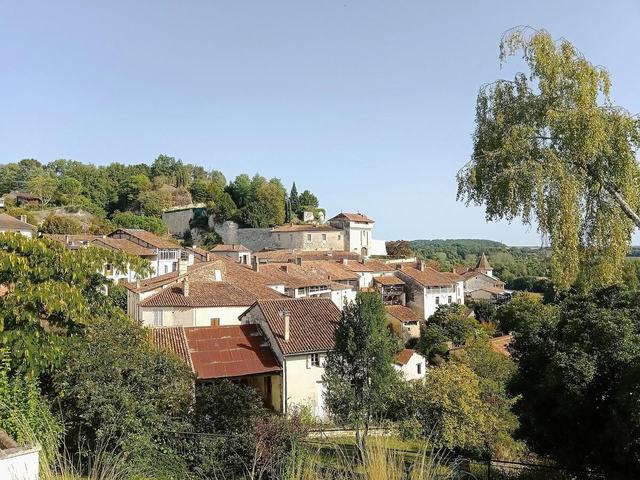
Aubeterre-sur-Dronne
You discover an old village with its sloping lanes, paved with pebbles, dotted with flowered gardens.
Going further
Find all the sites of the region on the page Nouvelle-Aquitaine, or explore a département: