Photo : rosier / Wikimedia Commons (CC BY-SA 3.0)
Château de Jonzac
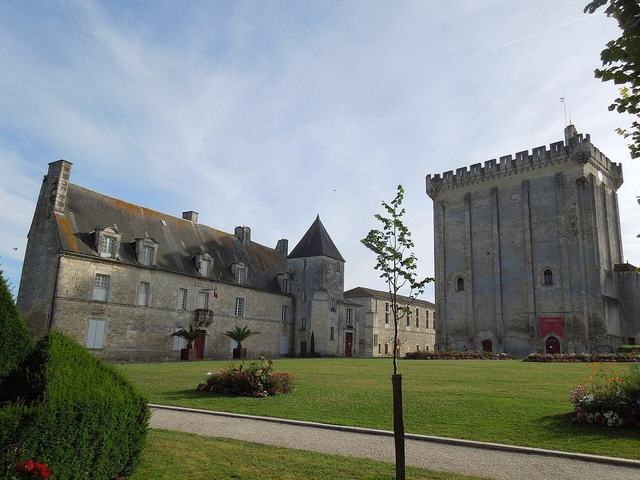
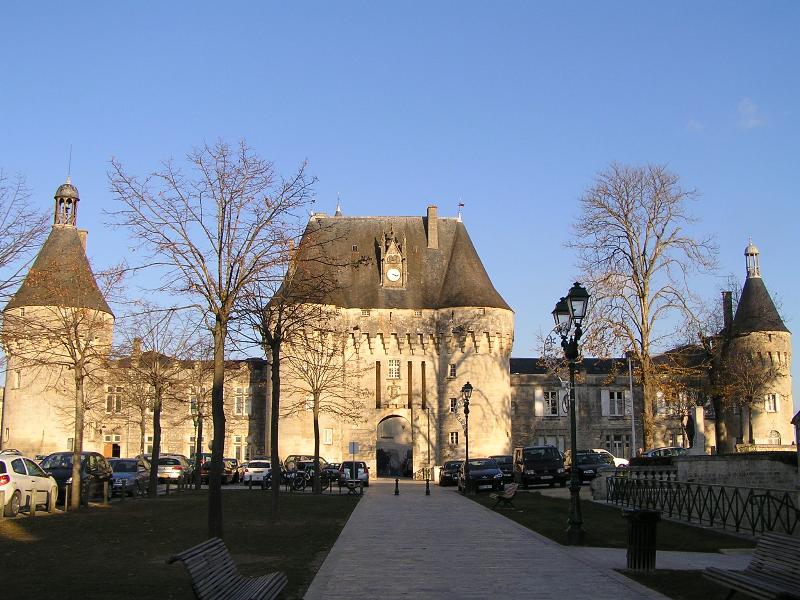
In 1073, the castle already existed; the first known lord is Guillaume de la Rochandry at the beginning of the twelfth century. In 1505, Jean de Sainte-Maure, lord of Jonzac, founded the Carmelite monastery on the remains of an old chapel dedicated to Saint Nicholas; the cloister was built in 1657. The young Louis XIV, the Queen Mother and Mazarin stayed at the castle in 1659. The castle remained with the Sainte-Maures until the end of the seventeenth century, and passed by marriage to the Espardes de Lussan who kept it until the Revolution. Currently the north wing of the castle houses the Town Hall buildings (restored in the nineteenth century), and the south wing those of the sub-prefecture. The cloister was restored between 1976 and 1978, and now houses a cultural centre, with exhibition rooms and an archaeological museum. The imposing entrance gatehouse is marked 1549 and thus dates from the sixteenth century, a time of works of which the north-west tower is part, while the south-west tower, of smaller diameter, is seventeenth century. The court of honour is surrounded by much-remodelled buildings; it was re-dug to turn the half-floor into a ground floor, with destruction of the outside staircases that led to the noble floor. The slate roofs are tall pepper-pots on the towers, and a curious two-pitch ensemble linking two pepper-pots for the entrance gatehouse. The façade has kept its crenellation, corbelled turrets and balustraded balconies...