Photo : JanManu / Wikimedia Commons (CC BY-SA 4.0)
Grotte de Lascaux
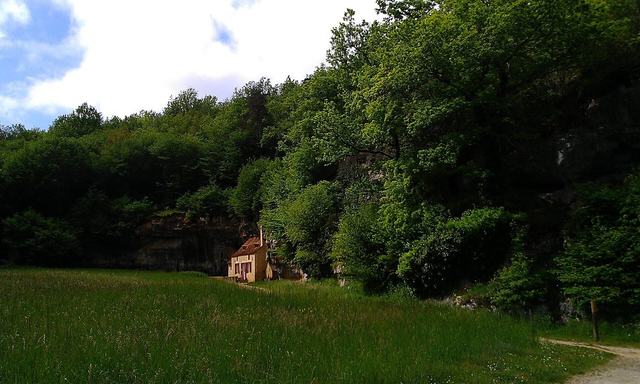
The Lascaux cave is near Montignac, in the Vézère valley, in the heart of the Périgord Noir. It was discovered in September 1940 by Marcel Ravidat, a local youth, on a walk with his dog, which had chased a rabbit into a hole; three companions quickly joined him. The cavity, medium-sized for the region, alternates rounded halls and narrow galleries.
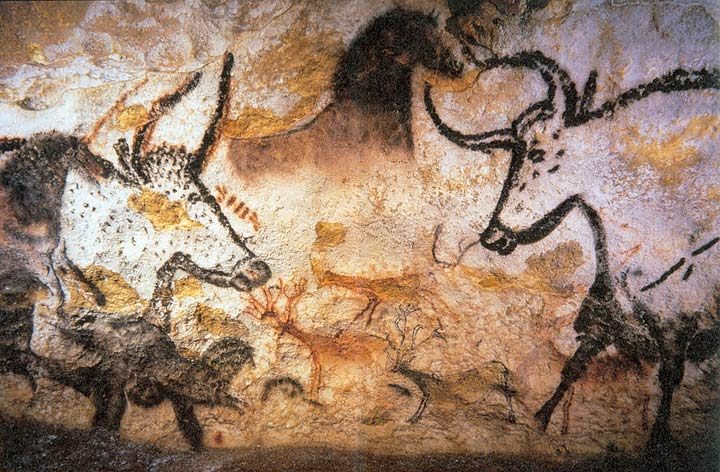
Its walls bear about 1,900 representations, painted or engraved: aurochs, horses, bison, deer and ibex. The Hall of the Bulls is the most famous group, with figures up to five metres long. The Shaft scene, which shows a man with a bird's head, is one of the rare human figures in the complex. Radiocarbon dating places the occupation of the cave about 21,000 years ago.
Opened to the public after the war, the cave was closed in 1963: visitor numbers had caused algae growth and calcite deposits that threatened the paintings. It has been UNESCO World Heritage since 1979. A complete facsimile, Lascaux IV, opened in December 2016 nearby, in a building designed by the Norwegian firm Snøhetta.