Discovering Ille-et-Vilaine: a practical guide
Ille-et-Vilaine brings together a much-loved Emerald Coast, some of the finest fortified towns in Brittany, the regional capital Rennes and the legendary forest of Brocéliande. On the doorstep of Normandy and Mont-Saint-Michel, it is an ideal gateway to Brittany.
This practical guide helps you choose your stops and organise your trip. Underlined site names link to their detailed pages.
Understanding Ille-et-Vilaine in a few minutes
In the north, the Emerald Coast stretches from Cancale to Dinard, around Saint-Malo and its ramparts. In the centre, Rennes is the capital of Brittany, an hour and a half from Paris by TGV. To the east, the towns of Vitré and Fougères once guarded the border with France. To the west, the forest of Brocéliande is the land of Arthurian legends.
Distances are short: Rennes is less than an hour from Saint-Malo, Vitré and Brocéliande. For a trip of a few days, one base in Saint-Malo and another in Rennes are enough.
- The TGV serves Rennes and Saint-Malo.
- On the coast, the tide changes the landscape: check the times.
- Mont-Saint-Michel, in Normandy, is less than an hour from Saint-Malo.

Rennes
Capital of Brittany at the confluence of the Ille and the Vilaine, whose historic centre has kept hundreds of colourful half-timbered houses.

Dinard
A chic seaside resort facing Saint-Malo, favoured from the nineteenth century by an Anglo-American clientele who had sumptuous Belle Époque villas built there.
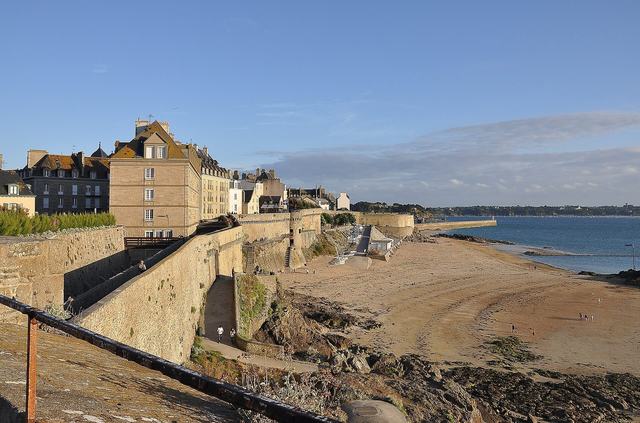
Les Remparts de Saint-Malo
Their construction began in 1144, at the instigation of the bishopric of Aleth moving its seat to the rock, the layout of the place allowing better defence.
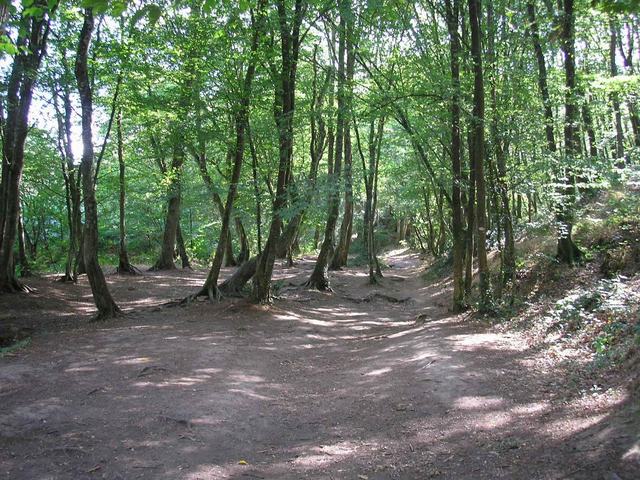
Paimpont et la forêt de Brocéliande
Come and discover Brocéliande and its mysteries. This mythical forest opens its undergrowth to you for a unique stay.
Culture, history and heritage
Saint-Malo, the corsair city, is best discovered by walking round its ramparts, with the Château de Saint-Malo, the Fort National and the Petit Bé, reached at low tide. On the Rance, the Tour Solidor guards the entrance to Saint-Servan, and the village of Saint-Suliac has kept its fishing-port charm.
To the east, the Château de Vitré and the Château de Fougères are among the finest fortresses in Brittany. The Château de Combourg recalls Chateaubriand's childhood, and the Château des Rochers-Sévigné the Marquise de Sévigné. Near Rennes, Châteaugiron is a small characterful town dominated by its castle. In Rennes, the fine arts museum and the Espace des sciences are worth a visit.
- The walk round the Saint-Malo ramparts is free and takes an hour.
- For the Fort National and the Petit Bé, check the tide times.
- Central Rennes is best explored on foot, around its half-timbered houses.
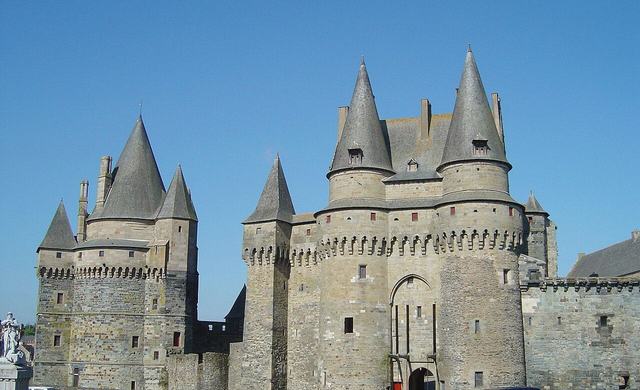
Château de Vitré
This castle is one of the most beautiful fortresses of Brittany. Fortified from the early eleventh century, it was besieged and taken in the twelfth century.
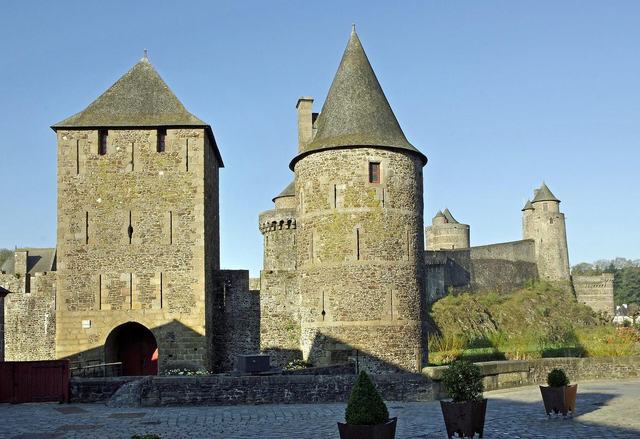
Château de Fougères
Fortified from the eleventh century, the castle was originally built on a rocky promontory emerging from a marsh.
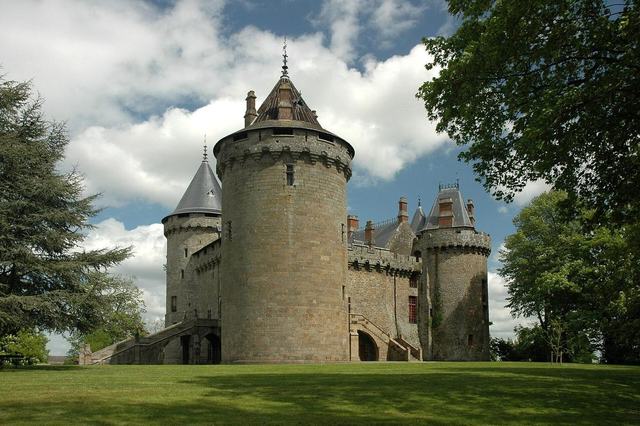
Château de Combourg
The foundation of the château de Combourg, which in its present state dates from the thirteenth, fourteenth and fifteenth centuries, goes back to the year 1016.

Fort National
Fort National is an emblematic monument of the Saint-Malo landscape. Built in 1689 by the architect Vauban, it served to protect the town.
Food and local produce
Cancale is the oyster capital: they are eaten facing the bay, on the harbour. The Ferme Marine de Cancale explains oyster farming. Buckwheat crêpes and galettes, the Rennes galette-saucisse, salted butter and cider are part of daily life.
The Marché des Lices in Rennes, on Saturday mornings, is one of the largest markets in France. On the coast, fishmongers and seafood restaurants abound.
- Taste oysters straight from the oyster market in Cancale.
- The Marché des Lices is very busy: come early.
- Have your galettes with a bowl of cider.

La Ferme Marine de Cancale
In a pleasant setting overlooking the port of Cancale, let yourself be guided and surprised by the world of the "sea gardeners".
Rennes
Capital of Brittany at the confluence of the Ille and the Vilaine, whose historic centre has kept hundreds of colourful half-timbered houses.

Saint-Suliac
Set in the centre of a tangle of narrow lanes, lined with fishermen's houses or granite walls enclosing gardens, the church of Saint-Suliac overlooks with its imposing bell tower an old cemetery with which it forms a parish close, rare in Upper Brittany.
Nature and wide open spaces
The forest of Brocéliande is explored on foot, with the Val sans retour and its legends of the fairy Morgan. To the east, the Saut de Roland rocks and the Couardes site offer fine walks. Near Rothéneuf, the Sculpted Rocks of Rothéneuf are an unusual curiosity, carved into the cliff by a priest.
Parks and gardens complete the visit: the Parc du château de Bonnefontaine and the Domaine de La Bourbansais, which combines a château, gardens and a zoo. With children, the Grand Aquarium de Saint-Malo and Cobac Parc are popular outings.
- The customs officers' path (GR34) runs along the whole Emerald Coast.
- In Brocéliande, wear good shoes: the paths are muddy after rain.
- The Grand Aquarium is very busy on rainy days.
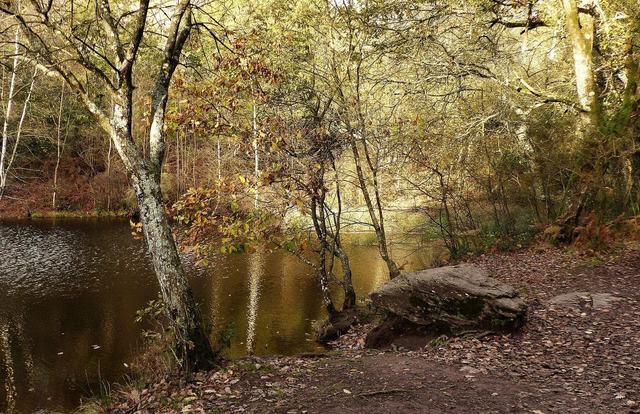
Val sans retour
The Val sans Retour is among the most recognised and most magical sites of the Brocéliande forest.

Grand Aquarium de Saint-Malo
The Grand Aquarium of Saint-Malo offers not only a real world tour of the planet's oceans and their species, but also lets you step into a Jules Verne novel.
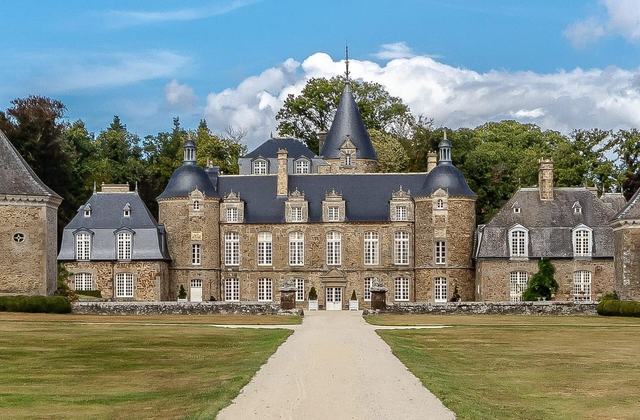
Domaine de La Bourbansais
At Pleugueneuc near Rennes. Built in 1583 on Gallo-Roman remains, La Bourbansais abandoned the military architecture previously imposed by an independent, warlike Brittany.
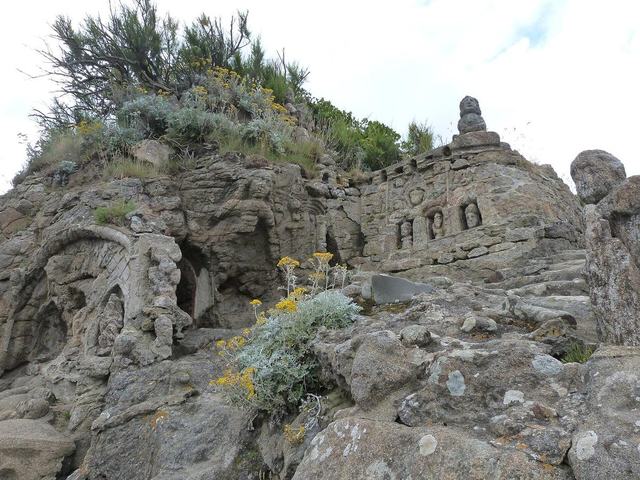
Rochers Scuptés de Rothéneuf
Five kilometres from Saint-Malo, following the sea towards Cancale, the Sculpted Rocks of Rothéneuf form a strange world, peopled with characters from another time: the grimacing figures shaped by the hand of man evoke medieval gargoyles and the beings…
When to go and how to plan
Spring and autumn are pleasant and quieter. Summer is the high season on the coast, with mild temperatures. The climate is oceanic: always pack a raincoat. The spring and autumn spring tides are spectacular.
A four-day trip can combine two days on the Emerald Coast (Saint-Malo, Cancale, Dinard), a day in Rennes and a day between Vitré and Fougères, or in Brocéliande.
- Book accommodation in Saint-Malo for the summer.
- Parking inside the walls of Saint-Malo is difficult: use the park-and-ride car parks.
- Check the calendar of spring tides.

Château de Montmarin
Overlooking the Rance, it opens onto a stretch of water more than a kilometre wide.
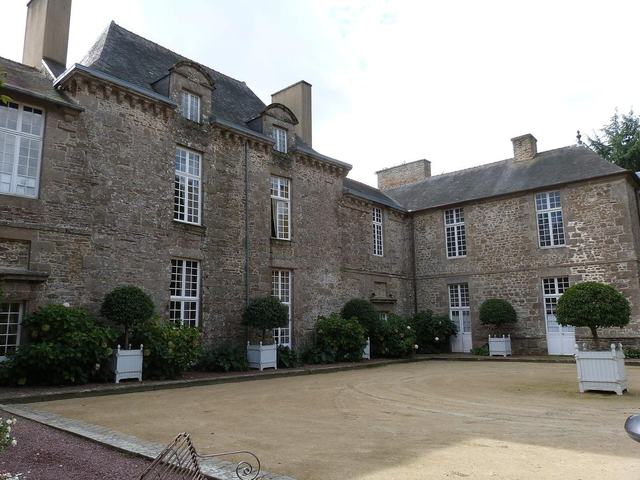
Château de La Ballue
Between Saint-Malo and Mont-Saint-Michel, between Brittany and Normandy, in an exceptional rural landscape of gentle hills and forests, close to a wild and unspoilt coast, this pure seventeenth-century château, a listed historic monument, owes its fame to its gardens and to the figures who have stayed there…
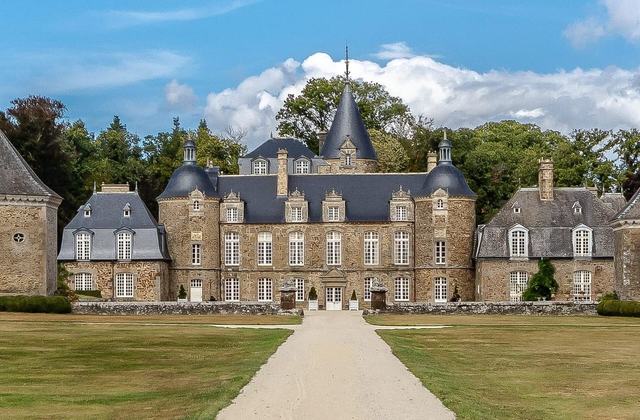
Château de la Bourbansais
The château, built in the sixteenth century on the site of a former Gallo-Roman villa and updated in the eighteenth century, is one of the most harmonious of the great Breton châteaux, with its Mansart-style pavilions, its chapel matching the cellar, the dovecote and the fruit store…
Going further
Explore the départements of this area: