Discovering Aude: a practical guide
Aude is first of all the Cité de Carcassonne, but the département offers much more: fortresses perched on rocky peaks, abbeys, deep gorges, vineyards and a still-unspoilt Mediterranean coast. It is an ideal destination for a trip between history and nature.
This practical guide helps you choose your stops and organise your trip. Underlined site names link to their detailed pages.
Understanding Aude in a few minutes
Aude is organised around a few main areas. In the centre, Carcassonne and its medieval Cité. To the east, Narbonne and the coast, from Gruissan to Leucate. To the south, the Corbières and the upper Aude valley, home of the castles of Cathar country. To the north, the greener Montagne Noire, with the Pic de Nore.
The Canal du Midi crosses the département from west to east. The A61 motorway links Toulouse to Narbonne via Carcassonne. For a trip of a few days, two bases are often enough: Carcassonne for the interior, Narbonne for the coast.
- The Cathar castles are spread out: group them by area.
- Roads in the Corbières are narrow and winding.
- Carcassonne and Narbonne are served by train.
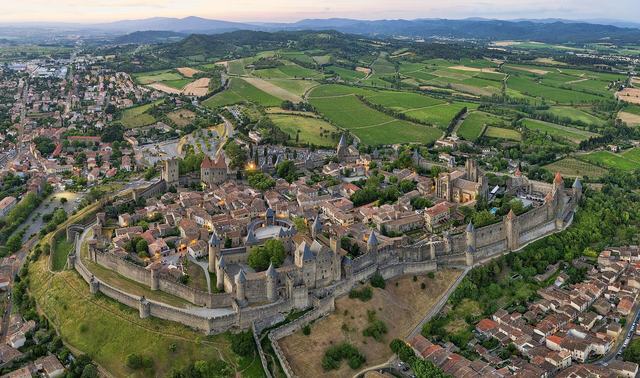
Cité de Carcassonne
A fortified medieval town, with the history of the crusade against the Albigensians, the still-inhabited Cité de Carcassonne lies on the right bank of the Aude.

Gruissan
Built in concentric circles around the remains of a medieval castle, the village of Gruissan nestles between lagoons and the Mediterranean, also famous for its chalets on stilts.
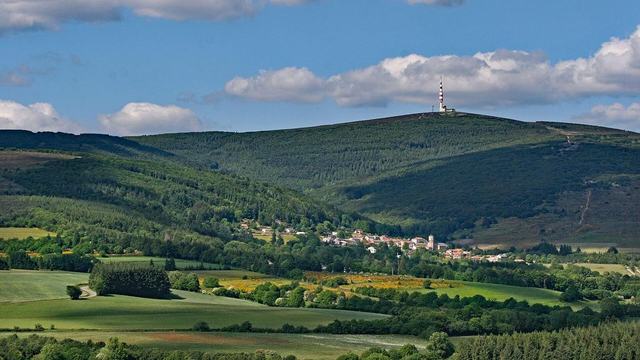
Le Pic de Nore
The Pic de Nore is the highest point of the Montagne Noire (1,210 m), a southern balcony of the Cévennes.
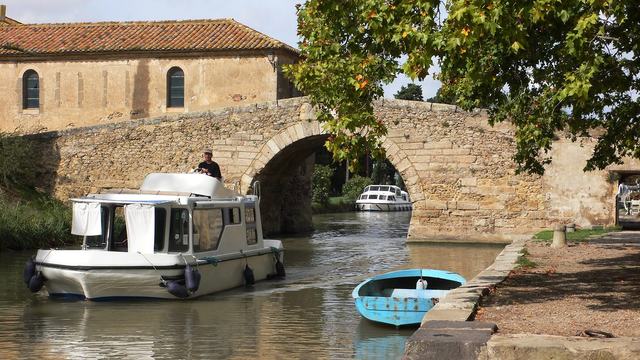
Canal du Midi au Somail
Shaded by its century-old plane trees, the hamlet of Le Somail is one of the most picturesque stops on the Canal du Midi, a seventeenth-century engineering masterpiece listed by UNESCO.
Culture, history and heritage
The Cité de Carcassonne, with its ramparts and its count's castle, is a UNESCO World Heritage site. The castles of Cathar country, perched on their peaks, are the other great draw: Château de Peyrepertuse, Château de Quéribus, Château de Puilaurens, Château de Termes, Château d'Aguilar, the Châteaux de Lastours and the Château de Puivert. The keep of the Château d'Arques and the Château de Villerouge-Termenès complete this medieval heritage.
Narbonne has kept its medieval quarter, with the archbishops' palace and the cathedral. Abbeys are plentiful: the Abbaye Sainte-Marie de Fontfroide, and the abbey villages of Lagrasse and Caunes-Minervois. The tiny village of Rennes-le-Château draws the curious with its treasure legend.
- Visit the Cité de Carcassonne early in the morning or in the evening.
- The perched castles require a climb on foot: bring water and good shoes.
- In strong wind, access to some castles may be closed.
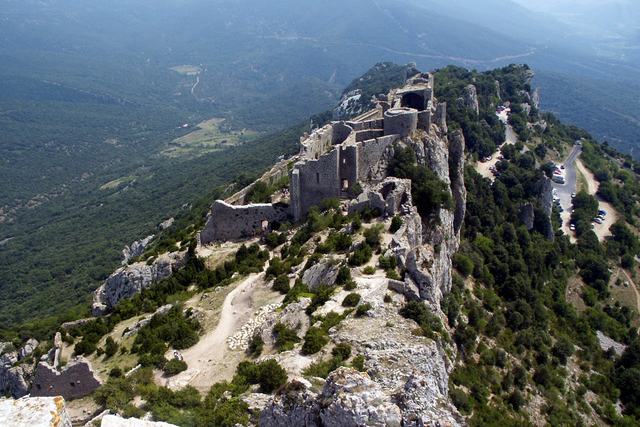
Château de Peyrepertuse
"It is to be known that in the Marches, on this side of the Aragon frontier, is the City of Carcassonne, which is the mother and has five sons, namely Puilaurens, Aguilar, Quéribus, Termes and Peyrepertuse".
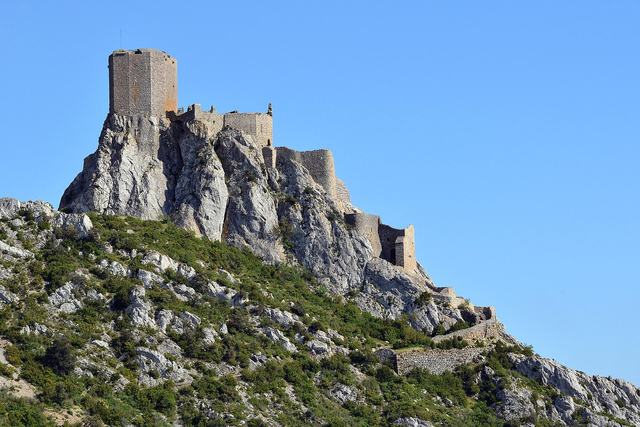
Château de Quéribus
It is in the commune of Cucugnan, a Corbières village immortalised by Alphonse Daudet in the sermon of his famous priest, that Quéribus castle stands.

Abbaye Sainte-Marie de Fontfroide
Founded in 1093 by a few Benedictine monks, Fontfroide joined the Cistercian Order in 1145 and quickly became one of the most powerful Cistercian abbeys of Christendom.
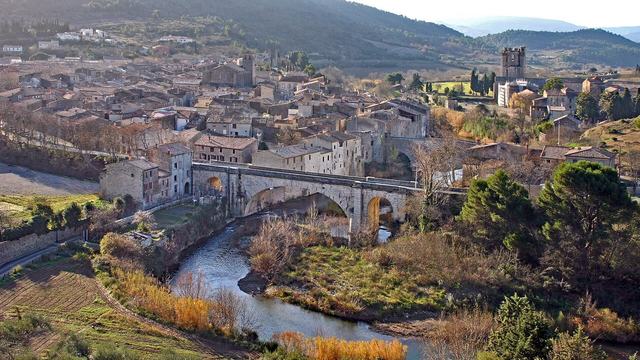
Lagrasse
The abbey of Lagrasse was founded in the eighth century in the Orbieu valley and, located on the Spanish marches of the Carolingian kingdom, played a particularly important role.
Food and local produce
Aude cooking is hearty: cassoulet, of which Castelnaudary claims to be the capital, oysters and shellfish from the Gruissan and Leucate lagoons, and cheeses from the Montagne Noire. Limoux produces blanquette, one of the oldest sparkling wines in the world.
Vineyards cover much of the département: Corbières, Minervois, Fitou, La Clape and Malepère. Cellars and estates often welcome visitors for a tasting.
- Try cassoulet in a traditional restaurant.
- Nominate a driver for tastings.
- The markets of Narbonne (covered halls) and Carcassonne are worth a visit.
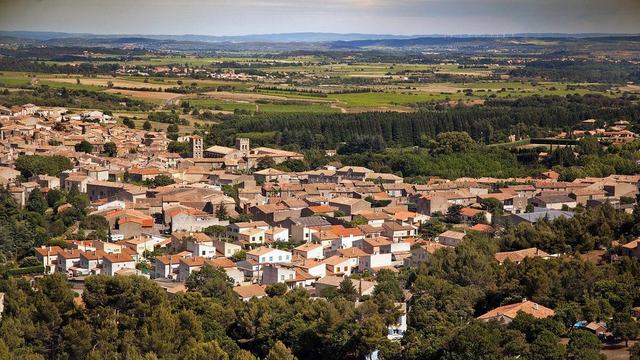
Le village et l'Abbaye de Caunes-Minervois
The village houses a heritage of incredible historical richness: around the bend of medieval lanes you discover façades of mansions from the eleventh to the eighteenth century.
Gruissan
Built in concentric circles around the remains of a medieval castle, the village of Gruissan nestles between lagoons and the Mediterranean, also famous for its chalets on stilts.

L'Ensemble Médiéval de Narbonne
The medieval ensemble brings together the archbishops' palace, the cloister and the cathedral of Saint-Just-et-Saint-Pasteur (1272–1340).
Nature and wide open spaces
The upper Aude valley has carved spectacular gorges: the Gorges St Georges et Pierre Lys and the Gorges de la Frau. Near Duilhac, the Verdouble gorges offer pools of clear water. In the Clape massif, the Gouffre de l'Oeil Doux surprises with its turquoise waters.
In the Montagne Noire, the Gouffre de Cabrespine and the Grotte de Limousis can be visited, and the Lac du Lampy is good for a walk. On the coast, the Plage de la Franqui is known for board sports. With children, the Sigean African Reserve and Dinosauria in Espéraza are popular outings.
- The tramontane and cers winds blow often: check the weather for water sports.
- In summer, set off early for walks: the heat builds quickly.
- In the caves, bring something warm.
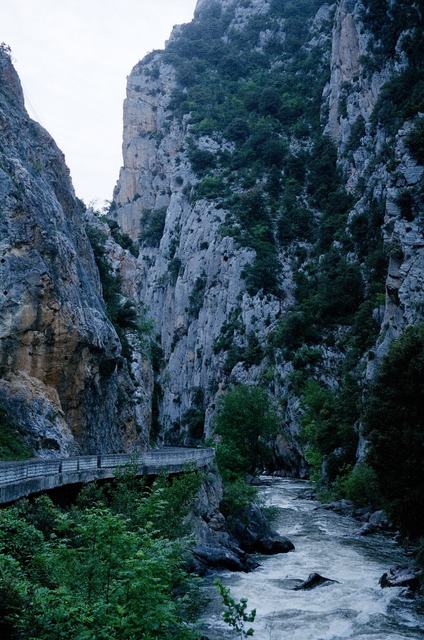
Gorges St Georges et Pierre Lys
The Aude, rushing down the Pyrenees from its source in the Capcir, has carved a series of majestic canyons in the limestone: the Saint-Georges gorges and above all those of Pierre-Lys.
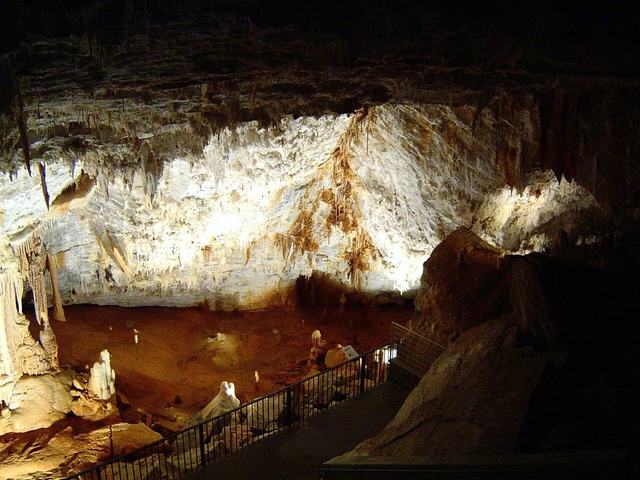
Gouffre de Cabrespine
Overlooking the little village of Cabrespine in the Aude département, near the Pic de Nore, highest point of the Montagne Noire, the Gouffre Géant de Cabrespine is one of the largest caves in the world open to tourism.

La Réserve Africaine de Sigean
A place of relaxation and adventure, the park is open 365 days a year and keeps on growing.
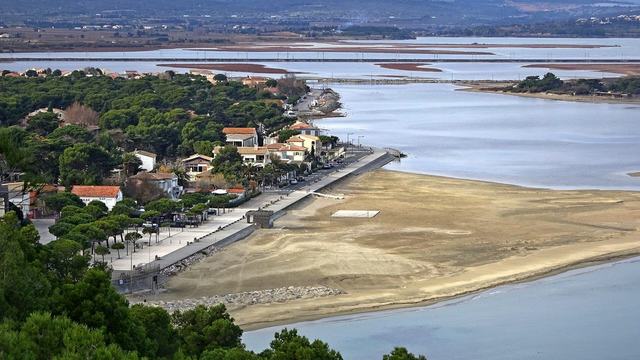
Plage de la Franqui
A seaside resort of Leucate, between the Étang de Salses and the Mediterranean, renowned for wind and gliding sports.
When to go and how to plan
Spring and autumn are the best seasons: mild temperatures, flowering garrigue and the grape harvest. Summer is hot and the Cité de Carcassonne very busy. Winter is quiet, but some castles reduce their opening hours.
A car is essential for the castles and the hinterland. A five-day trip can combine Carcassonne and the Montagne Noire, a loop of the Corbières castles, then Narbonne, Fontfroide and the coast.
- Book accommodation near the Cité in summer.
- Some castles are closed in January: check before you go.
- Allow half a day per perched castle.
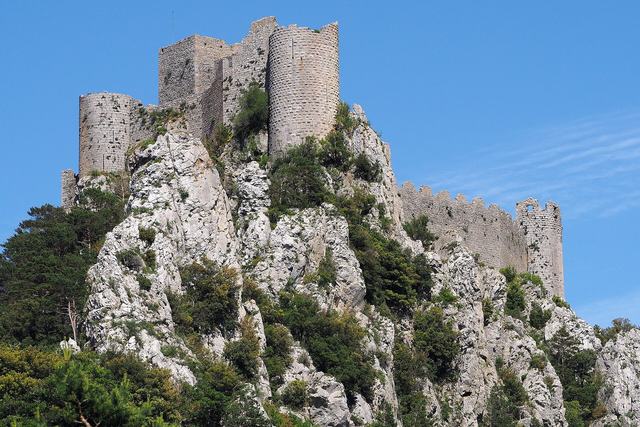
Château de Puilaurens
On the departmental boundary of the Aude and the Pyrénées-Orientales, Puilaurens long remained the southernmost fortress of the kingdom of France.
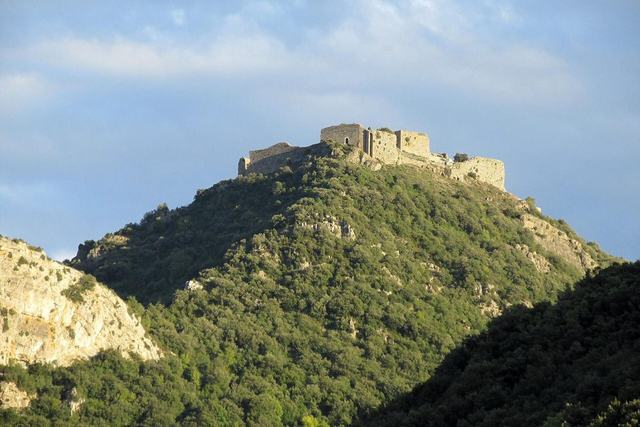
Château de Termes
In this natural site, at 470 m altitude, the castle was one of the most powerful in Languedoc, and ruled over the Termenès, a lordship of about sixty villages.
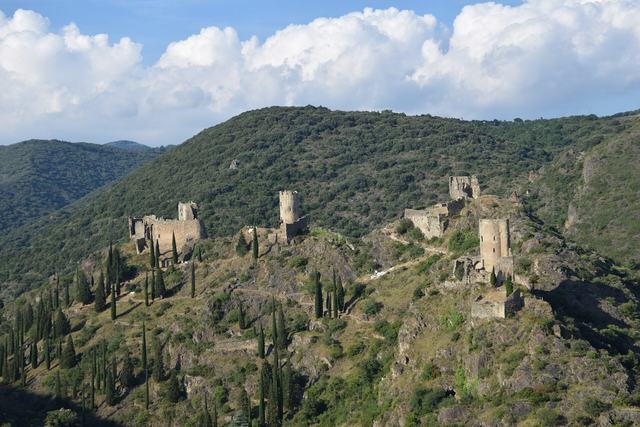
Châteaux de Lastours
A lock on the Cabardès since the early Middle Ages, the Lastours site is an exceptional ensemble with its four castles built at 300 metres' altitude, on top of a rocky spur.
Going further
Explore the départements of this area: