Discovering Occitanie: a practical guide
Occitanie is the second-largest region of France by area. It brings together the Mediterranean, the Pyrenees, the causses and gorges, medieval cities and a rich heritage, from Toulouse to Perpignan.
This practical guide helps you choose your stops and organise your trip. Underlined site names link to their detailed pages.
Understanding the region in a few minutes
The region was born from the merger of Languedoc-Roussillon and Midi-Pyrénées. It has thirteen départements, and can be discovered by large areas: the Mediterranean coast, from the Gard Camargue to the Catalan coast, with Collioure and Sète; the Languedoc plain, with vineyards and historic towns such as Nîmes, Béziers and Uzès; the causses and gorges of the Massif Central, with the Gorges du Tarn and Les Détroits du tarn; and the Pyrenees, from the Basque Country to Roussillon.
Toulouse, the Pink City, is the great metropolis: Toulouse charms with its brick, squares and museums. Albi, with its cathedral, and Cordes-sur-ciel are an hour's drive away.
This diversity forces choices: you do not visit Occitanie as you would visit a single département. It is better to pick one or two areas and spend time there.
- Allow about three hours' drive between Toulouse and Montpellier.
- Gorge and mountain roads are slow: allow some slack.
- Keep half a day free for a swim or a walk by the water.

Toulouse
France's fourth-largest city, nicknamed the "Pink City" for the brick that clads its façades, organised around the monumental Place du Capitole.
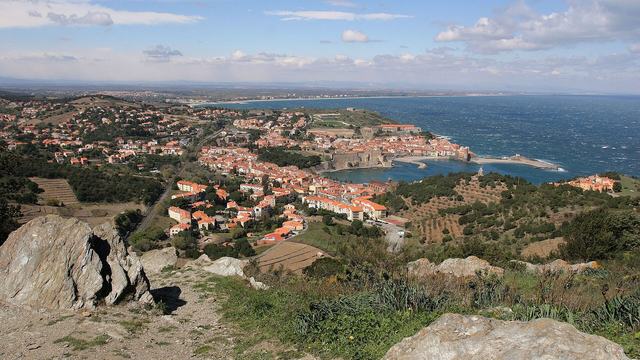
Collioure
A little Catalan port of colourful houses nestled in a cove of the Vermilion Coast, immortalised by Matisse and the Fauvist painters in the early twentieth century.
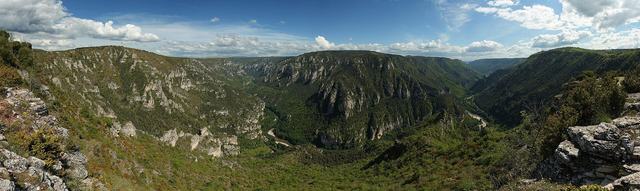
Gorges du Tarn
A 27 km limestone canyon carved by the Tarn between the Causse de Sauveterre and the Causse Méjean, dotted with hilltop villages and dizzying viewpoints.
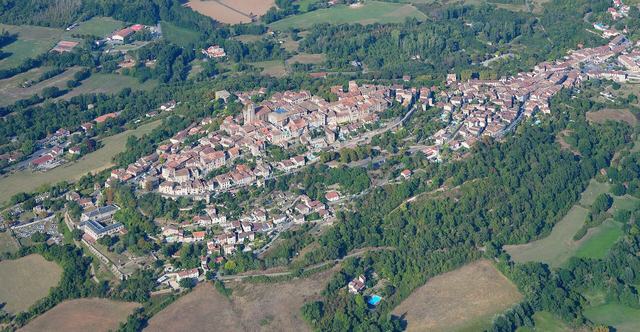
Cordes-sur-ciel
25 km from Albi, in the Tarn, let yourself be charmed by the enchanting face of Cordes-sur-Ciel.
Culture, history and heritage
Occitanie is rich in varied heritage. The Roman era is visible in Nîmes and at the Pont du Gard. The Middle Ages are everywhere: the Cité de Carcassonne, the so-called Cathar castles, such as Château de Peyrepertuse, Château de Montségur, Château de Puilaurens and Châteaux de Lastours, and the abbeys.
The pilgrimage to Compostela left many sites, such as Conques, Saint-Bertrand-de-Comminges and the Basilique Saint-Sernin in Toulouse. Bastides, medieval new towns of the south-west, such as Sauveterre-de-Rouergue, Lauzerte and La Romieu, are recognisable by their regular layout and arcaded square.
The Occitan language, festival traditions, rugby and bullfights in some towns are also part of regional identity. As for museums, the region offers the Musée Fabre in Montpellier, the Carré d'art in Nîmes, the Musée de Tautavel, Centre Européen for prehistory, and Aeroscopia in Toulouse.
- For hilltop castles, expect some walking and wear good shoes.
- Combined tickets exist for some sites in Carcassonne and Nîmes.
- Check museum opening hours: many close one day a week.
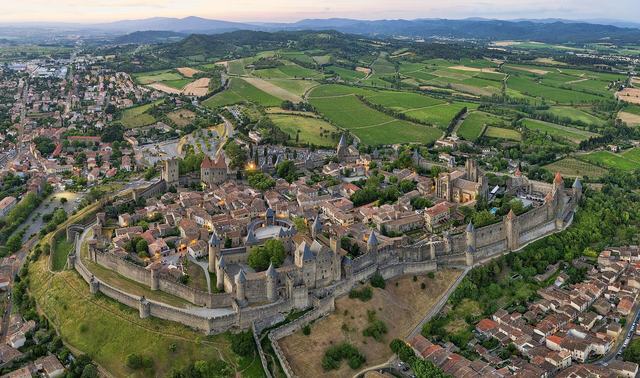
Cité de Carcassonne
A fortified medieval town, with the history of the crusade against the Albigensians, the still-inhabited Cité de Carcassonne lies on the right bank of the Aude.
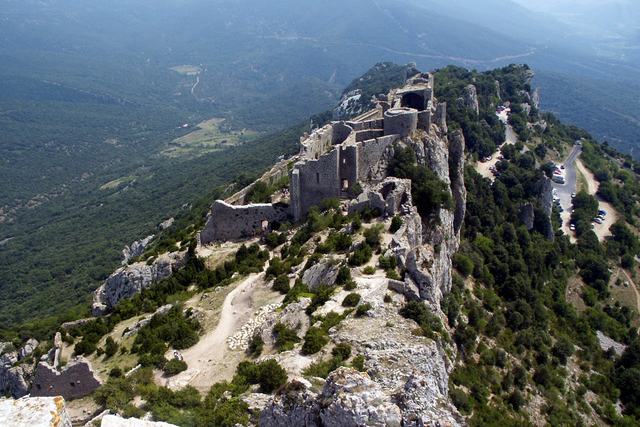
Château de Peyrepertuse
"It is to be known that in the Marches, on this side of the Aragon frontier, is the City of Carcassonne, which is the mother and has five sons, namely Puilaurens, Aguilar, Quéribus, Termes and Peyrepertuse".
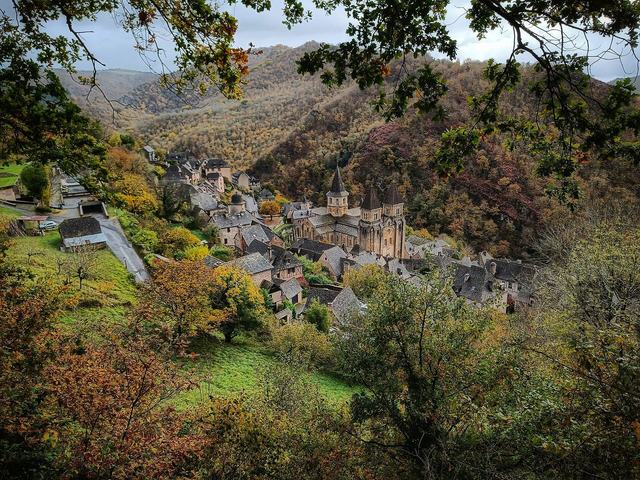
Conques
The great period of Conques, in the eleventh and twelfth centuries, coincides with the building of the Romanesque abbey church and the creation of the finest pieces of goldwork in its treasure, including the golden Majesty of Saint Foy.

Pont du Gard
The Pont du Gard was built shortly before the Christian era to let the Nîmes aqueduct, nearly 50 km long, cross the Gardon.
Food and local produce
Occitanie cooking is generous. Cassoulet from Castelnaudary, Carcassonne and Toulouse is the emblematic dish. You will also find Aubrac aligot, duck confit, Toulouse sausage, seafood from the Étang de Thau, Nîmes brandade and Collioure anchovies.
The cheeses are renowned: Roquefort, which you can discover at the Caves de Roquefort Société, Bleu des Causses, pélardon and Pyrenean sheep's cheese. The wines are just as varied: Languedoc wines, Minervois, Corbières, Banyuls, Gaillac, Cahors and Côtes de Gascogne wines.
Village and town markets are an excellent way to taste local produce. Farms and wine estates often offer visits and tastings.
- Book good restaurants in advance, especially in summer.
- For vineyards, nominate a driver.
- A dish-of-the-day lunch is often the best value.

Caves de Roquefort Société
Visit of the Roquefort "Société" caves all year round including public holidays. The guided visit lets you discover the original site of Roquefort, its making and ageing in caves.
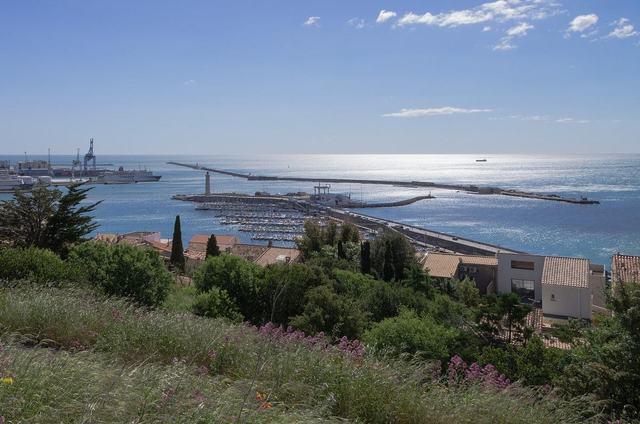
Sète
Mediterranean port built on the slopes of Mont Saint-Clair, criss-crossed by canals that earn it the nickname "Venice of Languedoc", birthplace of Georges Brassens.
Collioure
A little Catalan port of colourful houses nestled in a cove of the Vermilion Coast, immortalised by Matisse and the Fauvist painters in the early twentieth century.
Nature and wide open spaces
The region offers spectacular landscapes. The gorges and causses form one of the great natural areas of France: Gorges du Tarn, Les gorges de la Dourbie, Cirque de Navacelle, Montpellier le Vieux, Le Chaos de Nîmes le Vieux, Trou de Bozouls. Caves and chasms are numerous: Grotte des Demoiselles, Grotte de Dargilan, Aven Armand, Gouffre de Padirac.
Roussillon and French Catalonia have the Les Orgues d'Ille sur Têt, the Les Gorges de Galamus and the Pic du Canigou. The Pyrenees offer the Cirque de Troumouse, the Les Cascades de Cauterets, the Col du Tourmalet and the Parc National des Pyrénées.
By the water, the Lac du Salagou, the Canal du Midi au Somail and the Mediterranean coast let you swim or stroll. The mountains require preparation: check the weather and the state of the trails before you go.
- In the gorges, roads are narrow: drive slowly.
- For caves, bring something warm: the temperature is low all year.
- In the mountains, start early to avoid afternoon storms.
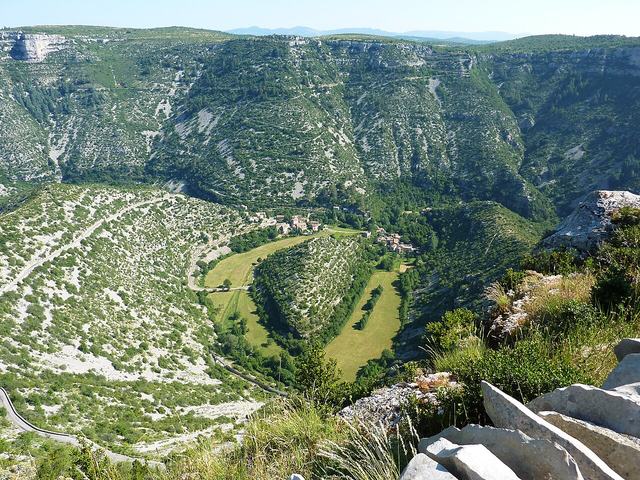
Cirque de Navacelle
Like other famous sites of the Grands Causses, the Cirque de Navacelles is visited every year by millions of tourists who come to admire the cut of the Vis canyon through the limestones and dolomites of the Causse de Blandas.
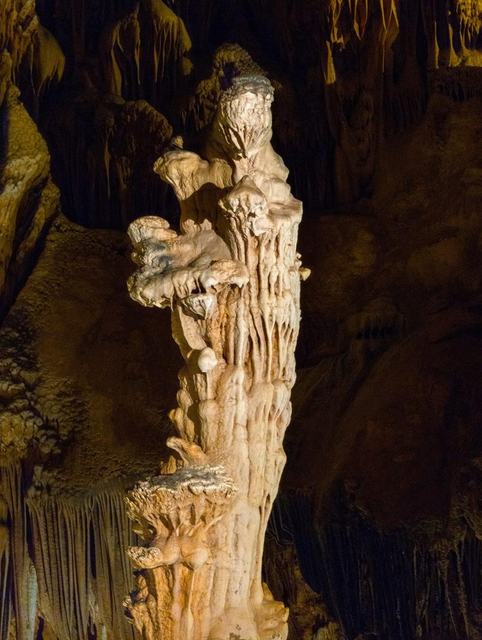
Grotte des Demoiselles
Located not far from the Cirque de Navacelle, this cave is in fact an old aven whose opening is on the Thaurac plateau.

Gouffre de Padirac
The Padirac chasm is a natural cavity 75 m deep that opens in the surface of the Causse de Gramat in the Lot, beneath which, at 103 m, flows an underground river.
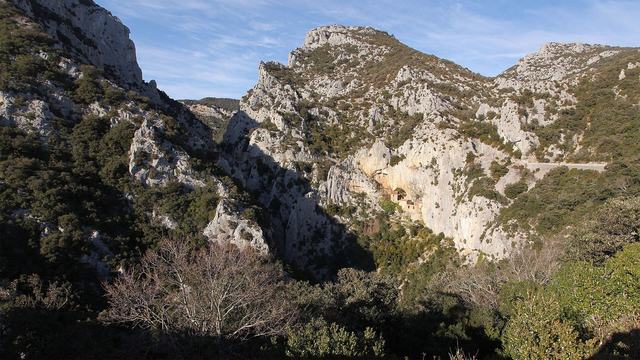
Les Gorges de Galamus
The Galamus Gorges offer the grandiose spectacle of the struggle between water and limestone rock.
When to go and how to plan
Spring and autumn are the most pleasant periods: mild temperatures, beautiful light and less crowded sites. Summer is hot, especially in Languedoc and around Toulouse, but pleasant in the mountains. Winter is mild on the coast, but cold and snowy in the Pyrenees and on the plateaux.
A car is essential for exploring the interior. Big towns such as Toulouse, Montpellier, Nîmes and Perpignan are well served by train. Gorge and mountain roads are winding: allow more time than the distance suggests.
A trip of eight to ten days can combine three areas: medieval cities and the Canal du Midi around Carcassonne, the Tarn gorges and the caves of the Causses, and the Catalan coast with the Pyrénées-Orientales. A shorter trip is better focused on one of these areas.
- Start early in summer to visit sites before the heat.
- Book gîtes and very popular sites in advance.
- Check that mountain roads are open out of season.

Albi
Omnipresent, Albi's red brick sets the tone. Delicate pink in the morning, powerful orange under the blazing summer sun or madder red in the evening.

Nîmes
Prefecture of the Gard with exceptional ancient heritage, whose arena and Maison Carrée stand next to the elegant eighteenth-century Jardins de la Fontaine.
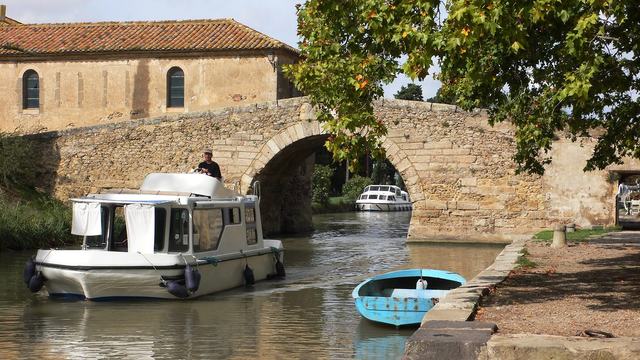
Canal du Midi au Somail
Shaded by its century-old plane trees, the hamlet of Le Somail is one of the most picturesque stops on the Canal du Midi, a seventeenth-century engineering masterpiece listed by UNESCO.
Going further
Find all the sites of the region on the page Occitanie, or explore a département: