Discovering Hauts-de-France: a practical guide
Hauts-de-France brings together the Opal Coast, the Bay of Somme, big cities such as Lille and Amiens, Gothic cathedrals, belfries and memorial sites. The region is close to Paris, Brussels and London, and lends itself well to short breaks.
This practical guide helps you choose your stops and organise your trip. Underlined site names link to their detailed pages.
Understanding the region in a few minutes
The region has five départements: Nord, Pas-de-Calais, Somme, Oise and Aisne. Nord and Pas-de-Calais, with Lille and Arras, form a territory of towns, belfries and former mining basins. The coast, from Dunkirk to the Bay of Somme, offers dunes and cliffs. The Somme is the land of Amiens and the Bay of Somme. Oise and Aisne are more rural, with forests and castles.
These areas are very different: from the flat landscapes of Flanders to the cliffs of the Boulonnais, from the marshes around Amiens to the forests of the Oise. The climate is oceanic, with changeable weather.
Distances are short, and the rail network is good between the major towns.
- Lille is one hour from Paris by train.
- The weather changes quickly: pack a waterproof layer.
- For the coast, a car is useful.

Lille
Capital of Hauts-de-France with a strongly asserted Flemish identity, whose Grand Place enlivens the heart of a historic centre with colourful Baroque façades.

Arras
Prefecture of the Pas-de-Calais whose two Flemish Baroque squares, lined with arcades on pillars, are among the finest urban ensembles of the North.
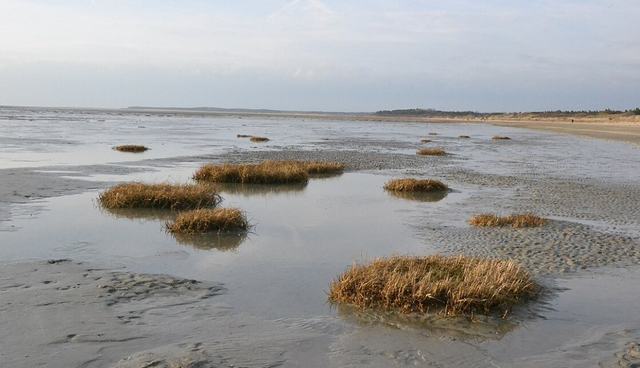
La Baie de Somme
Ranked among the most beautiful bays in the world, the Bay of Somme is an exceptional natural site.
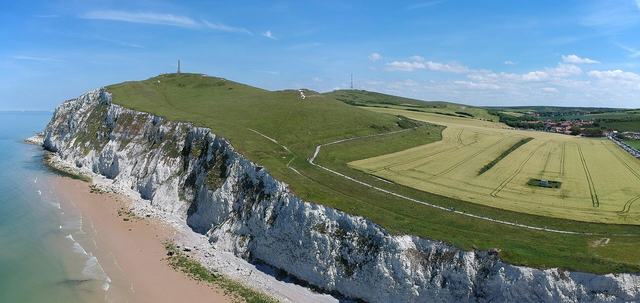
Le Cap Blanc-Nez
Mineralogy enthusiasts all know the famous Cap Blanc-Nez site (Boulogne-sur-Mer area, northern France): the chalk cliffs yield a great abundance of marcasite, crystallised in cockscomb form.
Culture, history and heritage
Hauts-de-France is rich in cathedrals: La Cathédrale Notre-Dame d'Amiens, Cathédrale Notre-Dame de Laon, Cathédrale Saint-Pierre de Beauvais and Cathédrale Notre-Dame de Saint-Omer. Belfries, such as the Beffroi de l'hôtel de ville de Lille and Le Beffroi de Douai, are symbols of communal liberties.
Castles are varied: Château de Chantilly, Château de Pierrefonds, Château de Compiègne, Citadelle de Lille, Forteresse de Ham and La forteresse des Ducs de Guise. The Abbaye Saint-Jean-des-Vignes in Soissons is a fine example of Gothic architecture.
The region also keeps the memory of the wars, with the Chemin des Dames, the Somme sites, the Coupole d'Helfaut and the Blockhaus d'Éperlecques. The Familistère de Guise evokes social and industrial history. Among the museums are the Palais des Beaux Arts de Lille, the Maison de Jules Verne and the Musée des pastels Antoine Lécuyer.
- For memorial sites, allow time and a quiet mind.
- Museums in Lille are often closed one day a week.
- Combined tickets exist for some monuments.

La Cathédrale Notre-Dame d'Amiens
Amiens Cathedral of Notre-Dame, a UNESCO World Heritage site, is the largest Gothic cathedral in France, and is often considered one of the masterpieces of medieval architecture.

Château de Chantilly
Raised in an unforgettable setting in the middle of the waters, the Château de Chantilly consists of a part built in the sixteenth century, of pure Renaissance architecture.
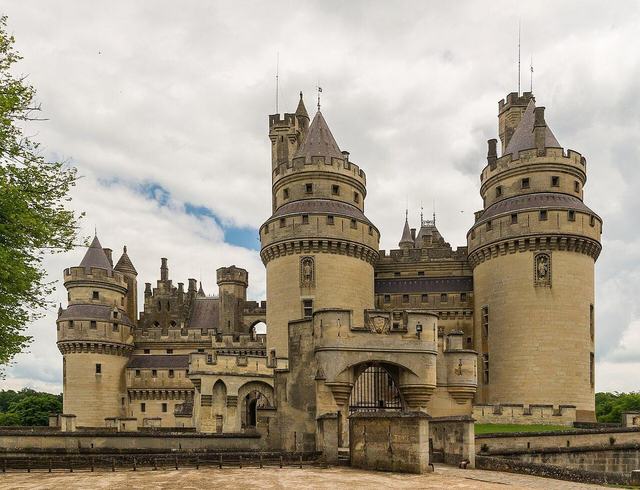
Château de Pierrefonds
The Château de Pierrefonds was built in the fifteenth century by Louis d'Orléans and then dismantled on the orders of Louis XIII.
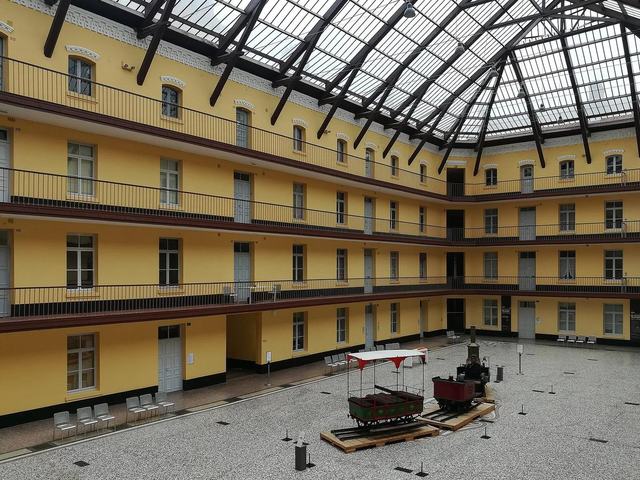
Familistère de Guise
The Familistère is the utopian story of Godin, a nineteenth-century cast-iron industrialist, who decided to create a revolutionary social palace of great comfort for his employees, in the little town of Guise.
Food and local produce
Northern cooking is generous. Here you eat moules-frites, welsh rarebit, Flemish carbonade, potjevleesch, chips and waffles. Maroilles, a washed-rind cheese, is one of the best-known specialities, and beer is a strong tradition, found in many local breweries.
The coast offers fish and seafood: herring, mussels, sole and shrimps. Picardy is known for its land produce: ficelle picarde, leek flamiche, Amiens macaroons. Markets and estaminets, traditional cafés, are excellent places to taste the specialities.
Workshops and farms also offer visits, such as Les Ateliers de l'Abeille.
- In an estaminet, order the dish of the day to taste the specialities.
- Book ahead at weekends in Lille.
- Maroilles has a strong smell, but a milder taste.
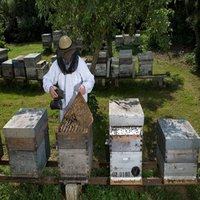
Les Ateliers de l'Abeille
Follow the queen's procession and her court, learn to decipher the rites and customs of this buzzing palace that is the beehive.
Lille
Capital of Hauts-de-France with a strongly asserted Flemish identity, whose Grand Place enlivens the heart of a historic centre with colourful Baroque façades.
Arras
Prefecture of the Pas-de-Calais whose two Flemish Baroque squares, lined with arcades on pillars, are among the finest urban ensembles of the North.
Nature and wide open spaces
The Opal Coast is one of the region's great assets: Le Cap Blanc-Nez and Le Cap Gris-Nez, cliffs from which you can see England in clear weather, Les Falaises d'Ault-Onival, Dunes de Flandres and sandy beaches. The La Baie de Somme is one of the most beautiful bays in Europe, with its seals, birds and spectacular tides, which you can discover with the maison de la baie de somme et de l'oiseau and the Le Chemin de Fer de la Baie de Somme.
Inland, the Les Hortillonnages d'Amiens are gardens on the water, discovered by boat. The Le Terril du Mont de L'Ermite recalls the region's mining past. The forests of the Oise and Aisne offer lovely walks, and the La Hottée de Gargantua is a natural curiosity.
For children, several parks are open: Parc Zoologique de Lille, Parc Zoologique de Maubeuge, Nausicaa Cap au Sud, Maréis, Centre de découverte de la Pêche et de la mer.
- On the coast and in the bay, check the tide times.
- The wind can be strong: pack a windproof jacket.
- For the Bay of Somme, choose guided outings.
La Baie de Somme
Ranked among the most beautiful bays in the world, the Bay of Somme is an exceptional natural site.

Le Cap Gris-Nez
At Gris-Nez, you will grasp the full meaning of the word passage. Whether in the endless coming and going of boats, the flight of birds or the meeting of water, wind and this greying cliff.

Les Hortillonnages d'Amiens
300 hectares of gardens stretch in the heart of the Amiens conurbation. They are cut across by 55 kilometres of rieux (small canals).

Nausicaa Cap au Sud
Nausicaá, in Boulogne-sur-Mer, along the beach, is much more than an aquarium: it is the largest European site devoted to discovering and raising awareness of the protection of the marine world.
When to go and how to plan
From May to September the weather is better for the coast and the bay. Spring and autumn are quieter. Winter is cool and damp, but towns such as Lille and Arras have Christmas markets, and the beaches are lovely in clear weather.
The major towns are well served by train. A car is useful for the coast, the Bay of Somme and the villages. Lille, Arras, Amiens and Senlis are explored on foot. Roads are generally easy.
A four- to five-day trip can combine three areas: Lille and Arras, the Opal Coast, the Bay of Somme and Amiens. For a weekend, choose one town and its surroundings.
- Book coastal accommodation in advance in summer.
- Pack a waterproof jacket in all seasons.
- Keep time for the markets and breweries.
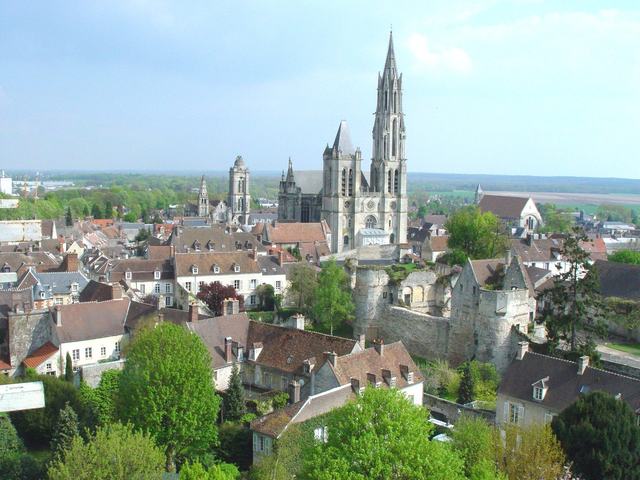
Senlis
Former royal city at the gates of Paris, whose Gothic cathedral and remains of the Capetian castle overlook a remarkably preserved medieval centre.
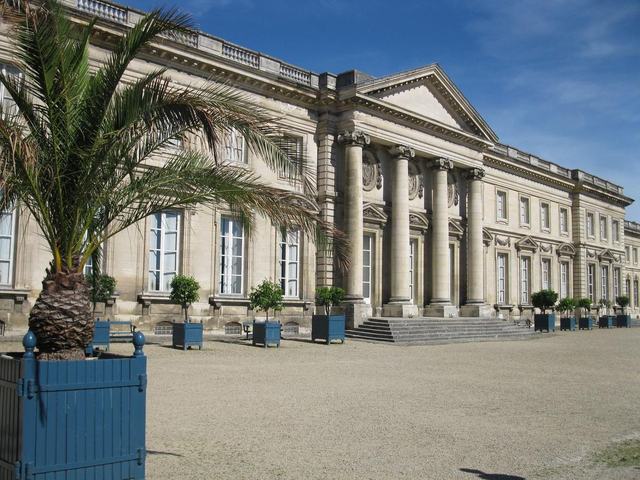
Château de Compiègne
The origin of the Compiègne residence goes back to the Merovingian dynasty. The royal residence found its definitive location in 1380 at the instigation of Charles V, who wished to build a fortress there.
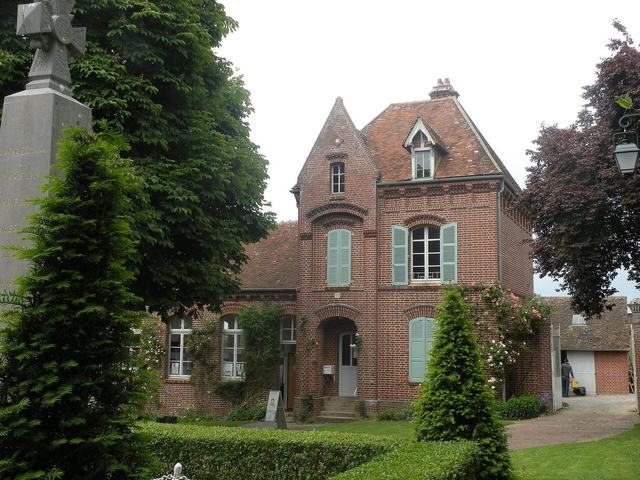
Gerberoy
Perched on a hill in the Pays de Bray, Gerberoy is the land of roses, but also wisteria, clematis and daisies that spill over old walls, invade the lanes and occupy the cobbles.

Citadelle de Lille
Called the queen of citadels, the Lille citadel was Vauban's first great personal achievement.
Going further
Find all the sites of the region on the page Hauts-de-France, or explore a département: