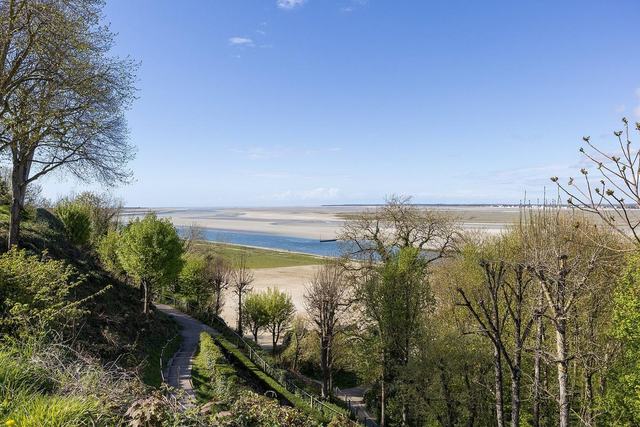
Photo : René Hourdry / Wikimedia Commons (CC BY-SA 4.0)
Les Falaises d'Ault-Onival
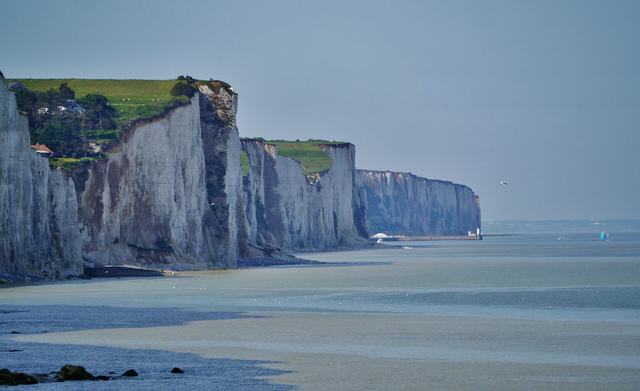
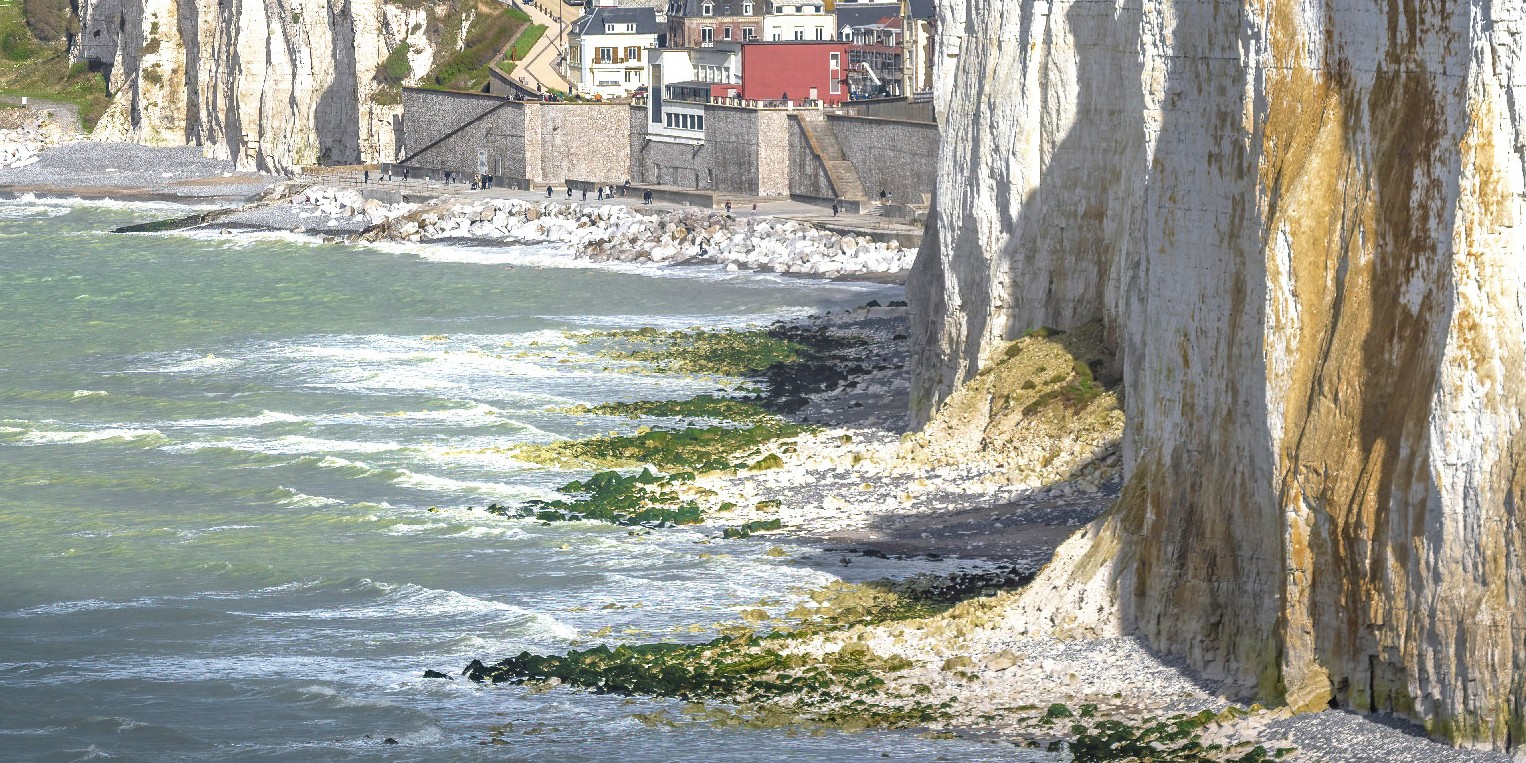
Between Mers-les-Bains, Ault and Onival, in the Somme, the chalk coast that extends the Norman cliffs gradually lowers towards the north. Beyond the mouth of the Bresle, the cliff reaches 80 metres high between Mers and Ault, 38 metres at Ault itself, and is only about fifteen metres on the Onival side. The town of Ault is built on the edge of this chalk cliff.
At the foot of the active cliff, lashed by the swell, stretches a narrow beach of shingle and sand. It extends seaward in a chalk platform, 300 to 400 metres wide, which is uncovered at low tide. It is opposite Onival, where the active cliff ends, that the shingle bank begins: this partly natural dyke, formed from debris of the Norman cliffs, protects the Bas-Champs from big tides and reaches Cayeux-sur-Mer.
The chalk in this area is crumbly and the cliff is retreating. Rainwater seeps in and destabilises the rock, large blocks fall under their own weight, then the waves dissolve them at the foot. You should therefore avoid going near the foot of the cliff. The site marks the transition between the Alabaster Coast and the shingle of the Bay of Somme.