Photo : Wikimedia Commons (CC BY-SA 4.0)
Château de Compiègne
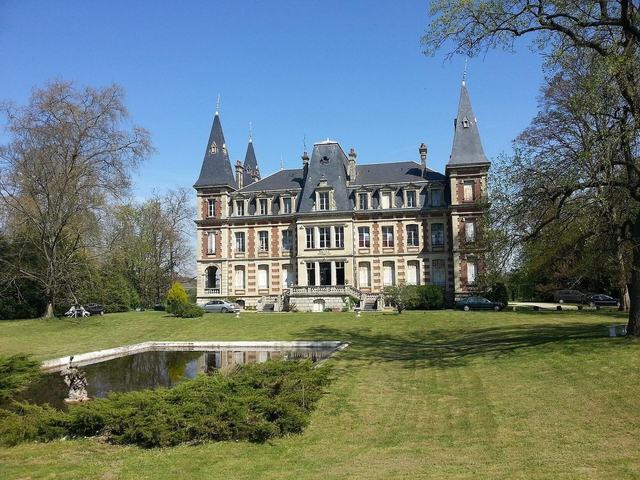
The origin of the Compiègne residence goes back to the Merovingian dynasty. The royal residence found its definitive location in 1380 at the instigation of Charles V, who wished to build a fortress there. The castle underwent several transformations over the centuries and did not suffer great damage during the Revolution. Only the royal furniture was dispersed in the revolutionary sales of 1795. The castle was integrated into the imperial estate in 1804 and redeveloped between 1807 and 1810. Napoleon received there notably his second wife, Marie-Louise of Austria before installing his son, the King of Rome, in Marie-Antoinette's former apartment. The castle park was then laid out as well as a great ballroom gallery. At the end of the Second Empire, the Third Republic turned the castle into a national museum. Successively English, German then French headquarters during the Great War, the building suffered two fires in 1919 and 1921. Since 1945, a policy of restoring the historic state has been carried out according to the apartments and their furnishings. Three periods are thus restored: the end of Louis XVI's reign, the First Empire and the Second Empire. The castle displays notably portrait galleries and paintings centred on the splendour of the Second Empire. You can admire works by Franz-Xaver Winterhalter, Édouard Dubufe, Thomas Couture... The museum also gathers sculptures from the second half of the nineteenth century.