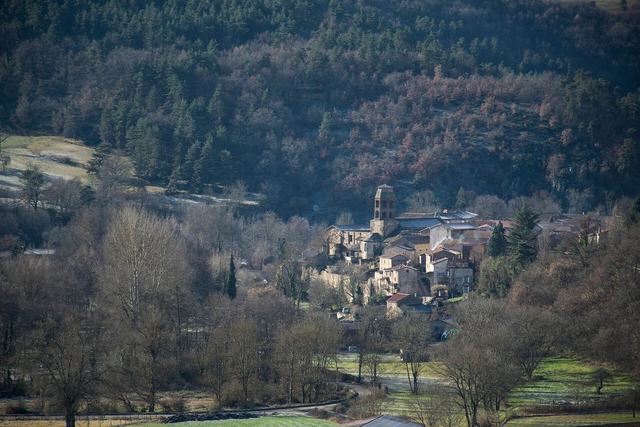
Photo : Stanichou / Wikimedia Commons (CC BY-SA 4.0)
Château de Saint vidal
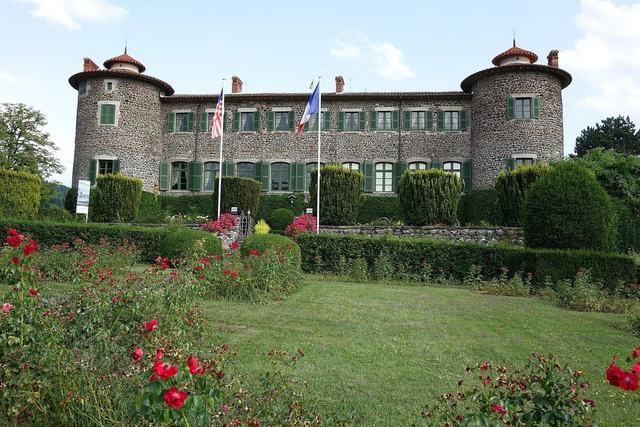
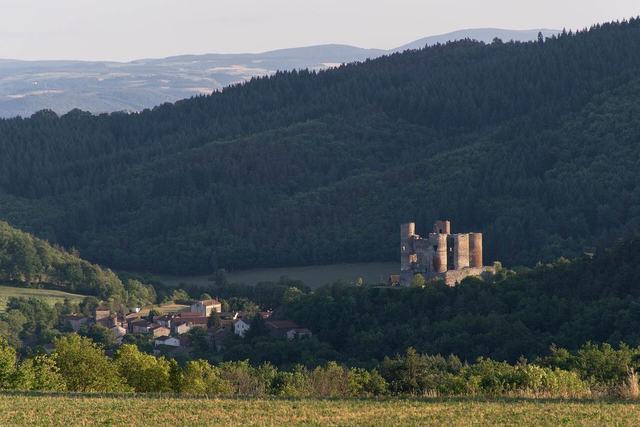
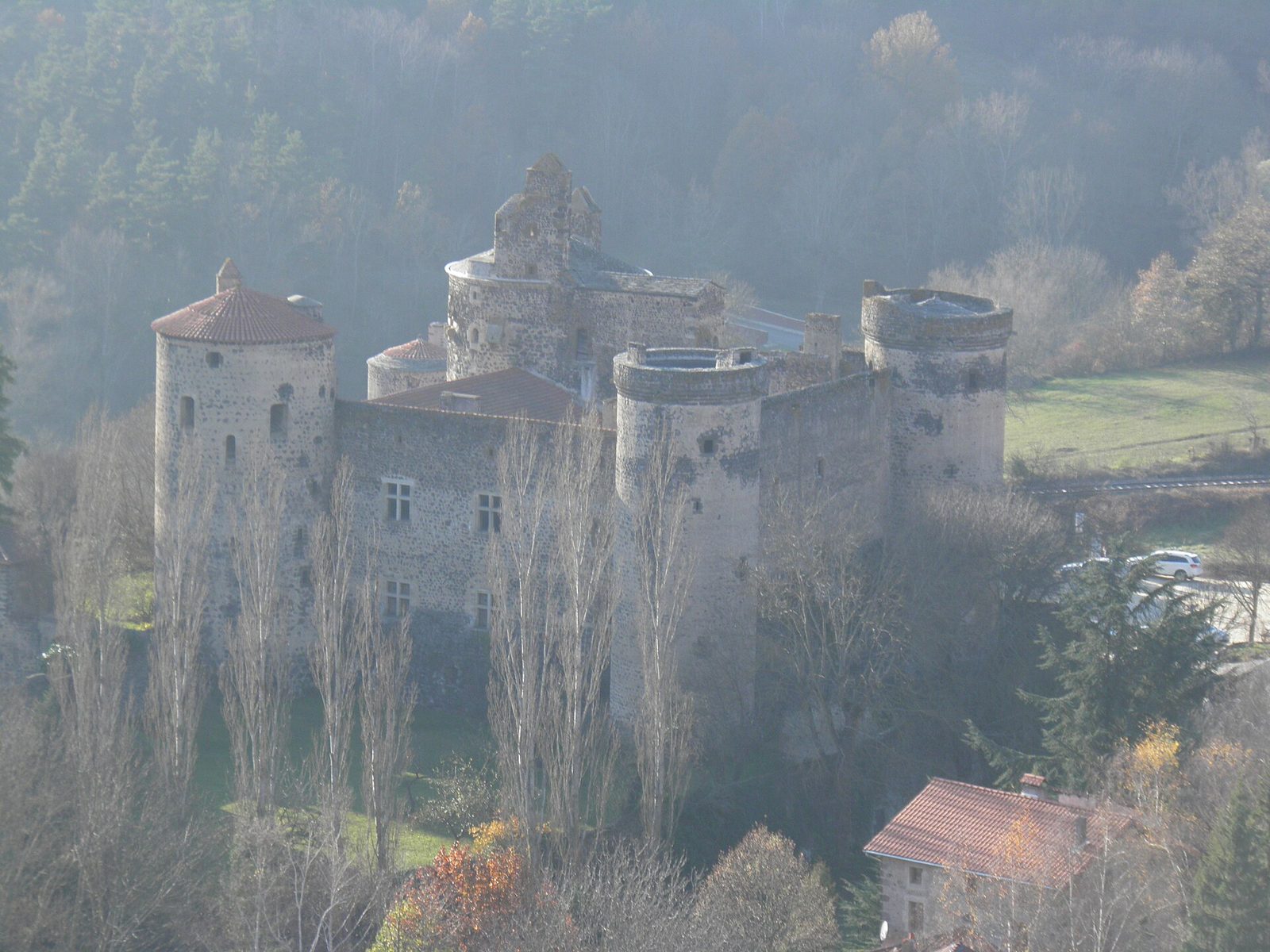
An imposing fortress in the Borne valley, fief of the La Tour de Saint-Vidal family. Originally, in the thirteenth century, it was a fortified house, which the Saint-Vidals enlarged in the fourteenth and fifteenth centuries. It was transformed and adapted to artillery in the sixteenth century by Antoine II de la Tour de Saint-Vidal, who had a keep added to the three existing towers and built a first enclosure. Antoine II de Saint-Vidal had been appointed Governor of the Velay and the Gévaudan. A leader of the League, he fought the Protestants and rebelled against Henry IV, who had Saint-Vidal besieged in 1591. The castle preserves from its feudal origin vaulted cellars and a pointed-arch kitchen with immense fireplaces. Renaissance windows, a sculpted stone doorway, French-style ceilings and an ogive-vaulted gallery bordering an inner courtyard are its decorative elements; numerous arrow slits, gun ports and bartizans are its defensive ones. The castle is a listed Historic Monument.