1

Natural wonders · Lozère
Parc National des Cévennes
The Cévennes National Park is the only inhabited park among the seven French national parks.
View full page →Between dizzying limestone gorges, rocky chaos and arid causses, the Cévennes National Park concentrates some of the wildest landscapes of the Massif Central, straddling Gard and Lozère.
This selection brings together the canyons of the Tarn and the Jonte, their most dizzying viewpoints, and the geological curiosities that earned the region its UNESCO World Heritage listing as a cultural landscape of Mediterranean agro-pastoralism.
A territory to explore over several days, as the sites are scattered over a vast karst plateau.
The Cévennes National Park is the only inhabited park among the seven French national parks.
View full page →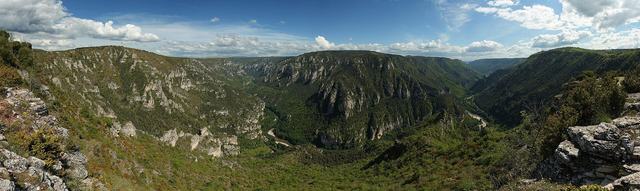
A 27 km limestone canyon carved by the Tarn between the Causse de Sauveterre and the Causse Méjean, dotted with hilltop villages and dizzying viewpoints.
View full page →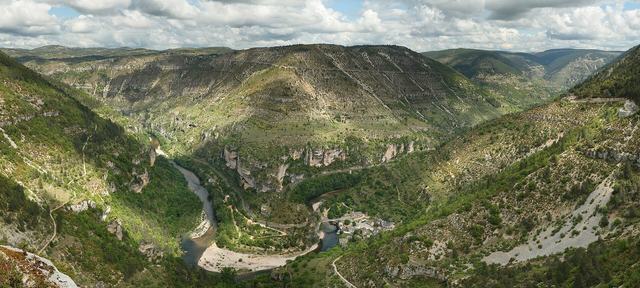
The Tarn rises on Mont Lozère at 1,575 metres' altitude and descends the slopes of the Cévennes in a fast and torrential course.
View full page →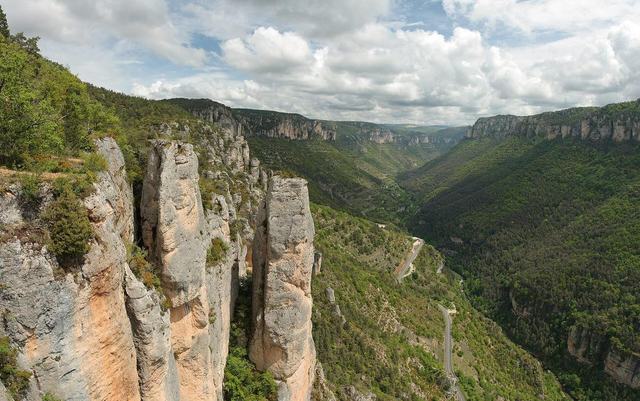
The Jonte gorges, a tributary of the Tarn, a sabre-cut between the Causse Méjean and the Causse Noir, offer climbers fine wild cliffs, haunted by griffon vultures. In short, a grandiose site in Roquefort country.
View full page →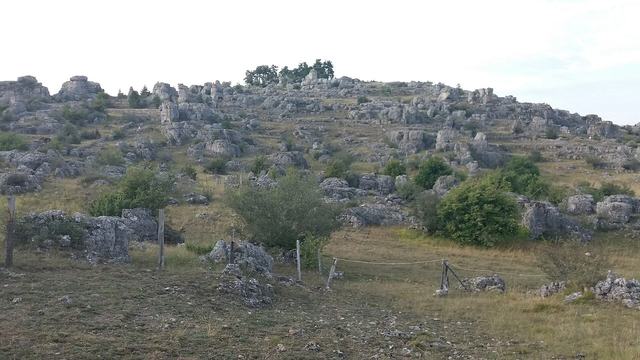
It is true that this group of ruin-shaped rocks can be deceptive.
View full page →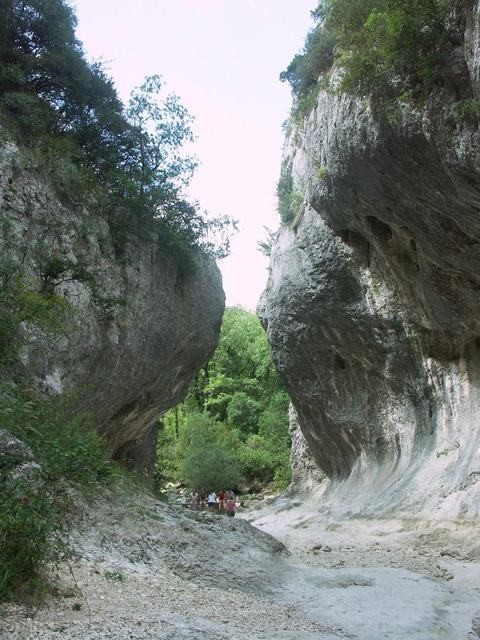
The Aiguillon, a stream dry in summer, has traced in the limestone plateau a rocky defile called "Les Concluses".
View full page →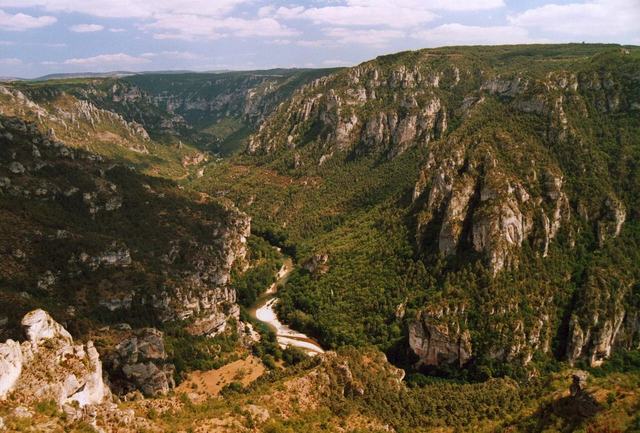
At 870 m altitude, the classified site of the "Point Sublime" is one of the most visited places in the Tarn gorges.
View full page →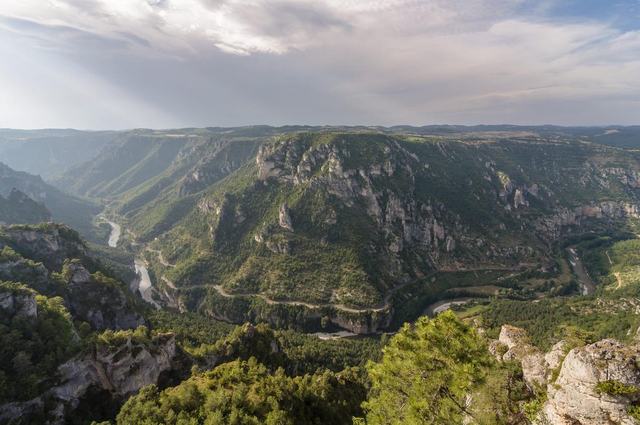
A balcony of the Causse Méjean, the Roc des Hourtous panorama overlooks by 500 m the narrowest part of the Tarn Gorges: the Détroits.
View full page →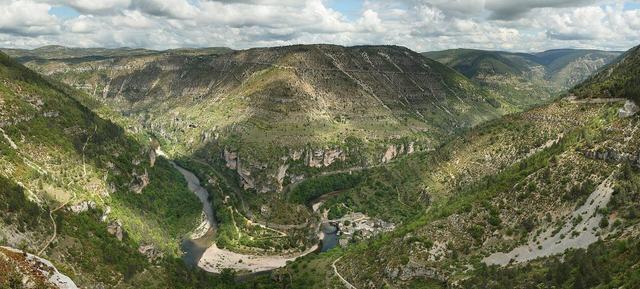
Swimming in the famous Tarn Gorges offers you paradise corners in water of always exceptional quality.
View full page →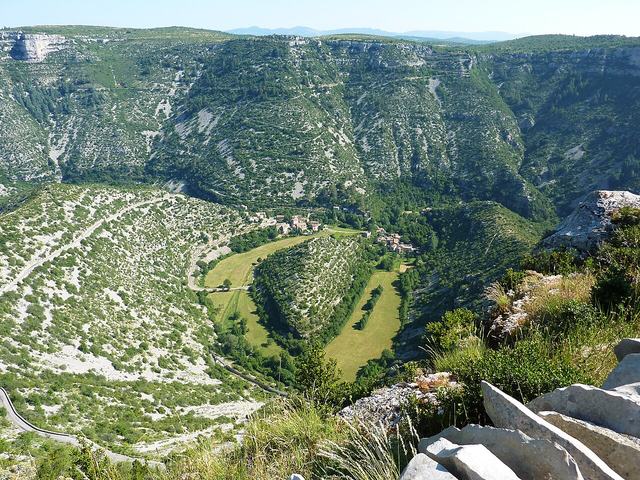
Like other famous sites of the Grands Causses, the Cirque de Navacelles is visited every year by millions of tourists who come to admire the cut of the Vis canyon through the limestones and dolomites of the Causse de Blandas.
View full page →