Photo : Einaz80 / Wikimedia Commons (CC BY-SA 4.0)
La faille de Saint-trou
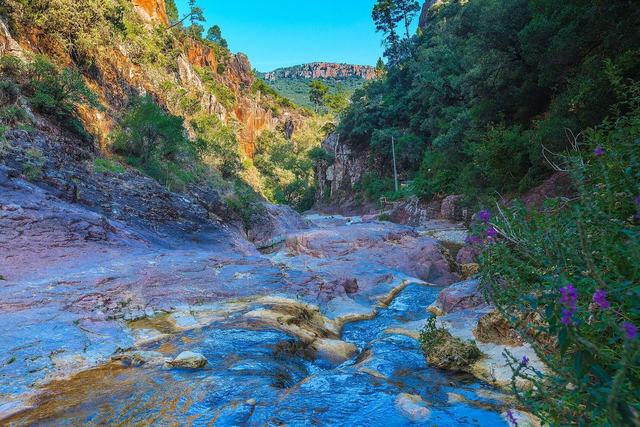
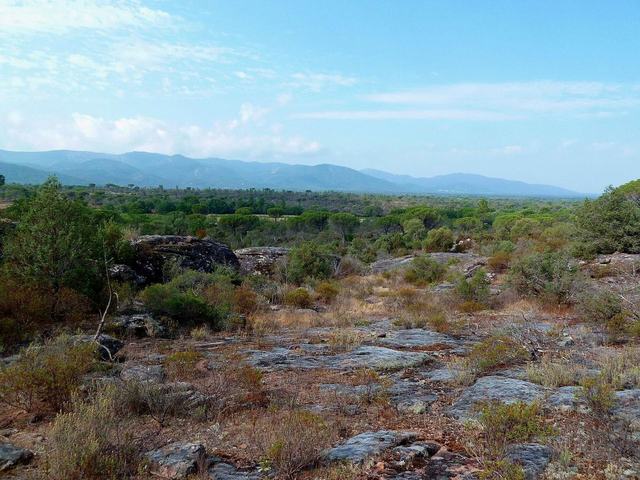
The Roquebrune rock (373 metres) is a little like the Var's Ayers Rock: its red colour, its sheer walls, its legends and its devotees. There was even a hermit, who lived for thirty years in a cave fitted out as a home. In fact, the rock has a rather varied and chaotic structure. Geologically, it is made of gneiss, granite and solidified acid lava. The high concentration of iron oxide in the rock gives it its slightly reddish appearance. Its topography is quite rugged, with flat areas to the north, jagged rocks, steep cliffs, crevasses and faults, as well as dry stream beds at its southern base. Because of its location and the diversity of its soil, it is home to a wide variety of plant and animal species suited to both damp and drier environments: eagle owls, tortoises, ocellated lizards, frogs, snakes, wild boar, rockroses, poplars, pines, holly, prickly pears and maquis.