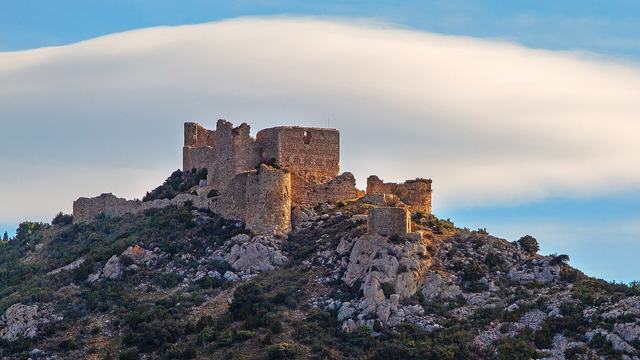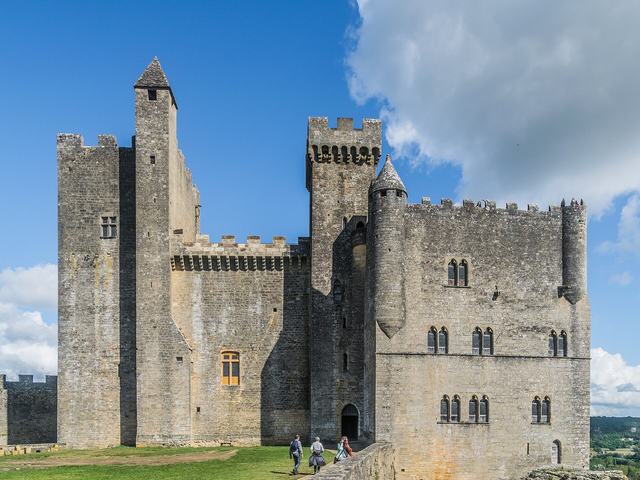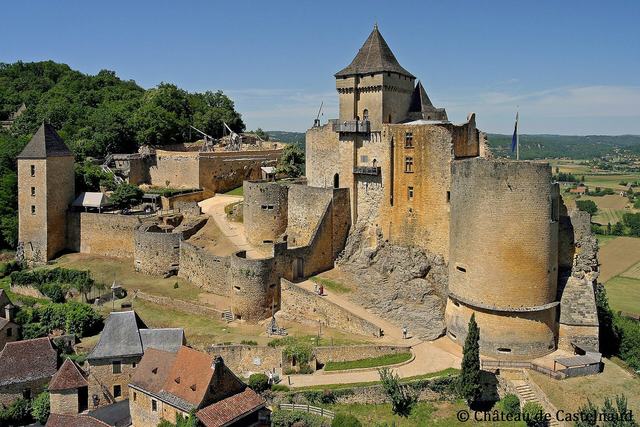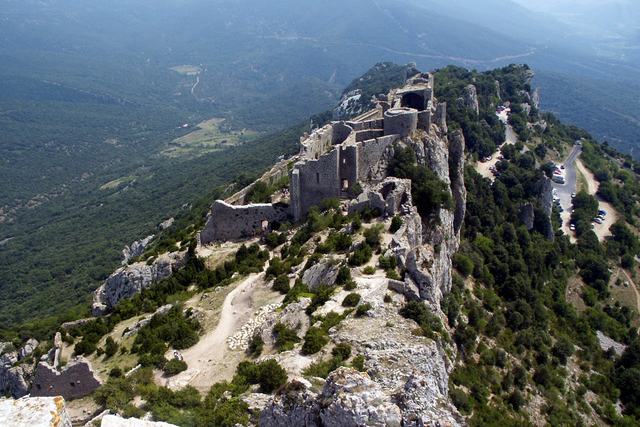
Château de Peyrepertuse
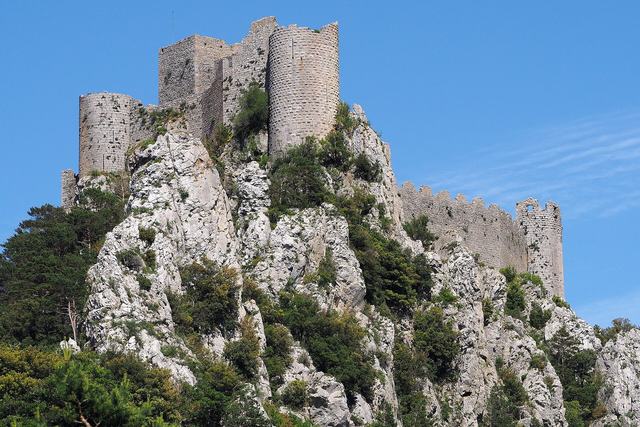
"It is to be known that in the Marches, on this side of the Aragon frontier, is the City of Carcassonne, which is the mother and has five sons, namely Puilaurens, Aguilar, Quéribus, Termes and Peyrepertuse".
View full page →Strategic bolts set on dizzying rocky pinnacles, hilltop castles once watched over roads, valleys and borders from almost impregnable positions.
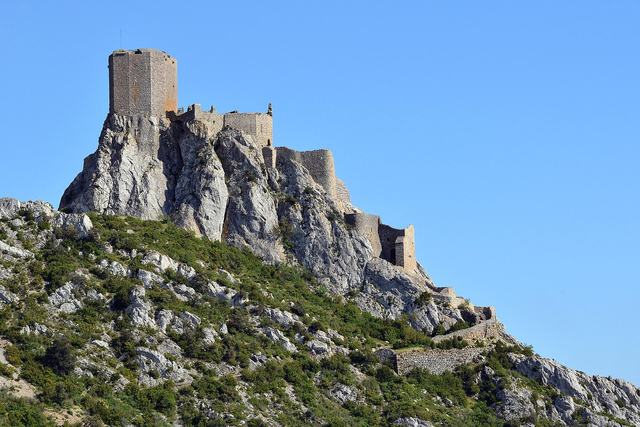
This selection brings together the most spectacularly perched fortresses in the country, from the "five sons of Carcassonne" to the eagles' nests of the Dordogne, where the climb on foot is often an integral part of the visit.
Guaranteed vertigo, and panoramas over the surrounding valleys that are worth the trip on their own.
"It is to be known that in the Marches, on this side of the Aragon frontier, is the City of Carcassonne, which is the mother and has five sons, namely Puilaurens, Aguilar, Quéribus, Termes and Peyrepertuse".
View full page →
It is in the commune of Cucugnan, a Corbières village immortalised by Alphonse Daudet in the sermon of his famous priest, that Quéribus castle stands.
View full page →
On the departmental boundary of the Aude and the Pyrénées-Orientales, Puilaurens long remained the southernmost fortress of the kingdom of France.
View full page →
The ruins of Aguilar castle crown a rocky peak. The oldest part is the polygonal upper enclosure, pointed on the attack side (twelfth century).
View full page →
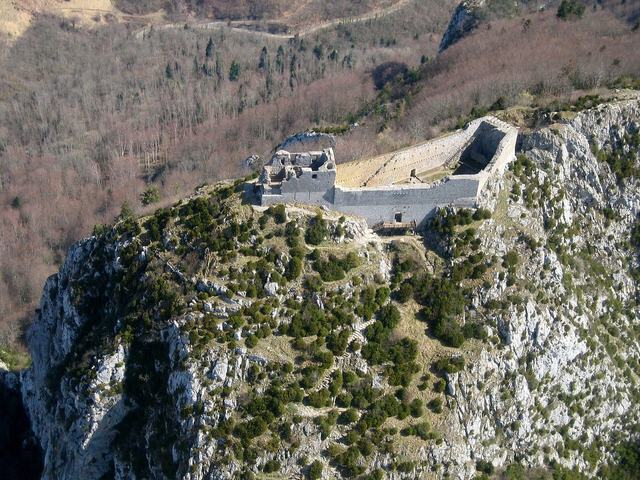
Before setting off to assault the "Pog", the path passes close to the stele erected in 1960 "to the martyrs of pure Christian love".
View full page →
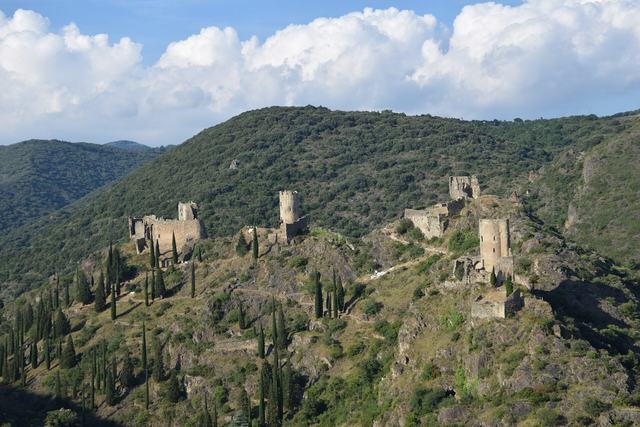
A lock on the Cabardès since the early Middle Ages, the Lastours site is an exceptional ensemble with its four castles built at 300 metres' altitude, on top of a rocky spur.
View full page →
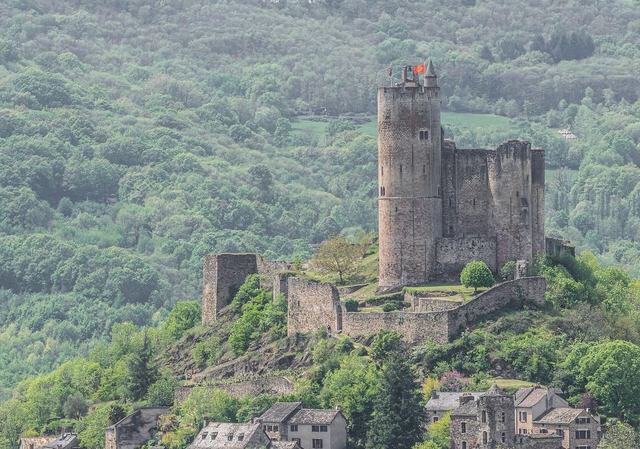
The Najac fortress has for 900 years occupied the top of a particularly steep rocky spur overlooking a loop of the Aveyron.
View full page →
It is probably from the course of the Dordogne that the fortress looks most impressive.
View full page →
Facing the Château de Beynac, whose implacable rival it was in the endless conflicts that punctuate the history of the Middle Ages.
View full page →
The castle, rebuilt in 1525, already existed in 1031.
View full page →