Photo : Alexandre Prevot / Wikimedia Commons (CC BY-SA 2.0)
Le Havre
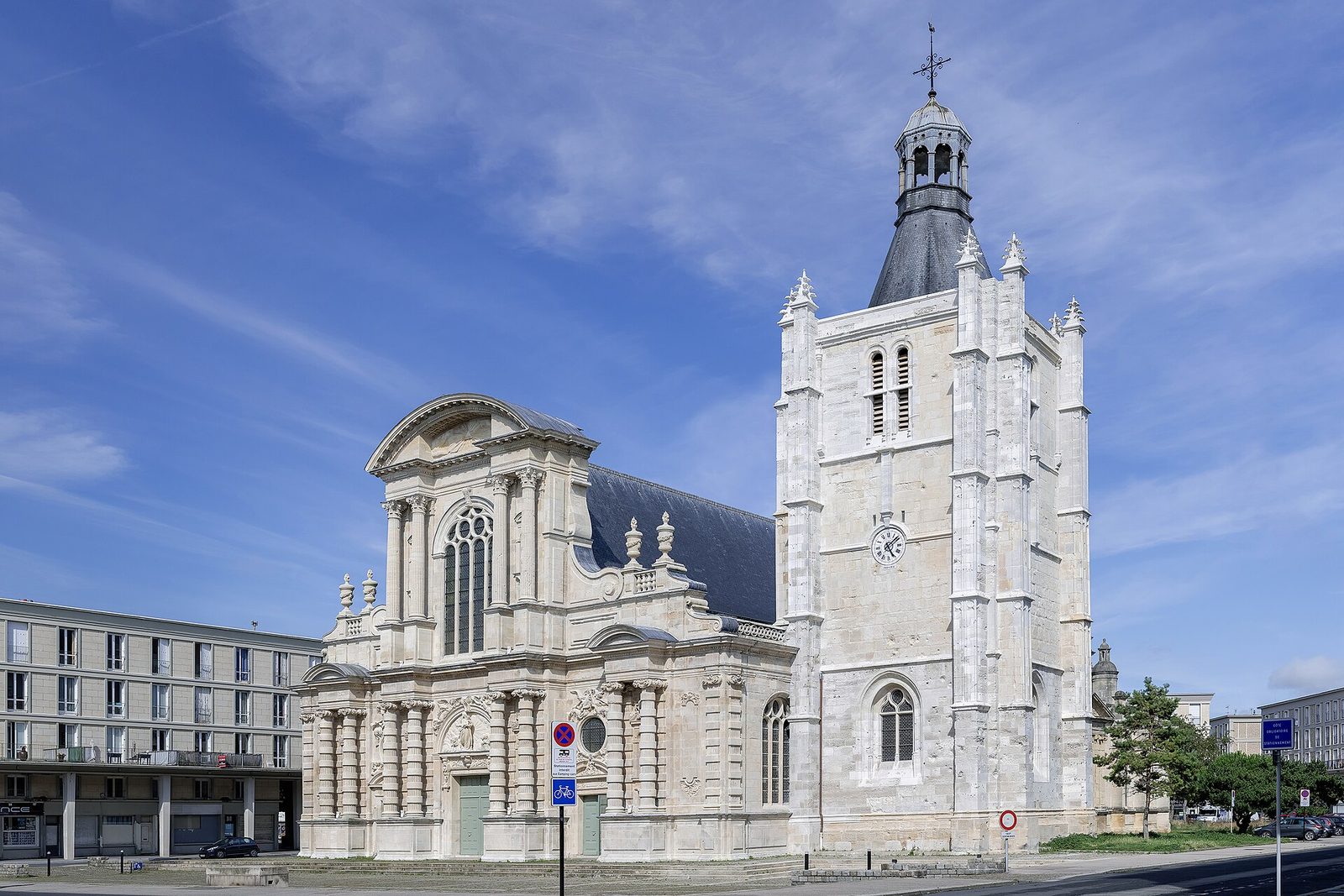
Destroyed more than eighty per cent by the bombings of the Second World War, the town was entirely rebuilt according to the plans of the architect Auguste Perret, who designed a coherent urban centre entirely of prefabricated reinforced concrete, organised around wide avenues and vast rational squares. This post-war urban planning, long decried before being recognised as a masterpiece of architectural modernity, earned the centre of Le Havre inscription as UNESCO World Heritage in 2005, a rare distinction for a twentieth-century reconstruction. The church of Saint-Joseph, a lantern tower of more than a hundred metres pierced by thousands of coloured stained-glass panes that flood the interior with light, is Perret's most emblematic work in the town. Second port of France by traffic, Le Havre also remains turned towards the sea, between urban beaches and great liners calling at its deep-water port.