Photo : Lorraine.Agostini / Wikimedia Commons (CC BY-SA 3.0)
Citadelle souterraine de Verdun
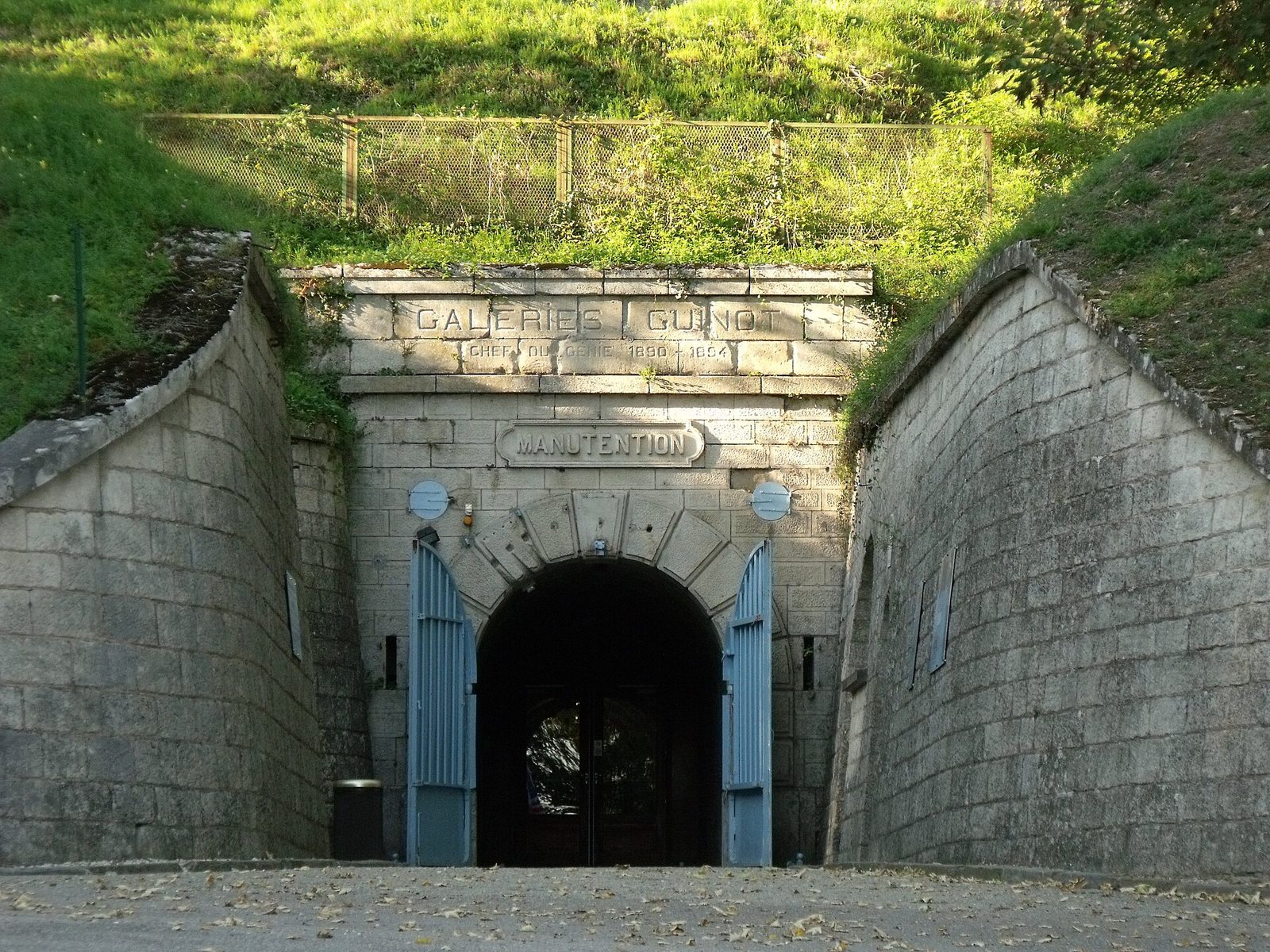
The Verdun citadel, built around 1624 and not, contrary to what is generally thought, remodelled by Vauban, but by one of his disciples, 50 years later, is a seven-bastion citadel. After 1870, Verdun entered the Séré de Rivières defensive system, completed well outside the town by forts such as Douaumont, Souville or Vaux. The galleries of the Verdun underground citadel witnessed the most important moments of the First World War. From 1890 to 1914 under the direction of Commandant Guinot, 7 km of underground galleries were dug, able to shelter 50,000 men at most, a mill and many armament stores. During the war, the citadel served as a logistics centre. As the History of the Unknown Soldier explains, on 10 November 1920, late in the morning, the ceremony designating the Unknown Soldier who is to rest under the Arc de Triomphe in Paris took place. Eight coffins, covered with a tricolour flag, were lined up in an underground gallery of the Verdun citadel turned into a funeral chapel. Private Auguste Thin, the last of the 132nd infantry regiment, dressed in a new uniform, was tasked with choosing a coffin. The Minister of Pensions André Maginot asked him, presenting him with a bouquet of flowers, to place it on one of the eight coffins. He chose the 6th coffin because the sum of the digits of his regiment (132) equals 6. Today, part of the underground citadel's galleries can be visited. You discover the life of soldiers during the Great War.