Photo : Wikimedia Commons
Château d'If
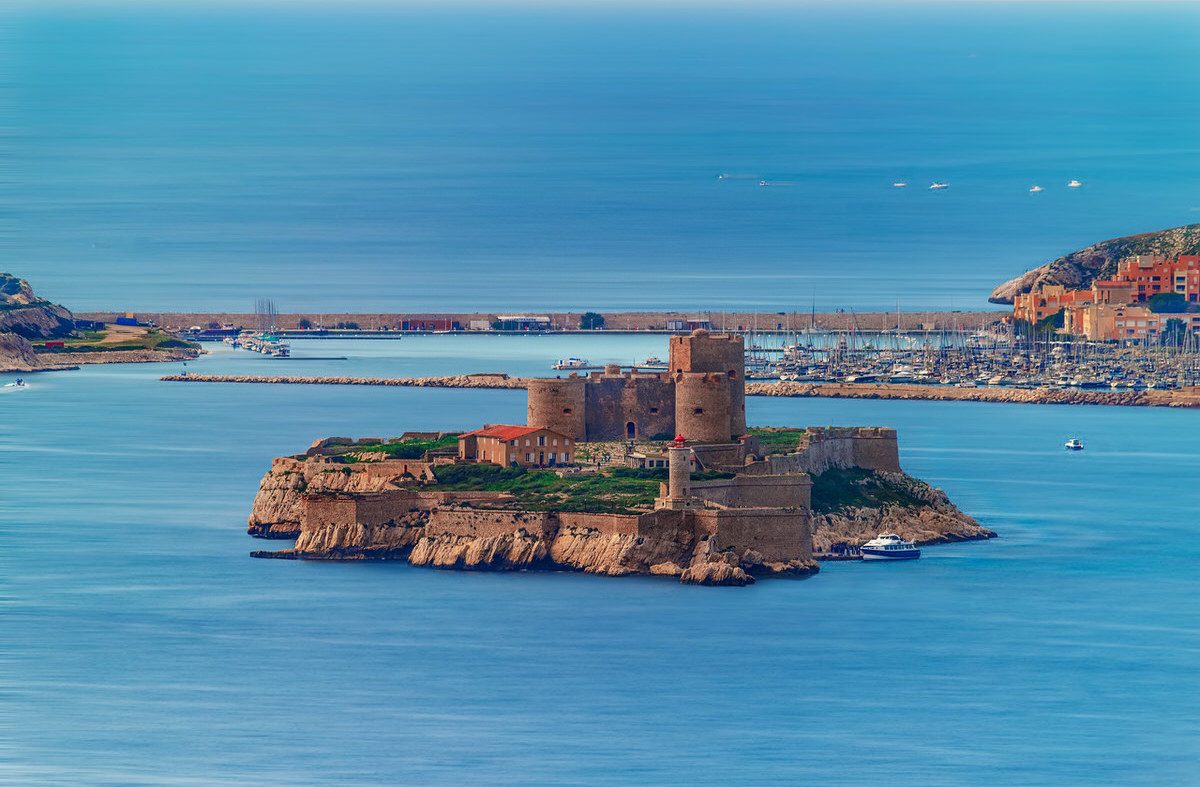
Facing the city of Marseille stands the château d'If, whose military importance has had a far lesser legacy than the legends linked to this picturesque site... The little islet entered history in 1515, when the first rhinoceros known in Europe was landed there, famous enough to be immortalised in an engraving by Dürer.
The castle was built shortly after, between 1524 and 1531, at the request of Francis I. Commanding the entrance to the port of Marseille, it was to protect the roadstead from any attack and guarantee the possibility of supplying the city by sea. The building, square in plan, was flanked by three powerful cylindrical towers. In 1702, Vauban, commissioner of fortifications, ordered the construction, beside the castle, of the guardhouse building called the "Vauban barracks". From the seventeenth century, the fortress served mainly as a state prison. Opponents of royal power were locked up there, notably Protestants, and republicans under the Second Empire. The site, however, owes its fame to the novelistic talents of Alexandre Dumas, who set the action of "The Count of Monte Cristo", published in 1844, on the islet of If.