Photo : Salamanamanjaro / Wikimedia Commons (CC BY-SA 4.0)
Grotte de la Luire
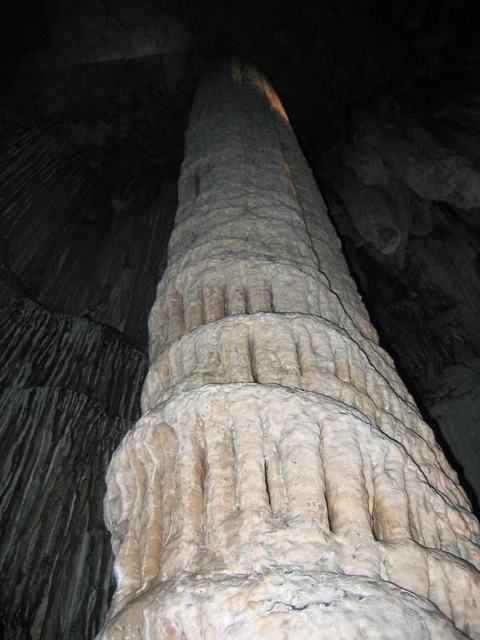
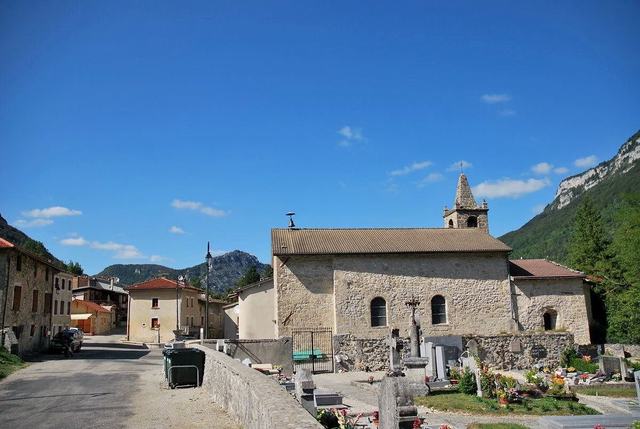
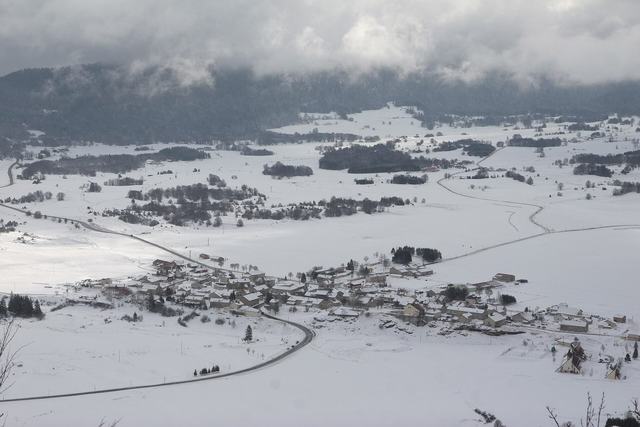
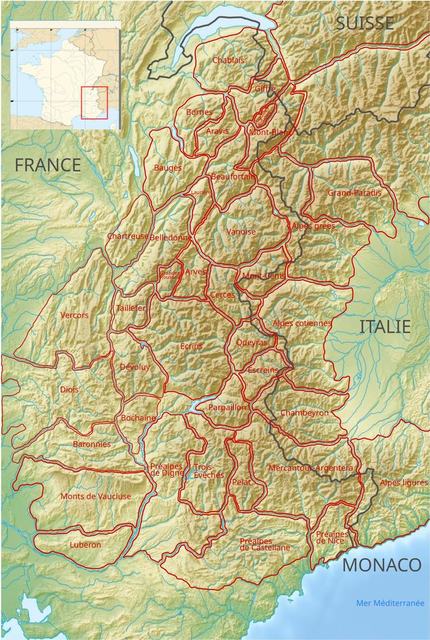
The Luire cave opens at 875 metres' altitude in the Vercors, near Saint-Agnan-en-Vercors, in the Drôme. It is an immense resurgence that serves as the outlet of the massif's underground water, and one of the largest networks of the Vercors: the explored galleries exceed 57 kilometres in development, for a depth of about 480 metres. The first explorations date from the late nineteenth century, notably the expedition of Oscar Decombaz in 1898, then research intensified from 1952 with the Groupe spéléologique valentinois.
The entrance, about twenty metres wide, opens onto vast halls and a deep vertical shaft. The place also keeps the memory of the summer of 1944: a Resistance hospital had been set up under the overhang to treat the Vercors wounded. On 27 July, German troops attacked the cave, and seventeen wounded were executed on the spot. Nurses were deported to Ravensbrück, and Abbé Yves de Montcheuil, present with the wounded, was shot in Grenoble. The part open to the public is covered on a guided tour.